
Animals, Environment, Faith, Nature, Politics

Getting Political

O Kings and rulers of the earth, listen while there is time.” Psalms 2:10

It seems ironic that I should pull this passage out of the Bible this morning as I was researching biblical passages pertaining to the election–or appointment–of a king, or ruler. Would that every candidate this election year take heed in regard to our environment and the very real threat of global warming.

For me, it is all about the environment. And my vote will be won or lost depending on where each candidate stands on environmental concerns. Yes, I know there are other issues. And they are all important. But how productive can one be in an improved job market if we are all dying of cancers and other diseases due to the increased carbon emissions produced by oil shale mining and the pollution of our precious drinking water? And what good is higher education if we continue to stick our heads in the sand and ignore the destruction of our dear planet, and the life contained therein? Yes, I want to bring our soldiers home. I want to decrease our dependence on foreign oil. But we can do that with the production and implementation of greener energies–energies that respect all life forms and will leave a cleaner, healthier world for future generations to enjoy.

So, a little background on oil shales. Yes, the largest reserves of this fine-grained sedimentary rock are found right here on domestic soil, in places such as Utah, Wyoming and Colorado (McDermott). And that makes it attractive because it will certainly decrease our dependence on that foreign oil. However, while there is a vast store of oil contained in these oil shales, the cost for extracting it far outweighs the benefits. Compared to conventional crude oil, the greenhouse gasses created by oil shale are nearly two times greater, most of them being created during production (Herra). And the Bureau of Land Management states that it would require anywhere from 2.1 to 5.2 barrels of water for each barrel of oil produced. This is water that will no longer be safe for drinking, or even bathing, and such a process will seriously deplete the annual flow of the Colorado White River. This river has been voted one of the most endangered rivers in America (American Rivers). The loss of it would threaten many species of wildlife, as well as the many citizens of Colorado, who depend on it for their drinking water.

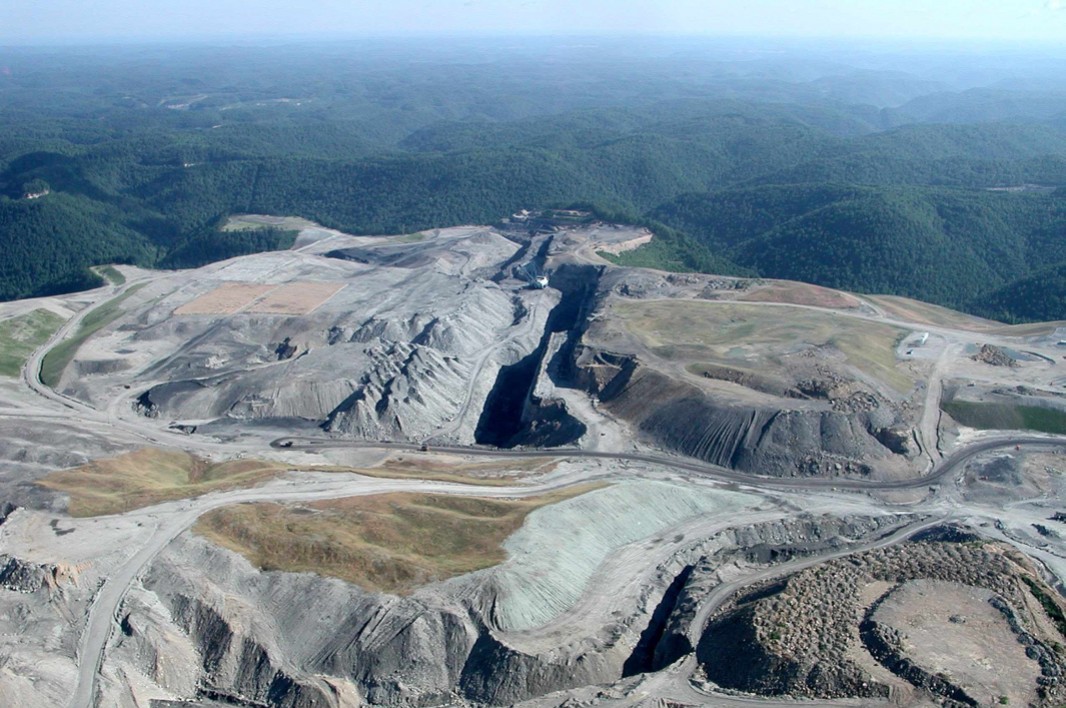
There are two potential processes for extracting keragen (the petroleum-like substance found in oil shales). The first involves either open-pit, underground or strip mining to extract the shale. It would then have to be crushed and the oil distilled at temperatures of 800 degrees Fahrenheit or more (Herra). The second is called an “in-situ” process that involves heating the shale underground to liquify it but this is a very untried and untrue method. The former method–mining–has proven time and again to be a hazardous occupation. We use open-pit mines to extract various metal ores, coal and other minerals from the earth. One of the largest of these is in Utah, the Bingham Canyon copper mine. There, enormous “lakes” have formed within the pits from groundwater seepage. These “lakes” are filled with the waste from mining, waste that often includes toxins such as mercury and uranium. Sadly, birds and water fowl are attracted by these “lakes” and lose their lives stopping for a drink, unaware of what’s contained within these waters. And, as groundwater travels underground, these toxins may also seep into nearby farmland, contaminating the soil. Underground mining, like the mining done for coal, has a history of dangerous explosions; cave-ins; with coal, the creation of black lung in the miners who work to extract it; and the emission of carbon dioxide from the many fires and explosions that result from this type of mining. Strip mining involves the removal of mountaintops, with all of the topsoil and earth being pushed down into the valleys below–along with the mercury, cadmium and other toxins. These valleys, along with their homes, farms, cemeteries, forests and streams, are often buried (Cunningham and Cunningham 309, 429). Valley filling has actually been banned in the United States but many of these mines are grandfathered in and continue to operate as usual. Below is a photograph of what land looks like after a strip mining operation moves in.
strip-mining

While beautiful forests and lush greenery surround this scar on the landscape, this strip mine plateau is devoid of life and beauty. The Appalachians are filled with these scars and the ratio of cancer victims in these areas far exceeds the national average (Cunningham & Cunningham).
tar-sands-rupture-arkansas-cropped

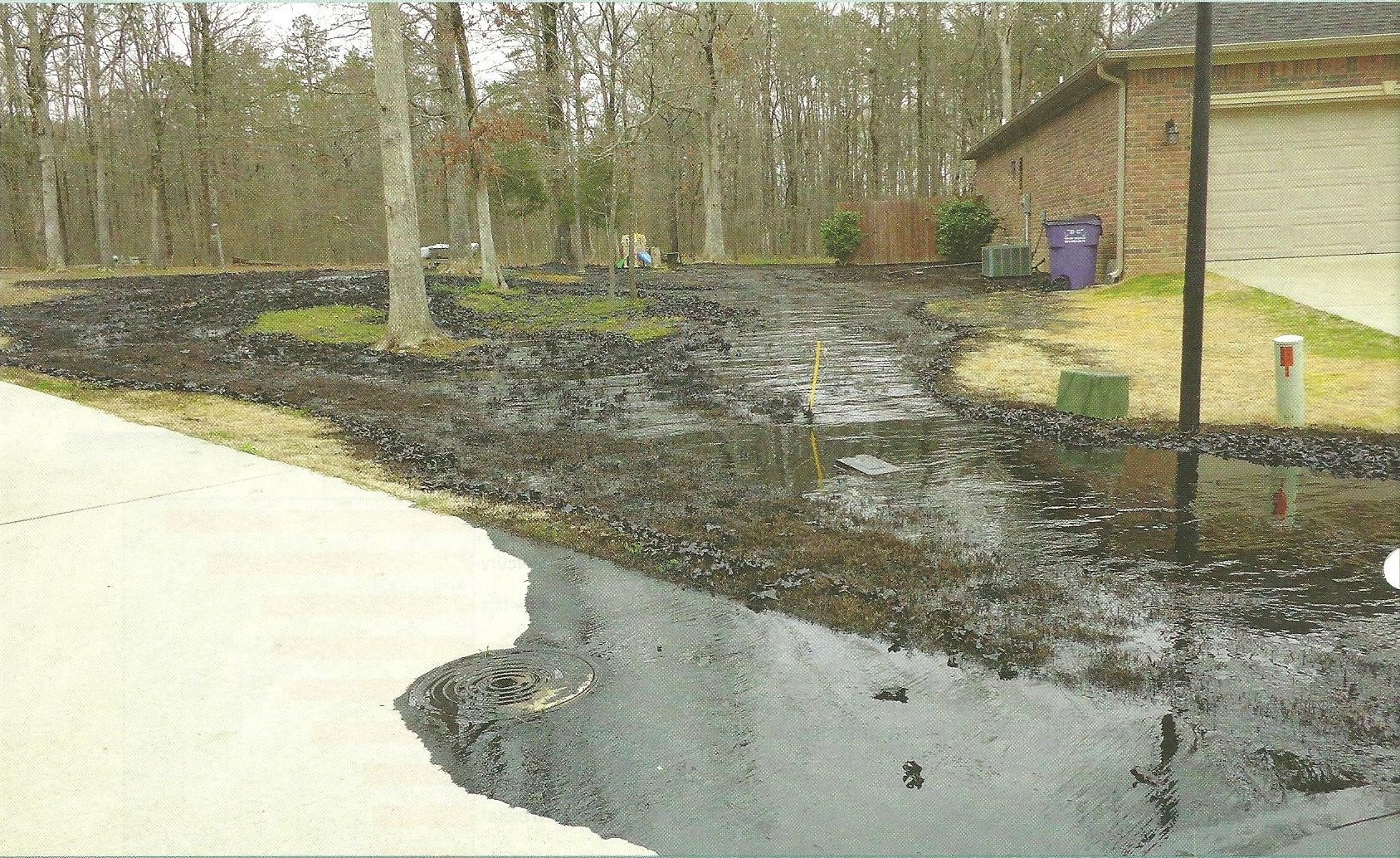
The picture above was scanned from a textbook I have entitled: Environmental Science: A Global Concern, 13th Edition by William P. and Mary Ann Cunningham. It shows what happened in 2013 when the Pegasus pipeline ruptured across yards in Mayflower, Arkansas. This is from tar sands, rather than oil shale, but both resources present a greater hazard to our environment than conventional oil drilling (Herro; McDermott). Imagine what it would be like to wake up one morning to find your yard flooded with this smelly, viscous lake of poison. These homes are forever lost, homes where people lived and loved and laughed. People who lost everything that they’ve worked for in life due to our greed and selfishness. Only a fool would trust that this ground, and the water within it, could one day be safe enough to live on/near, the water safe enough to drink again. And what of the beloved pets who also made their homes in this area? Or the wildlife? This is not just birds and squirrels and chipmunks, though they love life, too. Our soil and water are both teaming with life–microscopic life that plays a huge role in cleaning, rejuvenating and aerating our natural resources. What are the chances any of these organisms survived this spill? And, sadly, as water and soil both move, this spill is not contained to this one area in Arkansas. Neighboring towns got to share the wealth. So will mining oil sands and/or shale really be a way to cheaper fuel prices?

And, as I type this, I am reminded of the opening song to the old sitcom, The Beverly Hillbillies: “Come listen to my story about a man named Jed, a poor mountaineer barely kept his family fed, and then one day he was shooting at some food, and up through the ground came a bubbling crude. Oil that is, black gold, Texas tea.” (Flatt & Scruggs) For many of our political leaders, this is the real motivation behind wanting to mine these oil sands and shales–they see the money and power behind it. But they, too, if we allow our vote to allow the progression of this mining campaign, will also feel the effects of these “accidents” in time. I can only hope that whoever is elected to office tomorrow will realize this while there is still time.

May God bless you & keep you!

Works Cited

American Rivers. “Colorado’s White River Among America’s Most Endangered Rivers of 2014”. 9 April 2014. Web. Retrieved from: http://www.americanrivers.org/conservation-resource/colorados-white-river-aong-americas-endangered-rivers-2014.

Cunningham, William P. and Mary Ann Cunningham. Environmental Science: A Global Concern, 13th Edition. McGraw-Hill, New York: 2015.

Flatt, Lester and Earl Scruggs. “The Ballad of Jed Clampett” 26 November 1962. Web. Lyrics retrieved from: https://www.quora.com/What-are-the-lyrics-for-the-Beverly-Hillbilly-theme-song

Herro, Alana. “Plenty of Shale, Plenty of Problems”. Eye on Earth, Worldwatch Institute. Web. Retrieved from: http://www.worldwatch.org/node/5167

McDermott, Mat. “Fossil Fools Gold: Tar Sands & Oil Shale Eco-Impact Explained”. Treehugger. Web. 12 October 2010. Retrieved from: http://www.treehugger.com/clean-technology-fossil-fools-gold-tar-sands-oil-shale-eco-impact-explained.html

Strip Mining. Photo. Earthjustice. Retrieved from: earthjustice.org/slideshow/images-of-mountaintop-removal-mining.

The Living Bible, Self-Help Edition. Tyndale House Publishers, Illinois: 1971.

Animal Rights, Animals, Environment, Faith, Friendship, Healing, Herbs, Holistic Health, Homesteading, Politics, Prayer, Religion, Spirituality

The Introduction Continues…

I got broad-sided in my last post as I hit on one of my passions–feeding the hungry and feeding them well. But also, taking away the opportunity to “sponge” off of our government and the kindnesses of others. There are too many who abuse our system but the answer is a difficult one. Too often we find adults taking that advantage but, if you took away the benefit they are abusing, it is the innocent children who pay for it later on. And that is the dilemma our federal and local governments have wrestled with for time in memorium.

The environment is another big issue I could go on about ad nauseum. We damage our planet greatly by our dependence on fossil fuels; the use of chemical fertilizers, pesticides, herbicides and household cleaners; the use of lawn treatments such as Scotsgard and TruGreen (Sp?); our over-consumption of electricity and water waste. Then there is the over-use of convenience foods and convenience items such as plastic cutlery and TV dinners that not only harms our rivers and streams but also our bodies. I read in Cunningham’s “Environmental Science: A Global Concern” that by 2020 there will not be enough fresh drinking water for everyone–even in the United States!  2020. That’s just 4 years’ away.  How scary is that?  Ironically, a major culprit in the contamination of our water is the plastic, single-serving bottle through which our water is sold on most supermarket shelves.  It actually takes the equivalent of 5 bottles of water (or 60 oz if the bottle is a 12 oz) to produce one of those plastic bottles. And, once created, the water used to make it is unfit for consumption.  Not only is it a waste of money–there is usually nothing worse coming out of our taps, and bottled water companies likely get it out of a tap somewhere else–it is a waste of life’s most precious resource.  As a holistic health care practitioner, I am grateful to see so many people adding more water to their daily intake but a reusable travel mug would work just as well, save tons of money each year, and millions of gallons of clean drinking water.

Another environmental hazard today is the K-cup coffee machine. Mom and I figured it out one day. We took the large metal canister of coffee she buys at the supermarket for $5 and change, which lasts her a full month of 4 cup pots of coffee each morning, and divided the sticker price by, roughly, 120 cups (30 days X 4 cups) and came up with .05 cents per cup of coffee. Then we divided the sticker price of a box of K-cups by 20, which is the average number of cups in a package, and came up with .75 cents per cup so, by making coffee the old-fashioned way, you save .70 cents per cup. When you factor in the plastic K-cups themselves and how much water is contaminated to make them, the aluminum covers–aluminum has to be mined out of the earth and creates more water and soil pollution than I care to speak about in polite company–and the likelihood of having to replace the K-cup machines more frequently than the standard drip coffee maker due to our modern society’s obsession with the latest technologies and, the only thing I can ask is, does any of this make sense from either an economical or environmental perspective?

And, yes, this is obviously a pet peeve of mine. I have many others. As an herbalist, the list of side effects from modern pharmaceutical drugs is frightening. Oftentimes, the side effects are worse than the malady the drug is supposed to control (Note I said “control” not “cure”). There was one in particular that has always stuck with me. Sadly, I cannot remember the name of the drug but only its use for treating headaches. One of the side effects was “gas with an oily discharge”. Eeew! I think I’d rather deal with the headaches…or seek a different treatment, such as an herbal tea or a 20 minute nap or a modification of my diet. This is just my honest opinion, of course. I am not a licensed doctor so I am not asking anyone to do away with whatever he or she has prescribed. I am simply wondering how good for us these prescriptions really are. These are our bodies and, while I applaud the pharmaceutical industry for providing this information so we can make our own intelligent choices for our health, still, our health is ultimately our responsibility and we do have a choice in what goes into our bodies.

While I am on the pharmaceutical subject, another pet peeve of mine–actually, an issue that I am as passionate about as our environment–perhaps more so–is anti-vivisection. Vivisection is the use of animals to test drugs, household products, medical procedures, military weapons, and anything else science elects to experiment with this month. If these poor creatures could speak, would they choose to be the, um, well, guinea pigs (pardon the poorly-chosen pun) for these experiments? I doubt it. What makes their lives any less valuable? What makes it ‘okay’ to maim, poison, injure, infect or kill them simply because some members of our society view them as “lesser” life forms? And how accurate is the data from these animal experiments versus the comparison with human DNA? How many drugs get recalled after testing “safe” for animals because, when given to a human animal (yes, we are animals, too, not vegetables or minerals…) they cause serious side effects, even death? How many rabbits have to blinded before we can say this mascara is safe or we should avoid getting this bleach/pine cleaner, etc. into our eyes? How many goats must have their limbs blown off for us to understand how traumatic combat wounds are to our soldiers? And how many chimpanzees will be lost in space so that we can find another planet in our solar system (or a different solar system) to pollute beyond the capacity to support life? We say they are lesser life forms but it is Mankind that is often the true beast when such cruelty is so easily inflicted and justified for our own selfish gains. Again, there are other choices. And we can support those choices by electing to buy cruelty-free products and electing government officials who support both cruelty-free and eco-friendly practices.

If we could find a candidate who also has faith in God, what a blessing that would be. This one is a tough one because I have the utmost respect for other belief systems. I cannot, in clear conscience, “condemn’ or judge someone as “wrong” or “bad” because they worship Buddha or Goddess Diana or even Allah. Our beliefs are at our core. They are the foundation of our very lives (unless, of course, we are talking about atheism but even that tends to be deeply rooted). However, here in the United States, our very culture is being stripped away as our First Amendment right to freedom of religion seems to include every other religion EXCEPT Christianity. If I pray openly in school, I am at risk of being expelled. If I pray openly in a public place, well, I may not be arrested yet but I may be asked to leave if it makes the other patrons uncomfortable. Why? Does it remind you that you have forgotten Him, whatever name you attribute to your Higher Power? Government buildings can no longer have pictures, slogans, etc. that reverence our Christian God though He is the foundation for this government. And, yes, before we go further, I am one of the First Americans, with my Narragansett and Mohawk heritage, and well aware that Christianity is not truly the first religion practiced here on these shores. I cannot change what my European ancestors did when they took over this land but would it make sense to allow history to repeat itself so that yet another culture is all but destroyed? And, I believe in my heart, that losing Him, hiding Him, removing Him from the foundation of our government is why we see so many without work, losing their homes, and we see so much violence in every form. Yes, Christians have committed some bloody acts in history, too. But, without faith, there is no balance, there is no compass point to keep us straight and true. And, while it is often the actions of Christians–especially Christian officials–that turn people away from Him, we should remind ourselves that priests, pastors, ministers, Jesuits, etc. are merely human beings. They are not God. Though most of them sacrifice everything they have to follow Him and to lead others to Him, they, too, are subject to all of the human failings and, while it may be difficult to do so, it would be wise to remember this lest our faith be shattered by those human failings. Faith in God, not in priest, pastor or otherwise. As for those individuals who share different beliefs but still come to these shores? Our First Amendment welcomes you and invites you to stay true to your beliefs but it does not give you the right to take away mine, to tell me or my government that we cannot print “In God We Trust” on our American dollar or place a manger scene on the lawn of our town hall. Instead of protesting, petition this same government to include symbols of your beliefs on the front lawn during your important holiday celebrations. I will not be offended to see, for example, a Menorah during Hanukkah or, for 2016, pictures of monkeys to commemorate the Year of the Monkey for the 2016 Chinese New Year. In fact, I welcome these sights as they provide the opportunities to learn more about you, my new neighbor. And, perhaps, if I greet you with such love and respect, you won’t feel as threatened by my God when I share Him with you as well.

God bless you & keep you!