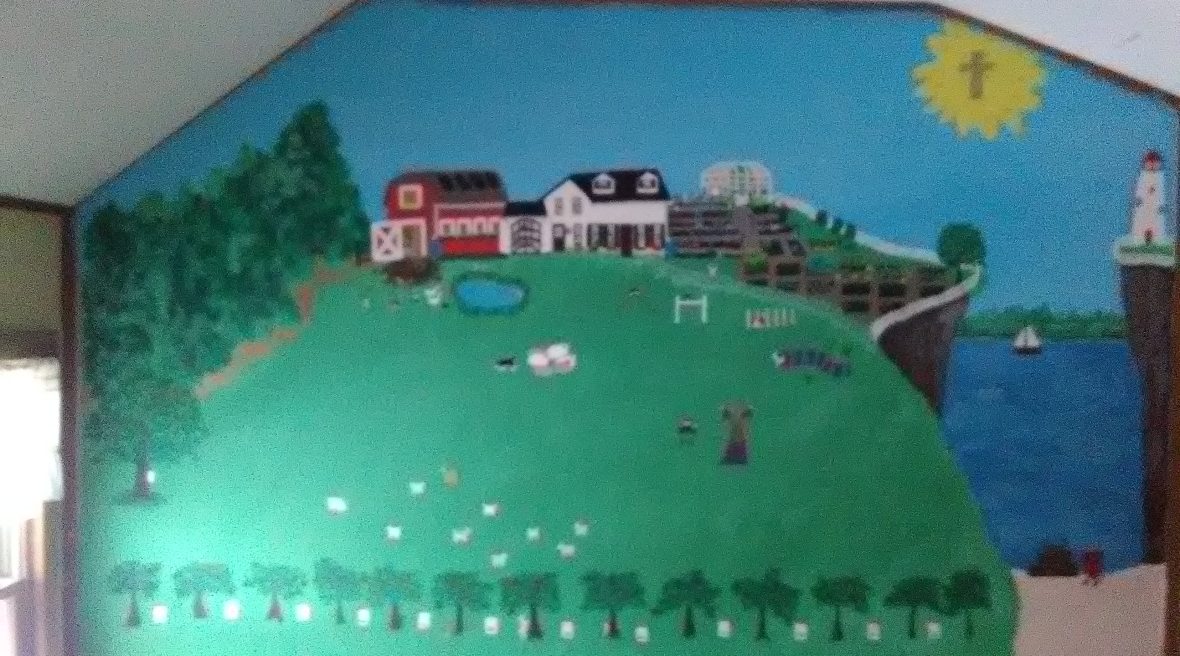
So what is homesteading? The Merriam-Webster dictionary defines a homestead as “the home and adjoining land occupied by a family” and a homesteader as “one who acquires a tract of land from U.S. public lands by filing a record and living on and cultivating the tract” (Merriam-Webster, 1974 edition). These definitions are pretty broad and kindle reminisces of the myriad Homestead Acts enacted by the U.S. Federal Government that have been popularized by such literary works as the “Little House” series of books by Laura Ingalls Wilder (1932-1943), which later became a television series starring Michael Landon on NBC from 1974 through 1982; the Great Plains trilogy by Willa Cather (1913-1918), which has also been made into several movie adaptations, and James Michener’s “Centennial” (Michener, 1974), which became a miniseries that ran on NBC from October 1978 through February 1979.
The first of those homesteading acts was The Homestead Act of 1862 signed by President Abraham Lincoln. Anyone who had not taken up arms against the US, was at least 21 years of age or the head of the family, could file for a land claim of 160 acres. They had to build a house and live on that land for 5 years, improving and cultivating it before receiving title. The Federal Land Policy and Management Act of 1976 ended all homestead acts (Wikipedia, 2014). So much for history but what about today?
The most popular view of homesteading today seems to be all about growing your own food. With all of the additives and preservatives (half of which we cannot pronounce); artificial colorings and sweeteners; chemical pesticides, fertilizers and herbicides that are used on our crops; and the myriad antibiotics and growth hormones that lace our dairy and meat products, it is little wonder that so many people are looking to raise their own food. Of course, with this attitude, we still look at that 160 acres of land to achieve this end. Many do not consider that a family can grow enough food to sustain themselves throughout the year on less than one-fifth of an acre. Today’s modern homesteads are often quite small. They are often referred to as micro-farms or hobby farms but they get the job done, teeming with life, energy and productivity.
How can anyone grow enough food on less than an acre of land? By using a combination of time-honored practices such as crop rotation, composting and companion planting with alternative methods of farming such as Square Foot Gardening (Bartholomew, 2005), lasagna or instant gardening (the layering of cardboard, newspaper, kitchen waste, grass clippings, leaves and/or dried manure/compost on top of a section of land without rototilling, which damages the soil) and vermicomposting (using earthworms to create worm “tea”, liquid worm castings). Heirloom and organic varieties of fruits, vegetables and herbs are generally used and preferred, and seed saving for the next season’s harvest, instead of Monsanto’s Franken-seeds, is a common practice. The time-honored practices of canning and preserving, drying, freezing, fermentation and root cellaring are also employed so that this healthier harvest can be enjoyed throughout the winter months when the growing season virtually ends for all but the most southerly states. For many this is the sole extent of homesteading. For many we could add the raising of chickens, ducks, quail and/or geese for their eggs and, along with other small livestock (where permitted by zoning laws and regulations), for meat and/or dairy, and bees for their honey. But this is just one definition.
Besides the growing concerns for what is in our foods, people are equally concerned about our environment. Alternative energies such as wind and solar are becoming popular. Though the initial installation is often quite expensive, these systems help pay for themselves over time. There are many who consider the expense irrelevant when compared to the harm that fossil fuels and nuclear power contribute to our planet. There are also many new “green” energy suppliers that will provide your energy needs via a wind farm and through the local grid, i.e. you still receive your service through your local utility company, and a bill, but your supply portion of the bill comes through them. Others install solar panels on your roof, usually free of charge, but you pay a nominal fee each month for the service. This is actually a very convenient alternative to investing in and installing a photo-voltaic solar system, which can cost as much as $70K, almost half the cost of one’s mortgage. To cut down on that energy usage, despite the source being alternative, many homesteaders–like myself–will also use power strips for our electronic devices that we can switch off when not in use to decrease the “ghost” load; candles and/or oil lamps for lighting; hand-held/operated appliances (whenever possible) and investing in Energy Star appliances as the old ones burn out. Alternative approaches to heating/cooling the home are also employed: acclimating; wood stoves that use dead fall and/or bio-bricks instead of deforestation; pellet stoves, and propane (though a fossil fuel it is cleaner than wood, which produces a lot of carbon).
Another area that impacts our carbon footprint is cleaning supplies. The amount of chemical waste that gets dumped into our soil and into our waterways from household cleaning agents is frightening at best! Chlorine bleach can actually cause a person to become asthmatic. For those of us who are already asthmatic, the smell of this common cleaner screams torture at us. It is not a matter of “if” I will have an asthma attack around bleach, but “when” and how severe. And yet, I have been known to use it myself on occasion–despite my commitment to using more natural products like baking soda, vinegar (both white and apple cider), lemon, cornstarch and castile soap. I try to keep it to a bare minimum and I am constantly searching for alternatives to disinfect–especially when an illness hits the household, not wanting to further upset the upper respiratory tract by using harsh chemicals. Frugality, as much as concern for the planet and my fellow creatures who inhabit it, is an additional driving force behind the use of natural cleaning agents–I can clean my home much more inexpensively with baking soda and vinegar than I can with expensive chemicals.
Frugality goes hand-in-hand with homesteading. Its that old expression of Recycle, Re-Purpose, Use It Up or Do Without. Do it yourself also falls into this category–whenever and wherever possible. I am neither a plumber, mechanic or electrician so, when something falls into these areas of expertise, I leave it to the pros. This is actually a frugal approach as I might cause a more expensive repair trying to do something of which I know so little. I can learn, of course, but experimentation can be costly–especially without the proper tools. Again, I leave it to the pros! However, there are other homesteaders who either have experience in these areas or else possess more confidence in their ability to replace a damaged muffler or rusted out water tank. More power to you! I experiment in the kitchen, in the garden, with sewing and various other handcrafts; that’s enough experimenting–for the moment, at least. And I am always searching for ways to recycle or re-purpose.
These are just some of the areas that encompass homesteading. There are as many reasons for homesteading–and as many ways or methods of homesteading–as there are homesteaders. There are people in inner-city flats growing and canning tomatoes from a few containers on a back porch; they grow herbs in containers and dry them; they comb farmers’ markets or take advantage of produce sales at the local grocery store and can or freeze what they cannot use immediately; they knit; they sew; they do carpentry work. No acreage at all but they are still homesteading with what they have. You don’t need a huge amount of acreage; just the willingness to keep striving towards that reason you started in the first place. Homesteading is a state of mind, not just dreaming but doing. It is an ongoing process, a journey that is far more pleasing and satisfying to the heart, mind and soul than the end goal.
God bless you & keep you!
Author: Lisa Burbank
Writer, minister, animal rights' and environmental activist, herbalist, homesteader and prepper.
Challenges
This past year has been one of great challenges. When I look back at all that has happened, I am amazed to be sitting here blogging again, still under the same roof, surrounded by my 4-legged menagerie of furry friends. Over the past couple of weeks I have been re-reading previous posts, deleting some that I wasn’t happy with–primarily those that sounded more like my personal journal or a few that ruminated over the dramatics of a brief and, hopefully, soon forgotten “relationship”; the latter is definitely not one of my strong suits. But I digress. This blog is about homesteading, a single woman homesteading in rural-Connecticut on just under an acre of land.
The challenges of this past year? For starters, a year ago I was facing foreclosure, terrified I was going to lose everything that I have worked so hard for in my life and, more importantly, the myriad creatures who share this home with me and make it all worthwhile. For me, it is all about the animals; it always has been. One of the biggest goals of this homestead is to provide a safe haven for unwanted and/or abused pets and small livestock (as many as I can adequately care for), and a wildlife sanctuary where all manner of wild creatures may find a safe place free from the threat of hunting or urban encroachment. The latter part I have only a limited amount of control over; I live in the commercial district with grandfathered use. Traffic grows ever thicker due to the recent opening of yet another Walmart store. Normally, I am not as opposed to Walmart as most people are. I understand their less than stellar practices but, another side of me is the self-proclaimed tightwad who is always looking for a bargain. I do not find Walmart to be cheaper on all things and, even some of those items that are cheaper at Walmart have a less than stellar quality, but I am not hosting viewings of “Walmart, the Movie” in protest of the chain. We did protest this Walmart, as it abuts a very important wetlands, but failed. And, unfortunately, this particular Walmart falls short of even, well, Walmart standards being poorly-lit, disorganized and inadequately stocked. The heavy traffic, however, affects the homestead in higher carbon emissions, noise pollution and, being a homestead where passersby see myriad animals in the yard, it is the recipient of unwanted pets. Yes, I know I said earlier that taking in unwanted pets is a large part of what this homestead is about but, where I am going with this statement is that people simply leave their pets on the doorstep and I have Suicide 6 just beyond the front yard; rare the animal, especially cats, that hasn’t lost its poor life to Route 6 before I can befriend it enough to bring it safely indoors. It is heartbreaking! The latest was a pair of orange tabbies. One of them lost its life in early-February during a snowstorm. The dreaded thump-thump as he/she met their end awakened me at 5 am-ish. By the time I was up, dressed, etc., the plows and early morning commuters had eradicated any distinguishing features. The ground was so frozen I would not have been able to bury him/her anyway. That same evening after he was struck down I heard a “meow” outside my kitchen window. This is how I discovered there were two orange tabbies. The second one is still surviving. I have been putting food outside and was actually able to pet this one but he/she scurried away when I tried to pick them up to get them inside where the threat of traffic and also predation, as my backyard butts up against a shallow forest that sees all manner of wild creatures, would disappear.
Another challenge this year has been the loss of my stepfather and the soon-to-be addition of a roommate–my mother! While I am saddened by the loss, it has not been unexpected as he was given less than a year to live last November. They were both supposed to come to live with me last fall but his doctor felt traveling would not be in his best interest (they live in Missouri) as he was on oxygen almost 24/7. With his passing, however, Mom is ready to travel, to come home. She is planning a trip to Tennessee to visit my brother and sister-in-law, Shaun and Stefanie, and her two granddaughters, Leah and Zoey, first and then she, the dog and the cat will come here. I am ecstatic; it has been many years since I have seen my mother as homesteading alone with livestock and pets to care for makes travel very limited, if at all. Having her here will be a blessing…and a challenge!
A blessing because I love my Mom and I have missed her over the years that she has been away. Also, she has quite the green thumb and it will be fun having someone to play in the garden with. She is the creative type; I am sure we will have some great times crafting, going to yard sales and flea markets, antiquing, plant nurseries and various other endeavors. But the challenge will be getting her onboard with this whole homesteading concept. It is not just green living, as she calls it, but deep green living; it may be a culture-shock for her. There will be an adjustment period for both of us as we re-learn each other’s ways but I am confident we are both equal to it. For myself, it will mean being a little more flexible. The homestead will no longer be cable-less; Mom has certain TV shows that she loves. And that’s okay because, as a family, and in today’s challenging economy, families can and should be pulling together as a unit for survival. Aunt Sandy may become another roommate in the not-so-distant future so the homestead will be growing; energy usage and modern accoutrements will also be a growing facet of the homestead. Eventually, not the total abolishment of modern accoutrements but the alternative energies to power them. I have already taken the first step in becoming both a customer and a representative of North American Power. At present, I am only using 25% green energy; once my introductory period is over, I am switching to 100% green energy with that energy coming from the wind farm in New Jersey from where NAP gets their supply.
One of those re-learning adjustments will be in personal habits. I am the OCD/OCPD person; everything has its place. Mom has multiple “junk” drawers as she calls them. Of course, I say this about myself of having everything in its place but, last year’s foreclosure threat brought about a depression so deep that I lost interest in all but the bare essentials. The homestead has been sadly neglected. The animals are hale and hearty but the grounds and the house itself are dusty, disorganized and I am scrambling to straighten it out, to get its appearance back as comfortable and cozy for Mom’s arrival. I am also struggling to make room for Mom’s things as she will be bringing some furnishings and special treasures of her own.
However, probably the biggest challenge with having Mom as a roommate will be the constant “battle” to not be reduced to a child again; nearly impossible as I am her child even if I am close to 50 years old. She’s been having kittens over my becoming a full-time (online anyway) student again plus the homestead, freelancing, two businesses to grow (NAP and my holistic practice with Dr. Tobin, DC), 5 additional classes with the local library, volunteering in the Folk Group at church and at a local, living history museum and working off-site at the dealership. She wants me to slow down. I am trying to figure out if, once I complete the 5 additional classes, can I handle another degree program with Everglades University in receiving my ND (Naturopath Doctor)? I am currently enrolled in a Bachelor of Arts in Christian Studies with an Emphasis on Biblical Studies with Grand Canyon University. The work load has been a little overwhelming at times but I made a promise and I intend to honor it as well as I am able.
This was the miracle that saved the homestead. I did what we all do in times of crisis–I wheeled and dealed with God. I wasn’t sure how I would pay for it, or find the time for the studies (He would have to take care of those details for me) but, if He would save the home from foreclosure and, most importantly, my animals from suddenly being homeless and the agony it would bring me from being parted from them, I would become the best minister that I could for Him. In November, I received Emergency Mortgage Assistance, full benefits at a time when this is becoming as rare as flying goats. Even the mediator at the courthouse said this was nothing short of a miracle. Granted, in 5 years, I will have to pay it back as it is a loan but I also intend to put this time to good use, to be more productive and grow my businesses, my writing career and the homestead so that Mom and I can live comfortably throughout the autumn and winter of our lives. I intend to live up to my part of the bargain with the Lord but, I confess, there have been plenty of weak moments when I am ready to walk away and quit. Last week saw one of the lowest points ever but, after turning the matter over to Him, my confidence was bolstered and I am happy and confident again. If I am going to be that minister, then I am going to have to learn discipline and better time management skills; GCU has certainly been helpful in these areas. One of our first lessons was in time management. This is one lesson that went straight to the heart and, by taking it step by step, I am finding ways to incorporate those time management lessons into my daily life as well as my college life.
Homesteading has been a lifelong dream of mine. I am still trying to do it all at once; I am learning through trial and error, and higher education that each goal has to be taken in increments so that the skills are learned and stay part of you for life. This is a lesson worth learning. And Mom will understand.
God bless you and keep you!
Homemade: Virtues and Learning Curves
There is something to be said about “homemade” anything: the hand-knitted scarf; the hooked rug; the hand-carved spoons and utensils. The time and effort that someone put into these crafts make them very special gifts. With each one, they have put a bit of themselves into the item, a bit of their love and care for you, and it is really difficult to measure that in dollars and cents. For the crafter, there is the added value of confidence. With each new skill or craft that you develop, your confidence grows. You feel stronger, invigorated. That, too, cannot be measured in dollars and cents. However, hand-crafted or homemade items generally tend to last longer and, because most of us can appreciate the time and skill required to make them–whether we were the crafter or a loved one was–we tend to take better care of them. They are one of a kind. They are indisposable. Even if we secretly hate the scarf that Great-Auntie Millie knitted for us, there is very little possibility that that scarf will wind up in a landfill and that’s a blessing in itself; we have become too disposable a society. And the cost of environmental deterioration–and even municipal trash removal–can be measured in dollars and cents but that is not the most important consideration here. (Did I say that?)
When it comes to homemade food, there is also the taste factor. Homemade almost always tastes better than store-bought. It’s usually cheaper, too. While the initial ingredients may cost you more upfront, many times you already have most of those ingredients in your cupboard or, even if you don’t, you’re not going to use a whole 5 lb. bag of flour to make one batch of cookies. So you have that flour for a second batch…and a third…and often one “batch” of chocolate chip cookies equals 2 bags of Chips Ahoy or Keebler. When you break down the amount of each ingredient you use to make those cookies, the cost becomes a lot less.
I’m a fanatic about frugality. These trying, economic times have necessitated it to the extreme but, even before the housing market crash and this 21st century economic depression, frugality has been a necessity for a single person trying to stay afloat and have something of a life. My philosophy is that the more I save on the essentials, the more I have for the little perks that come along and make life more interesting. But I’m finding that even for the “perks” I’m weighing more carefully everything I spend. For example, two weeks ago I stopped at Burger King on my way home from the laundromat and purchased a veggie burger, large order of onion rings and a medium order of french fries. The bill came to $7 and change. The fanatic kicked in as I was eating it and, the next time I went to the grocery store, I had a list of everything that went into that purchased meal: Morning Star garden burgers (as this is the brand that Burger King sells), hamburger buns, condiments, onions, tomatoes, lettuce, onion rings and french fries and noted the cost of each item on my list, the serving size and the number of servings per container…and divided the price by the number of servings to get the individual cost. The cost of that drive-up meal was more than double what it would have cost me to make this meal at home using name brands; the savings becomes even more significant if, like me, you use store brands or even opt to make the onion rings and fries from scratch. It is not that I will never buy a drive-thru dinner again but, when I do order take out, I am doing so now knowing exactly what my cost really is…even without the health concerns as I probably would’ve baked the fries and onion rings rather than deep frying them! And that’s another positive factor of homemade: knowing what is in your food and having the control over how it is made as that can make a big difference in the nutritional value. It’s like that Breyer’s ice cream commercial where the little girl is trying to pronounce the names of the preservatives in the competitors’ brands. I would much rather look at my plate and say: eggs, cheese, spinach than have to tack on “Monosodium Glutamate”, “High Fructose Corn Syrup” and/or “Maltodextrin” (and those are some of the easier ones!).
With that in mind, I am experiencing the thrill of having tackled something new again in the kitchen: homemade marshmallows. Store-bought marshmallows are loaded with all the “bad” stuff, especially High Fructose Corn Syrup (HFCS), which is a major contributor to so many health problems in America today: Irritable Bowel Syndrome (IBS), Chronic Fatigue Syndrome (CFS), Fibromyalgia, Crohn’s Disease, Chronic Epstein-Barr, Type II Diabetes. The list could go on. Anything which has HFCS in the ingredients has the potential to excerbate these and other conditions. I have IBS, CFS and Chronic Epstein-Barr so I write this from experience…and the extensive research I have done in regard. I’m a bit of a fanatic where prescription medications are concerned, too, so I refuse to take anything for any of these conditions, preferring to monitor and modify my diet instead. This is the reason for the extensive research because despite being very careful to follow my physician’s list of “do not eat” items like caffeine, red meat and chocolate (which has caffeine), I was still suffering from frequent bouts of these auto-immune diseases. When I found the link between auto-immune diseases and HFCS–and decided to cut it out of my life as much as possible, if not altogether–I found that my bouts became less. And less severe.
I became a vegetarian in 1998 after a severe attack of Irritable Bowel Syndrome that sent me to the local emergency room for 13 hours, doubled over in pain, being poked and prodded and tested into oblivion only to find that the decaffeinated iced coffee I was drinking each morning had triggered this attack. I thought I was playing it safe because it was decaf but the trace amounts of caffeine that still exist in decaffeinated beverages had built up over time and, after 2 days of intense diarrhea, my intestines suddenly swelled almost completely shut. I still had the cramping, still needed to go to the bathroom, but I couldn’t pass anything. Later, after it all eased up and my intestines returned to “normal”, I began researching how to keep this from happening again. I was also borderline Crohn’s Disease; by becoming a vegetarian, I actually reversed this situation and Crohn’s Disease is no longer an immediate factor at least.
People ask me how I could’ve given up meat of any kind. That part was easy. I thought of my love of animals and the fact that what I was eating was actually someone’s flesh; it was enough to kill any real appetite for it though, I confess, I have added some fish back into my diet due to having iron-poor blood. Salmon, especially, is one of the richest sources of vitamin B-12 available and, though I know it is still the flesh of an animal of the sea, there were two factors that helped negate this sensitivity: 1. my faith and the Bible stories of Jesus feeding thousands with fish and 2. having watched two pet tropical fishes giving birth to hundreds of guppies all at one time and these new mothers opening their mouths and eating most of their offspring themselves! I may love the animals and even the fishes, too, but I cannot save the world. And fish is a lot easier for me to digest than beef, swine or even poultry.
Amazingly, the toughest thing to avoid has been chocolate. I am human in this. I love chocolate…especially hot chocolate. But Swiss Miss, Nestle and all the other commercial brands of hot chocolate mixes all contain High Fructose Corn Syrup. And, even knowing this, I cheat. I buy boxes of Swiss Miss and enjoy a cup now and again. And I pay for it by either being constipated and grumpy, or having loose and intense bowel movements…and still being grumpy…for the next couple of days. After reading countless articles about HFCS and its effects on Irritable Bowel Syndrome, I started looking for a brands of chocolate–both hot chocolate and chocolate candy bars–that did not contain HFCS. The only ones I found were the organic brands. And there I only found organic cocoa. I bought a tin of it and found, to my delight and surprise, that a cup of organic cocoa did not trigger an attack of IBS like the more commercial brands did. I keep it to a minimum, only enjoying a cup infrequently, and I seem to do okay. It’s nice to be able to enjoy this lovely taste again. But organic cocoa doesn’t come with those lovely mini-marshmallows in it (eh, I want it all…). And, while I can sometimes find organic marshmallows in the local health food store, the frugal fanatic kicks in. Organic cocoa costs more per tin than a box of Swiss Miss. If I factor in the additional price of organic marshmallows, well, that frugal fanatic just can’t justify it. Is it really that important? I’m guessing, to some degree, it has been as I’m still cheating with Swiss Miss hot chocolate w/ mini-marshmallows from time to time…
And then I found a new book entitled “The Homemade Pantry” by Alana Chernila listed in my book club. The advertisement extolled the virtues of this new cookbook as having recipes to make your own marshmallows, Oreo cookies and various other “treats” and condiments for a lot less $$ at home. Being unemployed and, again, a frugalist, I struggled with the expense of buying a new book right now but I had racked up a considerable amount of points with my book club from past purchases and they were offering a special that, if you bought two books right now, they would take an additional $5 off the price. All total, with my points’ savings and the additional $5 off, I purchased “The Homemade Pantry” and another book that I’d been ogling for only $16.00 + s/h; they would’ve been $42.00 + s/h at regular price so I “splurged”. And last night I made homemade marshmallows…
The recipe is simple but I won’t infringe on Ms. Chernila’s copyright by copying it here. I can tell you the ingredients were easy to find: corn syrup (not High Fructose and definitely NOT the same animal at all…), water, plain gelatin, vanilla extract (and there’s even a recipe for that in the book…), sugar…and approximately 15 minutes of my time making them. That is key whenever you buy a new cookbook. If you can’t readily find the ingredients at your local grocery store and you likely won’t use them again for anything but the recipe you’re trying to make, it’s really cost prohibitive despite being homemade (especially if you find you hate the recipe after making it and vow never to make it again!). Homemade should be simple and inexpensive as well as being wholesome and healthier for you. As for the prep time with this recipe, I probably could’ve cut that time a little shorter as my mix started to turn white, shiny and thicker in about 8 minutes of mixing. As a result, though they taste wonderful–like no other marshmallows I have ever had before–they are not exactly uniform in shape. The extended mixing, because I wanted to follow the 10 – 15 minutes of mixing time she advocated, made them impossible to spread in a pan later on so they are quite lumpy instead of the round, smooth, cylindrical shape of commercial marshmallows.
Either way, they will serve up fine in a cup of organic cocoa tonight. And that is where the thrill comes in…and the whole point of making them in the first place.
God bless you & keep you!
Unexpected Eyes…
When I think of predation on the not-so-urban homestead here in New England, things like hawks, coyotes and bobcats come to mind but certainly nothing bigger than that and Bear, my lovable, slobbery St. Bernard, has proven to be quite the hunter despite his “rescue dog” image so it hasn’t been the big concern for me that it has been for so many others. Possums, skunks and even raccoons have all fallen prey to Bear’s prowess as a hunter whenever they’ve made the mistake of venturing into the backyard bent on raiding the chicken coop. With three foot sections of chicken wire now attached to the bottom of the fence and buried underground, even those marauders are seldom seen. The only continuing threat is still the hawks but, fortunately, I’ve only lost 1 chicken in 3 years to these magnificent birds (and cried myself silly over poor Autumn, thinking how terribly frightened she must’ve been her last moments alive and hoping she died of heart failure or something before being picked apart…a gruesome thought…). However, this week has upset the peaceful complacency I’ve experienced up until now…
I spent most of this week and last petsitting. Though I started off doing this as a career move 2 years ago, it has proven to be a very sketchy form of income for the homestead and leaves me stretched too thin trying to care for my own menagerie of pets and somebody else’s critters so now I’ve all but given it up except for friends and family members. Reisa and Steve started off as petsitting clients but, over the years, I learned count them as friends, having found so much in common with them and knowing them to be warm and fun-loving people. They boarded their dogs but I went back and forth to their farm twice a day to take care of Pedro and Marianne, two lovely and lovable goats, and a flock of 17 chickens and 5 ducks–chickens at least so tame that they actually hunch their shoulder blades, begging to be petted.
I am seldom nervous caring for Reisa and Steve’s pets. Steve works in construction and there are so many motion-sensor lights set up that one toe stepped onto the property and the place lights up like a Christmas tree. Jack the Ripper would have a tough time lying in wait. But this week, I was extremely on edge.
The first night went badly. Marianne refused to come into the barn. I got there early but stayed until almost 11 p.m., toes numbed with cold and uttering a few choice words in my frustration with this silly goat. At one point, I decided to hunker down at an old table Reisa stores in the barn behind Steve’s motorcycle, hoping if Marianne didn’t see me, she might just mosey on into the barn with Pedro on her own. I sat there for over an hour–after which my leg got a cramp in it and my bladder was threatening to burst so I gave up, left my “hiding place” and found Marianne standing just outside the barn door. A little patience might’ve ended this charade a lot sooner. As it was, she took off on a run and I was there another hour. However, while I was waiting in the barn for her to decide to mosey in, several times I thought I heard something scratching or banging at the side door. I chalked it off to the wind but that was the first moment I felt some unease. It was strong enough that though I was thoroughly frozen in low-30’s temps and exhausted (I’m too old to chase recalcitrant goats around the barnyard…), I just couldn’t leave her out all night. Something kept telling me that this was the wrong thing to do though Reisa has often advised this on other nights when Marianne was being contrary. I was thinking coyotes; I was a little off from the mark. The rest of the week I tied Marianne out the same as Pedro and had no problems getting her inside. I’m thankful now that I did.
The rest of the week went off without a hitch except for the extremely nagging feeling that I was being watched. The wind storm that cropped up overnight that first evening left lawn furniture toppled into the woods behind the barn and a “welcome” mat flung almost into the neighbors’ yard. Other than that, nothing seemed amiss and the animals were fine. However, the hair on my head stood partially on end every night when I ventured into the barn to turn on the lights before leading the goats inside. I more than half expected Jack the Ripper to come popping out at me as soon as the lights were on and, as Marianne literally raced me for the barn door each night as soon as Pedro was inside, I was beginning to think there was another reason for her fear besides the almost-stranger who was caring for her. Each morning she was comfortable enough to allow me to scratch her; evenings she and Pedro both seemed more nervous than usual and couldn’t wait to get inside. I remember thinking more than once that I was definitely giving up this petsitting business; I couldn’t wait for the last of the chickens and ducks to migrate into the henhouse so I could leave. And I confess to taking an almost obsessive attitude about making sure the latch was secure on the henhouse before I left and the bolt on the goats’ stall also secured; I would check and re-check a couple of times before I left, something I seldom do knowing both shelters to be strong and well-built.
Mornings were just as compulsive. The morning after the wind storm, the latch on the henhouse had jiggled loose and the birds were all outside already when I drove in; I almost suffered an apoplexy though they were all present and accounted for and just as eager for breakfast as they are any morning. Usually Reisa leaves the barn door open during the day so the sun can warm the inside and any breeze air it out. Also, she has one chicken who leaves the confines of the coop (it is only partially covered with mesh…) to lay her eggs in the goat stall. For some reason, my last day of petsitting, I was obsessing about only leaving the barn door open enough for that chicken to get in and out and I was worried about the goats. I actually drove down the little cul-de-sac that Reisa’s home sits on the corner of and came back around a second time after tying out the goats to make sure they were both all right. They were but all day I was nervous about leaving them. I had a class that evening and was doubly nervous about leaving them out after dark as the class was not scheduled to end until 8 p.m. Thank God the class was cancelled!
Nothing happened that night. I got to Reisa’s early and hurriedly put the goats inside. I checked and re-checked the bolt on the door. I breathed a sigh of relief when the chickens and ducks went inside early. I spent some time with each bird telling them I loved them and that this might be “Auntie” Lisa’s last time petsitting them but I would never forget them. I did the same with the goats. I went home and worried about them, hearing again the rattle of the side door to the barn that I hoped was only the wind…
The next morning, though I knew Steve or Reisa would’ve contacted me if they’d been delayed coming home, I couldn’t shake the feeling of unease and drove by their house. Reisa was outside with the goats, chickens and ducks and all was well. I stopped to chat and I told her about being there all night the first night trying to get Marianne indoors and she told me about what she had sighted near her henhouse a few nights before she left on vacation–an Eastern catamount, a cougar! It probably migrated down from Maine or maybe even Canada. The eternal cynic in me thought, “Thanks for telling me now…!” She said she came home late one night from work and she caught it in the headlights. She was afraid to get out of the car. Later, she talked to friends and neighbors, and DEM (Department of Environmental Management) and they asked her to describe the cat she had seen; they confirmed after her description that it was, indeed, a catamount and that Connecticut has been having trouble with them in recent years.
Now, I don’t know about anyone else but when I think of cougars, I think of California and the Rocky Mountains. I think of all the stories of hikers coming up “missing” after running or walking in California parks. I also remember a friend of mine telling me about another catamount dragging off a couple of calves from his farm a few years back; I was heartbroken, having helped him bottle feed one of those calves when its mother rejected it but my friend, Robert, lives in farm country out in North Franklin, Connecticut not the suburban area of Plainfield; Brooklyn is less than 10 minutes away from Plainfield and I have my own flock of chickens and ducks. As she was telling me about it, I kept thinking of all the nights at Reisa’s feeling like I was being watched…
As I was leaving again, I looked out at Pedro and Marianne and then at the chickens and ducks whom Reisa had let loose from the coop. They were peacefully scratching and pecking about along the edge of the woods and I had this insane impulse to yell at her to get them inside. There was a nagging feeling that that peace was about to be shattered, the added worry about what I knew now was out there. Looking back, though it probably would’ve seemed silly and extreme, I wish I had yelled at her to get them all inside…
Reisa called me the following day all upset. The catamount came to visit again. She and Steve had gone to the feed store after supper. They had taken the precaution of putting Marianne and Pedro into the barn but there were still some hours of daylight left, and the chickens and ducks weren’t ready to migrate in. When they came home they found a bunch of feathers and a trail of blood; four chickens and one Pekin duck are missing, presumed dead, with one chicken actually being found a bloody mess in the barnyard. They thought they had lost their Mallard duck, too, but he showed up in the morning, a little shaken but in one piece. Reisa was devastated. Though it is a sad loss, a part of me felt a little relief that there is someone out there who is just as sensitive to even a chicken as I am; Reisa kept thinking how terrified those poor birds must’ve felt during those last moments on earth. I was thinking the same thing and agonizing along with her. If you have any heart at all, it’s impossible to share your world with any creature and not come to think of it as a member of the family, a loved one despite any “trouble” their daily care must bring. Worse, now that this cat has found a source of food at Reisa and Steve’s there is little doubt it will keep returning. I can’t imagine their worry and I, to some degree, share it as I love their animals almost as much as my own…and, being as Brooklyn is so close to Plainfield, I’m now on high-alert at this homestead hoping it never makes an appearance here.
What frightens me most though are the set of footprints found outside the goat barn and marks of digging by the side door. Now I wonder if it was really the wind at all rattling that door the night Marianne refused to come in. I wonder if her fear was born on the scent of this large, unknown threat. And I wonder if poor Marianne would’ve suffered a similar fate a week earlier had that nagging little fear not crept up on me and convinced me to stay–even if it meant staying all night–to make sure she was safely indoors. I wonder, too, if like so many hikers in California, would I have fallen prey to this big cat?
The Lord works in mysterious ways. I am grateful to Him for giving me that nagging little fear all week. Though this “knowing” has stolen over me at various times throughout my life and I have often lamented it, I am grateful for His gifts, always. If I hadn’t listened to it, Marianne might not be with us today. I am also grateful that He was watching me even more closely than the catamount…
God bless you and keep you!
Baby Steps
I often get dismayed and overwhelmed. I have that bad habit of comparing myself to others and seeing myself as falling short of the mark.
When I was in my teens and early-20’s, dreaming and working towards becoming a major rock star, I compared my guitar prowess to that of guitar legend George Lynch of Dokken/Lynch Mob fame and was dissatisfied. I compared my vocal prowess to heavy metal powerhouse Doro Pesch and lamented my “weak” voice. In more recent years, while singing Christmas carols in the church folk group, I was “reminded” that “The First Noel” was supposed to be a lullaby putting the baby Jesus peacefully to sleep in the manger while I was in danger of waking the dead with my “softer” voice. And my ex-husband’s nephew gave me the greatest compliment ever one day arguing with his mother about my guitar playing ability by insisting, “But, Mom, you haven’t heard Auntie Lisa play!” So this comparison to others is a little distorted but I’m my own worst enemy. I may not be seeking fame and fortune on VH-1 anymore but I still compare myself to others and believe I don’t measure up.
For example, I look at my little one-acre homestead in rural Connecticut and compare it to the Dervaes’ 1/5 acre homestead in the city of Pasadena, California. And I despair. It seems I will never get to that point of almost total self-sufficiency.
I’m not talking about the self-sufficiency lamented against in the Bible. I can do nothing without Christ Jesus and I purpose my little homestead to God, asking that He do good things with it and whatever I can accomplish there. But I am speaking of self-sufficiency in worldly affairs, in providing for the majority of my needs by living off of the land and off-grid. I am speaking about returning to a way of life that has all but been lost as modern technology and agribusiness have taken over and spoiled our food supply, our medicine and our health. I’ve come to the conclusion that the Amish have it right in a lot of ways: anything that comes between myself and God, I don’t need. And, no, I’m not planning on becoming Amish. I simply agree with their simpler way of life.
So here I am writing this blog with the intent of reminding myself of some key factors here. First of all, the Dervaes have been homesteading for over 20 years on that 1/5 of an acre. I have only been at it for about 3 years and there have been a lot of learning curves in that 3 years, which I’m sure the Dervaes encountered as well. Secondly, I am doing this alone. There are no other humans living with me (though there are a total of 41 animals sharing my homestead!). All of the chores associated with landscaping, gardening, animal husbandry, etc., are done by me or they’re not done at all. There are four family members working “Path to Freedom” together and the Dervaes work at home. I am forced to work away from home at a “day” job (which I hope to have by next Wednesday, praise God!) to keep up with the mortgage payments.
It is actually foolish of me to compare myself to folks who have been working at this for so long while I am still learning (though I’m sure everyday for the Dervaes is a learning experience, too…). And, by so doing, I have inadvertently made of them idols. I’m sure it’s not a role any of them would want and I ask their pardon for placing them in such a place. It’s also not a role my God would want me to place them in. And I am grateful to Him for showing me the areas in my life where I need to improve, especially as I enter the ministry.
Instead, it is time to take stock of what I have accomplished in such a short time.
One of the first steps in becoming self-sufficient is learning to pay down your debts and/or reduce your cost of living. In a way, though I was a frugal individual beforehand, unemployment has been a blessing in teaching my how to live–and live well–on much less. Having such a limited income, especially over the past year since unemployment insurance has been exhausted, has forced me to use some good, old-fashioned Yankee ingenuity.
How many people, living in a 7 room house that’s still entirely on-grid, can claim a monthly electric bill of only $56? Granted, it has gotten that low because I have been slowly unplugging everything. Yes, the refrigerator is still electric as is the range, toaster oven, bread machine, crock pot and food dehydrator. I also have a solar food dryer. And, as each appliance “burns” out, I have replaced it with something manual…even my blender has to be cranked! And most modern households would probably go nuts without cable, digital, satellite (i.e. no TV reception) or even Internet (I am writing this at the library where Internet is free). There is no microwave, no washer or dryer, no dishwasher…almost everything is done by hand or, in the case of some of the laundry, done in bulk at the laundromat once a month. There are little “secrets”, too. I do most of my baking–not just cookies or whatever but also casseroles–one day a week and freeze in single serving dishes my meals for the week. I take them out of the freezer a day in advance so they can defrost in the fridge then heat them up in a sauce pan or for just 20 minutes at a lower temp in the oven instead of the 55 minutes it took to cook it from scratch earlier that week. You see, if I plan and bake my meals all in one day, I can put more than one item in the oven at a time instead of heating it up for an hour each day for each meal. And, if it’s a smaller item, the toaster oven uses much less electricity than the range oven. I truly enjoy the challenge of constantly thinking up new ways to save money and cut corners.
Gardening on the cheap has actually been sort of fun. I’ve been combining Mel Bartholomew’s “Square Foot Gardening” method with Louise Riotte’s “Roses Love Garlic” and “Tomatoes Love Carrots”. My raised beds are 4′ x 8′ instead of 4′ x 4′ and I’ve only planted one bed so far but most of what I’ve planted is doing well (and, by Mel Bartholomew’s instructions, a 4′ x 8′ is equal to 2 beds in the square foot method…). The other beds are being primed as I call it. With 11 rabbits, 15 chickens, 4 ducks, 2 guinea pigs and a cockatiel there is never a shortage of fertilizer or mulch (dog and cat manure doesn’t break down safely enough to use in the garden and may actually burn your crops). Buying bags of peat moss, vermiculite and/or topsoil can be very expensive. Instead, I’m also using the lasagna gardening method and layering waste in each of the other beds. Each bed is currently a small composting center with lots of red wiggler worms turning that waste into black gold. I’m using the same method on the front lawn. The grass is slowly being covered over in exchange for several herb beds. Eventually, some vermiculite and topsoil will be purchased. But, by recycling manure, old bedding, hay/straw, kitchen scraps and grass clippings, I won’t need to purchase nearly as much of it.
What is important to remember here is that, when I’m tempted to compare myself to someone like the Dervaes’ family, it has taken them over 20 years to get to where they are with 4 pairs of hands helping to make shorter work of whatever the chore. But, even with those 4 pairs of hands, it’s even more important to remember that homesteading is both a process and a state of mind. I have the mind-set. And it is an on-going process.
In three years, I’ve established a strawberry patch that gives me a bountiful harvest each year, with each year seeing a larger yield than the previous year. Last year I made 7 pint jars of strawberry preserves; this year, I hope to make at least 10. What few herbs I’ve planted have been spreading and I hope to be able to thin them next year and sell the slips to folks who might be interested in them. Next year will also see a first harvest of rhubarb. For someone who had never raised chickens before, I have 13 healthy hens giving me at least a dozen eggs each day. I sell what I can’t use and save the money to purchase more chicken feed so it’s a nice little cycle.
Herbs are another area where I’m constantly learning and an integral part of my homestead. With the hot, humid weather upon us, any weeding or yard work is done in the early morning with the rest of the day indoors. It’s a perfect time to study and experiment with herbal remedies and home crafts. This week it was an anti-flea spray that, unfortunately, didn’t work (the first time one of Juliette de Baircli Levy’s remedies failed me…sigh!) against the fleas but I did find a wonderful new herbal air freshener. The combination of wormwood, southernwood and rosemary smells divine!
I get frustrated with these baby steps but I know, if I keep taking them, I’ll get to where I want to be. And I’ll have learned more by taking my time and planning it right than by pushing full steam ahead. Kind of like that little engine that could…
God bless you and keep you!
Another “Small” Miracle…
Perhaps it was because I hadn’t left to pick up the free weed whacker yet when I wrote the last post but there is another miracle attached to the freebie weed whacker.
I left the following Monday morning to visit my Aunt Cheryl and to pick up the weed whacker in question. In addition to needing a weed whacker to tame the jungle most folks call a lawn, I had sent a silent prayer to God to help me as I was running low on hay for my rabbits and, having just “adopted” 8 more from a friend, that hay was running out rather quickly.
The day started like any other. I went through my morning routine of yoga, prayers and care of my beloved menagerie of critters. Around 11 a.m. I got in the car and started east on Route 6 in Connecticut bound for West Warwick, Rhode Island–an almost-full hour’s drive. I wasn’t thinking about hay at all but I do remember being a little in awe about the way the weed whacker had come into my life and also, being thrilled to share some time with one of my favorite aunts (and I know I shouldn’t have “favorites” but Auntie Cheryl is only 5 years my senior so she’s more like my sister than my aunt and time spent with her is always time well-spent). =)
Anyway, I was just approaching the Rhode Island/Connecticut border when, lo and behold, what should I spy sitting in the middle of Route 6 completely intact and undisturbed? You guessed it…a bale of hay! Talk about manna from heaven. I’m guessing it fell off a truck that had passed that way not too much before but what are the chances of my coming upon this gift from God at just the hour of need if not for His intervention? Even more miraculous was the lack of traffic on Route 6 at that hour of the day. I was able to pull right over, pick it up and place it in the backseat of my car. All the way to my aunt’s house, my car smelled of sweet, fresh hay (not exactly the healthiest aroma for an asthmatic but I am too grateful to care) and my bunnies have been enjoying it for about a week now. It is really good hay, too–no dust or mold and at least a 2nd cut because there aren’t any weeds either.
I am well and truly blessed. Praise the Lord!
God bless you and keep you!
Not Exactly a Floodgate But…
…A trickle of interest in my writing again.
I’m almost afraid to write it for fear it’ll jinx me and I won’t come back for months again. My writing habits have been all fits and starts. But I’m enjoying it and that’s the most important thing. I’m starting to feel renewed and invigorated. Writing is at my core and something I have been neglecting for so long now that I’ve felt half-dead and convinced there’s been something inherently wrong with me. That’s not a good feeling.
Now I’m even beginning to feel some stirrings where the fictional writing is concerned but, sssh, let’s not rock the boat…
Another “trickle” is a small but definite miracle today. My lawn has gotten absolutely atrocious with it being thigh-high in some areas. Walking through to the back compost pile, I pick up at least a half dozen of ticks and a dozen mosquito bites. Granted, we have had nothing but heavy rains for almost 2 weeks but it was overgrown before the rain. At this height, the old lawnmower isn’t likely to get through it anyway and the weed whacker died last summer; being unemployed, I haven’t been able to replace it. I need a weed whacker so the other morning I prayed to God to bring me one–somehow, someway.
Today I picked up my pay for some petsitting I did this week. Though I could certainly use the extra money, I decided, having become totally fed up with the overgrown jungle and finding exploded ticks all over the house that the dogs bring in on a daily basis, that I would purchase a weed whacker with part of that pay–but only if I could find one for under $40. I did. I found one at Home Depot for $32…with tax! Praise the Lord! I was really proud of myself.
Then I made my next stop at the library to read my emails. And this is where the answered prayer and miracle occurred: my Aunt Cheryl posted a message for me on Facebook that she had a weed whacker and, if I wanted it, I could have it. Wow…a small lesson learned about the virtue of patience and waiting on the Lord…and also, a renewed boost of faith that He truly does care and is taking care of me. And the receipt for the one I purchased is in the car so I should be able to return it. Hallelulah!
Now for the secondhand laptop that I might enroll in the Pastoral Ministry course from Ohio Christian University…He works in mysterious ways.
God bless you & keep you!
Facing Foreclosure
It’s everyone’s nightmare…to suddenly lose your home through no fault of your own except being unable to find gainful employment that will provide you the monthly payment. This is where I am at the moment, having just received the letter from the mortgage company that they’ve sent my account to a foreclosure attorney. Of course, if I can come up with, not just the back payments I owe, but the full $152K still owed on the mortgage, then I can reinstate it. If I can find that gainful employment, I can refinance through another company and keep my home.
But that’s a big “if” in this economy.
It has cost me many a sleepless night. I love my home. It’s become a comfortable oasis, a place to retreat to on a daily basis the same as everyone else’s home. It’s familiar. But, unlike so many, I am not overly bound to material things. Granted, I need shelter like anyone else, but I’m not as fussed about where that shelter is as long as its rural. However, what stresses me out to the point of hysteria at times is my 4 legged menagerie. I cannot bear to part with any of them and I will live in a cardboard box with all of them if I have to. So, should we have to leave, I will have one of the greatest challenges of my life before me: finding a proper home for me and the farm.
Of course, I’ve been considering this from a spiritual standpoint. Years ago, I had such a gut-feeling that I had to leave, that God was pointing me away from Brooklyn, CT. I had gone to Canaan, Maine with my friend, Donna, to visit her aunt and uncle and had this gut-feeling that I had come home, that this was where I was meant to be. The feeling returned with a vengeance when I attended Goat School in St. Albans, Maine, just 8 months later.
In 2008, I traveled to St. Albans to look at some land that was being sold by the folks who run Goat School. I left on a Friday with $15K available from my 401K for a deposit on the land. This was when the housing crisis hit. I came back to work on Monday with only $3K for a deposit, not nearly enough to secure it even with owner financing instead of Bangor Savings, as was graciously and generously offered by the owners.
I took it as a sign He didn’t want me traveling to Maine but now I wonder if I didn’t interpret it wrong, if the Adversary didn’t plant that doubt in my mind to throw a monkey wrench in His plans for me. Perhaps it was a sign, instead, for me to seek faith and trust in Him. I’m wondering if my current stagnation here in Brooklyn and my inability to find steady employment isn’t His way of saying, “Trust me this time! And I will give you rest…” Perhaps it is His will that I lose–or sell–this home and, thus, be forced to start anew.
On the flip side of this is the effects of two very negative relationships that I have been involved in over the years. The first kept telling me that if he’d been my ex-husband, Dan (who was my husband when I bought the place), he would’ve never let me purchase this house. Granted, being an older home (built 1915), it does need a lot of TLC but I received nothing but criticism from him about my home. Then the next guy came along and just went to town making changes as he saw fit, not caring if I really wanted those changes done at all. The work he did was exceptional, I’ll give him that, and most of the time, truly appreciated, but there were other changes made that really hurt. In short, both of these men have made me feel embarrassed and often ashamed of something I have been blessed with and have worked so hard to keep. So maybe God is giving punishment here, punishment for not appreciating His blessings, for allowing myself to look at it through someone else’s jealous or embittered eyes.
Yes, like many adult children of abusive people, I often see God as that stern and punitive patriarch. It is one of the many reasons I am dedicating myself to the ministry–I want to help other victims of childhood abuse overcome this distorted view of such a loving God.
That being said, I’m more inclined to believe my former theory; it is time to simply move forward to a better life elsewhere. Though I love so many things about my home: the convenience of living in town within walking distance of the grocery store, library, post office, etc; the rolling green “hills” that characterize the 1/2 acre lot; the daily visits from white-tailed deer through the woods behind me; Helen, the Norway maple, who provides blessedly cool shade on hot summer days, I am also aware that it is often too much home to care for. It needs a new roof, gutters, the foundation is cracked and I have few, if any, carpentry skills. As an asthma sufferer it is next to impossible to keep the lawn mowed to a respectable height. Eventually, if I can find a way to stay, I would like to mulch over all the grass–except the backyard–and plant raised flower beds and small fruits throughout the 1/2 acre lot and an extensive raised herb garden instead of a front lawn. However, there is also the hermit of the woods in me that always feels like she’s in the fish bowl being on such a busy street. And, while I live in a rural town, I am in the commercial district. The property has a grandfather clause for agricultural use but I’m feeling the encroachment of big box stores, Walmart going up and expected to be completed soon with more properties being sold along the strip as commercial. It’s only a matter of time before they start harrassing me even about the chickens and ducks…and I would be extremely limited as to the amount of goats and sheep I can raise here anyway so maybe He is saying He has a place for me that is better suited for me and will be easier to care for that I might have more time for Him and the ministry He is calling me to…
…Either that, or perhaps He is testing me to see how much I really do appreciate His gifts, helping me to heal from all the negative remarks my home has received and, at that last final moment, He will show me one of his miracles. He’s done it before; I am wrong to worry so much as His love has no end. I simply can’t help the back and forth rumination as I try to discern what His plan might be for me.
I’ve had a friend, who is also a real estate agent–and a minister, go figure!–come out to look at the house from a professional standpoint. She sees lots of possibilities for making extra income. She suggested a roommate but, I confess, unless that roommate were family or close friend, I don’t think I could do it. I like my privacy too much and I think it would be very uncomfortable with a stranger sharing with me.
My Mom wants to come home from Missouri and offered to share with me but that would mean my stepfather would come with her. I felt like a “bad” daughter–and an equally “bad” Christian–for saying “no” and not wanting that man under my roof until I talked to my minister friend about it and then later my priest. I fear having my stepfather, the pedophile, under my roof because I fear it will undo 20 years of therapy and, worse, destroy my credibility with so many family members and friends who have stood by me through those 20 years of therapy and taken care to keep young children away from him (as I cannot prosecute him due to the RI Statute of Limitations…). I fear it, not out of pride or ego, but out of fear for my young nieces and my soon-to-be godchild who will see him in my house and trust him simply because he is being sheltered in Auntie Lisa’s home. I have no wish to put any of them at risk–especially not for the sake of keeping my home; there are other houses out there. I also have no wish to be further violated where my privacy is concerned as he is not above “accidentally” opening mail and riffling through file cabinet drawers, etc., to poke his nose where it does not belong. And I am not convinced he is totally cured of alcoholism. At present he has little means of getting the booze; Mom won’t go get it for him and he cannot drive. I have a liquor store almost across the street, easily reached even with his limited mobility. My friend says I owe it to my inner child to take care of her. Father Katookaran (sp?) advised that, though having them here to help with the mortgage payments might solve the immediate problem of foreclosure, in the long run it would prove to be bad for me spiritually and emotionally, and possibly make problems within the family, too. And that’s more important…to protect myself and to also keep the peace within my family.
So I come around full circle, believing He has some other plan for me, someplace that I am meant to be, someplace where I won’t be perpetually “stuck” and, once I’m there, all the doors will open for me again and I’ll have my hearts’ desire–yes, my goats! I’m looking at this as a new beginning rather than a loss. That is the faith I cling to as I struggle against the tide of losing possibly everything I have worked for. I know He’ll bring me–and my menagerie of “babies’, too–round right.
God bless you & keep you!
Living History Revisited
(This one is obviously out of chronological order…)
It’s Tuesday again and yesterday was my second day of volunteering at a local, living history museum. I am still in awe of the skills that are suddenly available to me to learn.
I tried my hand at butter churning. My morning was “free” as I wasn’t really needed until 1 pm when 1000 pumpkins needed to be carved for this Saturday’s Halloween program. I spent the time with a hot mulled cider, traipsing the Woodland Walk, wrote an entry in the visitors’ diary that is kept in a box at the eyrie overlooking the Walk, greeted all the animals in the pastures and getting to know the many interpreters that grace the museum each day. I found myself at one of the farms. I had hoped to greet the herd of Red Devon cattle that live there but, as they were in a back pasture on the outskirts of this re-created village, I wandered into the farmhouse.
Two interpreters greeted me in the kitchen. The younger of the two, Victoria, explained that they were making a tea cake. It was a very simple recipe found in Mrs. Child’s “The Frugal Housewife”, a reference “bible” used by the staff of the museum. The recipe calls for 1 cup of butter, 2 cups of sugar, 3 cups of flour and 4 eggs…1, 2, 3, 4…easy to remember. I watched Victoria scoop some ashes out of the hearth and lay them on the stone “apron” in front of it. Then she scooped some of the hot coals out and placed them atop the ashes. Having participated in one of their evening programs where they teach cooking on a hearth, I knew she was making a burner and she confirmed it as she placed a trivet over the coals. The butter was still as hard as a rock and needed to be melted for the recipe.
One of the things that drew my attention was the enormous amount of flies in the room. I can’t rest if even one fly gets into my kitchen; there was no way to count these. They were everywhere. Dozens peppered the ceiling. There were a half dozen stuck in the “goo” at the bottom of a pitcher. They swarmed and landed on an apple and pork pie; the squash seeds that the other interpreter was layering on a flat baking sheet; a towel laying on the table. Visitors came and went and all of them commented on the flies. Victoria explained that this was normal in the 1830’s as window screens hadn’t been invented yet and folks in that time period simply didn’t consider them a pest like we do today. Rats and mice were pests. Flies were simply a fact of life. She admitted that she was so accustomed to them that she didn’t even notice them anymore. I’m not sure I will ever be in a place internally where I don’t notice dozens of flies swarming around but, then again, who knows?
After explaining about the flies and the tea cake, Victoria showed me an interesting contrivance located in the dairy room just off of the kitchen–a faucet with running water! Now, in 2011 this would not be any show-stopping event. But, in our modern perception of life in the 1830’s, running water just doesn’t figure in. According to Victoria, running water was actually common in rural-1830’s. If you’ve ever seen the landscape paintings of old New England, you have no doubt been struck by scenes of rolling green and/or rocky hills with a farmhouse built right at the base of that hill. I’ve always wondered at the wisdom of building a home at the base of a hill. While the hills might be a buffer against winter winds, it would also leave the family vulnerable to an Indian attack (although most of your New England tribes had by then been nearly extinguished…) and at greater risk to a flood. Well, it is this latter reason that so many farmers built their homes at the base of a hill. They would dig their well at the top and then let gravity take over in providing them at least one faucet of running water inside. This was especially true of dairy farmers where the prompt cleansing of milk pails and various other utensils is imperative. Granted, the flow of water coming out of the faucet was extremely low pressure (definitely NOT intended for today’s marathon showers…) and cold but it served its purpose.
Later, Victoria took me downstairs into the root cellar, which was another fascinating feature of farm living then and gave the modern-day homesteader some great ideas for home. Crates filled with sand provided storage for potatoes, carrots and parsnips. Shelves were lined with pumpkins and all manner of squashes. Onion tops were braided and hung from the rafters and barrels of apples and kegs of cider lined another wall. It was food security at its best. And a design I hope to copy as my utility room downstairs is exactly that–an old root cellar updated for modern usage; it can easily be converted back.
When we went back upstairs, Victoria invited me to try my hand at churning. I was a little put off–there were flies crawling on top of the dampened towel that covered the opening of the churn. I have to admit it served two purposes of keeping these pests–my modern-day perception of them–out of the new butter and also keeping the butter cool. Fortunately, they all flew away as soon as my hand came near and settled themselves elsewhere. The churning was easy at first. But, after about 10 minutes of endless churning, my arms began to get tired. I noticed the “ache” was right in that tricep area…you know the one, that area in back of your arm just below the shoulder that always seems to grow “wings” as we get older and/or gain weight and/or lose muscle tone. I can’t help wondering how well-toned the average dairy maid’s triceps were. They certainly got a good workout! My stint with the butter churn lasted approximately 15-20 minutes; Victoria shared that there was one summer day when they churned for over 5 hours and never got any butter due to temperatures, humidity and such. All that work and the milk/butter had to be tossed to the pigs for dinner.
That’s another thing learned–nothing was wasted in the 1830’s. You used it up, wore it out, repurposed it or went without.
Again, there is so much to learn. I am certain there will be many more posts as I continue to walk back in time each week and adapt these precious lessons learned to modern-day homesteading…
Winter Blues in Autumn
Tonight was the museums’s Halloween program. I was supposed to work the event, guiding young trick or treaters through the haunted pathways of the 1830’s. The weatherman’s predictions of dire road conditions prompted me to call and cancel. It’s probably for the best because I’ve got a 45-minute drive in good driving conditions. Likely, the trip home would be much longer due to slippery macadam. Granted, I take all the back roads so traffic would be less of a worry but, that being said, the back roads may not be plowed as cleanly as the main drags. So I’m bumming, sitting here watching the snow and sleet as it comes down in finer particles than when it started–the kind of fine, driving snow that accumulates usually–and wishing I was at “work”.
Of course, this is the first snowfall for 11 of my “children” and none of them seem to understand they’d be that much warmer and comfortable if they went into the henhouse. Sgt. Feathers & Co. are all on the perch under the tarp, staying fairly dry but it’s not much protection from the wind. The ducks are out in it, too, but they like wet stuff. I layered the floor of the henhouse with straw and they seem to be eyeing this new “flooring” with distrust; I’ve always used just wood shavings but last year it wasn’t enough. They actually spent a couple of nights in my house last winter because it was too cold in the henhouse. 6 chickens and 4 ducks was chaotic enough indoors; 17 chickens and 4 ducks would be insanity. Should we get extreme temps again this year, I’ll have to clear out a spot in the basement by the furnace rather than in the parlor!
Yes, I baby my animals. They’re worth it.
I still wish I was at “work” tonight. There are other reasons, reasons I’d rather not go into, but the biggest one is simply my own obsession with life in “those” days. Anything that takes me away from my favorite genre is irritating–and I usually love the first snowfall, knowing the long winter nights are the ultimate time to slow down and enjoy life. I think I need to rein in this obsession but I’m not sure how. I see so little virtue in our modern, technological world.
However, I can’t waste the night lamenting being home, safe and sound and able, Lord willing, to take care of my “children” on the morrow…or, just as important, staying home and off the roads where I might jeopardize other lives, both human and humane. God bless you & keep you!
 The Herbal Hare Tomestead and Animal Sanctuary