Homesteading

Taraxacum officinale

“And the Spirit of the Lord shall rest upon him, the Spirit of wisdom, understanding, counsel and might; the Spirit of knowledge and of the fear of the Lord” (Isaiah 11:2)

It is the scourge of every landscaper, of every grumpy old man hoping to obtain that perfectly manicured lawn without the broken contrast of colorful, yellow blossoms. “This notable “weed” is often needed most by those who love to pull it–fiery, excitable and, often, angry folks–because it clears what in Traditional Chinese Medicine is regarded as Liver Heat, a congestion that causes this energy” (M. Tierra, The Way of Herbs, 1998).

I am talking about Taraxacum officinale…The Dandelion.  In Chinese medicine it is called Pu Gong Ying. In Ayurveda–or East Indian medicine–the Sanskrit word for dandelion is Atirasa. Other common names for this little “weed” have been Blow Ball, Cankerwort, Lion’s Tooth and Wild Endive so, perhaps, instead of lamenting the “dandelions” in your lawn, you can rejoice in your abundant crop of Lion’s Tooth?

The dandelion comes from the family: Compositae.

All parts of this plant are used medicinally and also, nutritionally.  Both the leaves and the roots have a cooling energy.  The leaves have a bitter flavor, the roots both sweet and bitter.

As a medicine, the healing properties of this little plant are as an alterative–or blood purifier, and as a chologogue, which means it aids digestion by discharging bile into the small intestine to relieve excess stomach acids.  It is a diuretic, an aperient–or laxative, a galactogogue, which means it promotes the flow of breast milk for lactating mothers, and it can be used as a tonic to promote the functioning of all systems in the body.

The main benefits of this plant are exerted upon the function of the liver.  It has the capacity to clear obstructions, to stimulate and aid the liver in eliminating toxins in the blood.  In this way, it is used as a blood purifier.  This is also due to its high mineral content.

The root can be used to also clear obstructions of the spleen, pancreas, gallbladder and kidneys.  It is of tremendous benefit to both the stomach and intestines. For stomach aches, dandelion root tea can be safely taken in doses of 1/2 cup every 1/2 hour until the stomachache is relieved.

For hepatitis, dandelion root tea may be taken in cupful doses 4-6 times daily with a light, easily-digested diet of vegetable soup broth, and rice and mung bean porridge.  Even the most serious cases of hepatitis have been rapidly cured using this treatment, sometimes within a week (Tierra, 1998).

Renowned herbalist and author of several books on herbal medicine–including “The Way of Herbs”, Michael Tierra, considers the root specific for hypoglycemia when it is combined with other tonic herbs such as ginseng and ginger.  And he states it can also be used to remedy the recent onset of diabetes when combined with huckleberry leaf in a tea.

Dandelion has been known to decrease high blood pressure, aid in the healing or curing of anemia; dropsy; PMS; urinary complaints; inward ulcers of the urinary passage; atonic dyspepcia; rheumatism; red, swollen and painful eyes; firm, hard abscesses; sores; breast abscesses; tumors; cysts; mastitis; gout; arthritis, and skin conditions such as rashes caused by measles, chicken pox, eczema, poison ivy and poison oak.  It relieves painful urination, promotes lactation, aids indigestion, Irritable Bowel Syndrome, jaundice, cirrhosis, constipation, urinary, bladder and kidney infections, in the treatment of both gall and kidney stones, scurvy and scrofula.

In Chinese medicine, its cooling properties are used to treat painful swellings, infections, inflammations, boils, abscesses, dental cavities, swollen eyes and throats, sore throats, fever and mumps.  It has a special affect on the breasts and is used as a breast cancer preventative.  Chinese medicine uses it to reduce tumors and cysts, mastitis and swollen lymph nodes.

Traditionally, Native Americans used the dandelion to treat snake bites.

Ayurveda–East Indian–practitioners use it for dysentary, fevers, vomiting and as an anti-poison.

Dandelion leaf tea is one of the finest diuretics known, equal to any known drug remedy.  It can be taken for fluid retention–i.e. edema, cystitis, nephritis and even as an aid in weight loss.

However, a word of caution here, the FDA has not evaluated these statements and, though I have a lot of faith in herbal medicine–more so than in most allopathic practices, the contents of this blog are not intended to diagnose, treat, cure or prevent any diseases and should not replace any treatment with your primary care physician.

That being said, nutritionally, dandelion root can be cut and dried, and combined with roasted acorns and roasted rye to make a fine alternative to coffee–without the harmful caffeine!

You harvest the leaves in spring before the flower heads bloom.  They can be eaten raw as a salad or steamed with other beneficial greens such as chicory and endive to help combat the onset of spring colds and flu.  Albeit, another word of caution, both dandelion and chicory can be quite bitter to some palates and might be better tolerated mixed with something like spinach or Swiss chard.

Dandelions are rich in natural protein, iron, calcium, phosphorus, inulin, potassium, vitamins C, G, all the B vitamins–especially B12 and contains more beta carotene than carrots.  They are also high in vitamin A, having 7000 units as opposed to the 1275 units contained in carrots.

I feed dandelion greens on an almost daily basis to my rabbits.  They are beloved by my ducks and chickens, guinea pigs, birds, dogs and, to a lesser degree, even my cats will sometimes nibble on a leaf or two.  They provide many of the same benefits to the liver and kidneys in animals as they do for humans.  In the documentary, “Juliette of the Herbs”, an autobiography of the life of revered herbalist, Juliette de Bairacli Levy, there is an interview with a breeder of Newfoundlands who tells of how feeding one of her prized Newfoundlands dandelion greens saved her dog’s life.  This was an animal who had been given only a short time to live due to kidney failure.  The owner had read one of Juliette’s books where it recommended a fast and then a diet of dandelion greens.  She didn’t think the dog would even try them; instead, she “licked the bowl clean” (Streeten, 1998).

Of course, the Christian witch in me had to look up the magickal properties of this little wonder.  I found, in my research, that dandelions were used by Early Americans to counteract impotence Hutchins, 1992).  Interestingly, the high vitamin A content in the dandelion is essential in the production of both male and female sex hormones so, perhaps, there’s something to this old wives’ tale…

Blow on a dried dandelion’s head (hence, the folk name “Blow Ball”…) and your wish will come true if you blow all of the seeds off in one breath.  This is said to be particularly effective as a love letter as dandelions provide a sort of magickal messenger service.  Allegedly, the seeds will carry loving messages and wishes to the one you love.  Focus hard on your hearts’ desire and blow…

Dandelion is, if you combine “white” witchcraft with astrology, a Jupiter plant.  Jupiter rules prosperity and money, health and good luck.  When picking dandelions on a Thursday–said to be a Jupiter day–in the moonlight, you will attract wealth and prosperity into your life.

Lastly, dandelions are said to be effective in summoning spirits.  I do not necessarily advocate this practice for myself but, for educational purposes, I am including the directions I found in a book I have on the subject:

1.  Place a cup of hot, steaming dandelion tea beside your bed just before you go to sleep.

2.  Watch the steam waft upwards as you call upon your desired spirits.

3.  When it cools, have a sip, turn off the lights and go to sleep.

4.  Take another sip of cold tea when you awaken and you may stimulate enhanced dream recall…(Dugan, 2003)

With all of this said, I believe every garden should have at least a small patch of Taraxacum officinale

Works Cited

Dugan, Ellen. Garden Witchery: Magick from the Ground Up. Llewellyn Publications, 2003.

Hutchins, Alma R. A Handbook of Native American Herbs: A Guide to 125 Medicinal Plants and their Uses. Shambhala, 1992.

Streeten, Tish. Juliette of the Herbs. Mobinogian Films, 1998.

Tierra, Michael. The Way of Herbs. Pocket Books, 1998.

Homesteading

An Extraordinary New World…

Twenty years ago, if anyone had ever told me I would become a beekeeper, I would’ve told them they were crazy.  This is the woman who would pull the car over, crossing 3 lanes of traffic, to escape one lone bee who had found his or her way into my vehicle–nevermind playing with a whole hive full of them!  Granted, the lone bee in the car was likely the more aggressive yellow jacket or wasp rather than a tame honeybee but, while I could admire the beekeeper, I didn’t aspire to bee one (lol!).  Somehow, He has had other plans for me…

My first stirring interest in beekeeping came about when I read “Wild Swan” by Celeste DeBlasis.  Both the lead character of the book, Alexandria Carrington Falconer, and her grandmother, Virginia Thaine, are beekeepers and I was enchanted by their “telling the bees” of any family events.  Apparently, the tradition is that if you want to keep your bees from deserting the hive, you have to keep them up-to-date on the most important of family events: births, deaths, marriages and leave-takings.  You have to knock on the hive then turn it 3 times and tell them the news.  Since reading this story (more times than I can count!), my interest piqueing with each re-read, I have also come across other pieces of literature with beekeepers as part of the cast.  But I didn’t seriously start pursuing it until 2007.

In 2007 I took Apollo Herbs (N.Kingstown, RI) herbal apprentice workshop with Michael Ford and Joanne Pacheco.  The workshop met one weekend each month from April until December.  It was the best and most absorbing class I have ever taken and, one of the fringe benefits was that, Joanne had just completed the Rhode Island Beekeepers’ Association’s “Bee School”.  Her family rented or leased some of their land to another beekeeper and one weekend this gentleman gave a lecture and demonstration on beekeeping with Joanne as his apprentice.  It was fascinating!  The following spring I, too, signed up for “Bee School”.

So, there I was every Wednesday night for 5 weeks’ straight with over 50 other students, listening to individuals from the bee association extol the virtues and wonder of beekeeping.   I was surprised to see so many people there; we filled a whole college lecture room and there was another class of equal size in South County being given simultaneously.  The future beekeepers came from every walk of life: young, old, children with their parents, black, white, Asian, Hispanic, farmers and city folks.  And I was enjoying it!  How did that happen?  What happened to the cringing fear everytime I heard that ominous “buzz”?

Granted, there are many virtues to raising honey bees, or Apis mellifera (Mike Ford was a stickler about Latin names!).  The most important is the recent reports of Colony Collapse.  Another “wonder” I received from Apollo Herbs’ class was learning about revered herbalist, Juliette de Bairacli Levy (who also recommended telling it to the bees…).  We watched “Juliette of the Herbs” in one of the workshops and I later purchased a copy of the DVD for myself.  She states in the film that “as long as the bee can live, Man can live…but the bees are dying!” (de Baircli Levy, 1996)  Bees are one of our primary pollinators.  Without them, we would all starve.  It’s scary to think that so many colonies are dying.  I’ve heard many theories: global warming, cellphone towers messing with their radar, excessive use of chemicals, etc., as to why the colonies are collapsing.  I wonder if it isn’t a little bit of each, overwhelming the poor creatures.  I encourage everyone with the interest and the means to take up this wonderful hobby and help bring the bees back from possible extinction.

Bees give us many gifts besides the pollination of crops.  In herb class, we learned to make salves using beeswax for our foundation.  Since graduating from the class I have also started making my own lip balms.  A future endeavor is to make candles and other items from beeswax.  It can get pretty expensive trying to purchase enough beeswax from other beekeepers to support an inventory for my home-based business.  So, keeping my overhead down is an added bonus.  And, of course, the honey is the sweetest reason–both literally and figuratively speaking.  I love honey in my tea, it’s great for candied pecans and mead is a smooth spirit for the palate.  Honey also makes a nice cough elixir.  Health food stores carry propolis and royal jelly but I agree with Juliette in letting the bees keep that for themselves (de Bairacli Levy, 1996).

In Bee School, we learned about some of the industries associated with beekeeping.  Did you know some orchards will actually hire beekeepers to bring their hives into their orchards to pollinate them?  And there are some beekeepers who primarily raise queens to sell to other beekeepers.  We learned about the different diseases that can afflict honeybees–albeit with chemical solutions–and more practical things like assembling hive boxes, when to add another “super”, what to do about swarms and how to prevent them, etc.

But, as I learned more about this extraordinary world, it was the honey bee, itself, that won my affection.  They are fascinating creatures.  Once I started learning about them, my fear dissipated and I would spend hours just watching them in my friend’s herb garden.  I had volunteered to help him weed one day but I was more often than not paused in my observations.  It’s amazing they can even fly with all the pollen they collect on their legs!  And never once did I get stung even when I “zoomed in” for a closer look at their industry.  They seemed to know I was harmless.  They are hard workers.  The old expression, “busy as a bee” is apt.  The worker bees, who are all female, by the way, collect pollen, build honeycomb, fill the cells with honey, feed, groom and pamper the queen, cool the hive with their wings and perform a host of other functions as well.  There are only a small number of drones (males).  They are there for one, single moment of glory–to impregnate the queen, who lays approximately 1500 eggs per day.  Once they’ve impregnated her, they die.  (This fact drew quite a few snickers in Bee School…lol!)

It was during only my second class that my heart was truly captured.  The instructor showed a documentary depicting life in the hive.  One scene showed a newly-hatched honeybee eating her way out of her cell.  By some advanced technological sound equipment, the director of the film was able to capture the sounds inside this hive.  The newly-hatched worker hadn’t quite gotten her “buzz” yet.  Instead she was emitting the most charming little “beep” as she devoured the wax covering.  Moments later, this fuzzy, little, yellow creature made her debut and tottered around, trying to find her “legs”.  She was so helpless and harmless that the decision to become a beekeeper was made.  Any residual fear left in me was finally eradicated by this winsome creature–until the day I released my first box of bees into the hive.  But that is a story for another day…

Homesteading

My Homesteading Blog

This is my blog for The Herbal Hare Homestead.  The Herbal Hare Homestead is in the very early stages of establishment.  It is aspiring to be an eco-friendly, sustainable and self-sufficient homestead in rural CT.  This is my blog as I walk this journey back to basics.

A typical day for me starts early, feeding 2 St. Bernards, 6 cats, 4 rabbits, 2 guinea pigs, 1 cockatiel and 1 parakeet…and the usual clean-up and other care they require.  It takes me about an hour to get it all done then it’s upstairs for some time on the inversion table, 1/2 hour of yoga and meditation, praying the rosary and prayers to each of my patron saints, the angels, God, Jesus, Mother Mary and Sophia.  Then it’s breakfast time, to read a chapter of the Bible, the usual bathroom ablutions (teeth, hair, etc.), fill the birdfeeders, walk the dogs and the morning is 3 hours’ old.  Being unemployed for the moment, the rest of my day (and a good part of my evening) has been filled with home improvements (DIY), work on my book (fiction) and also some articles, starting my own business in herbal, apian and hand-spun fiber products and working on my slowly evolving modern day homestead.

Modern day homesteading.  This is a back-to-basics lifestyle.  I have been slowly unplugging my home, using hand-operated appliances, candles, oil lamps, clotheslines and soon, a wood-burning cookstove.  What few appliances (such as PC) do require energy, are unplugged when not in use and/or Energy Star.  Rainwater harvesting and water conservation are on the list of future projects.  Using a bicycle, walking instead of driving (less fossil fuel usage…yay!) and, when possible, public transportation are other goals.   And I’ve recently learned something about aquaponics.  I will explain more later as I learn more about it.

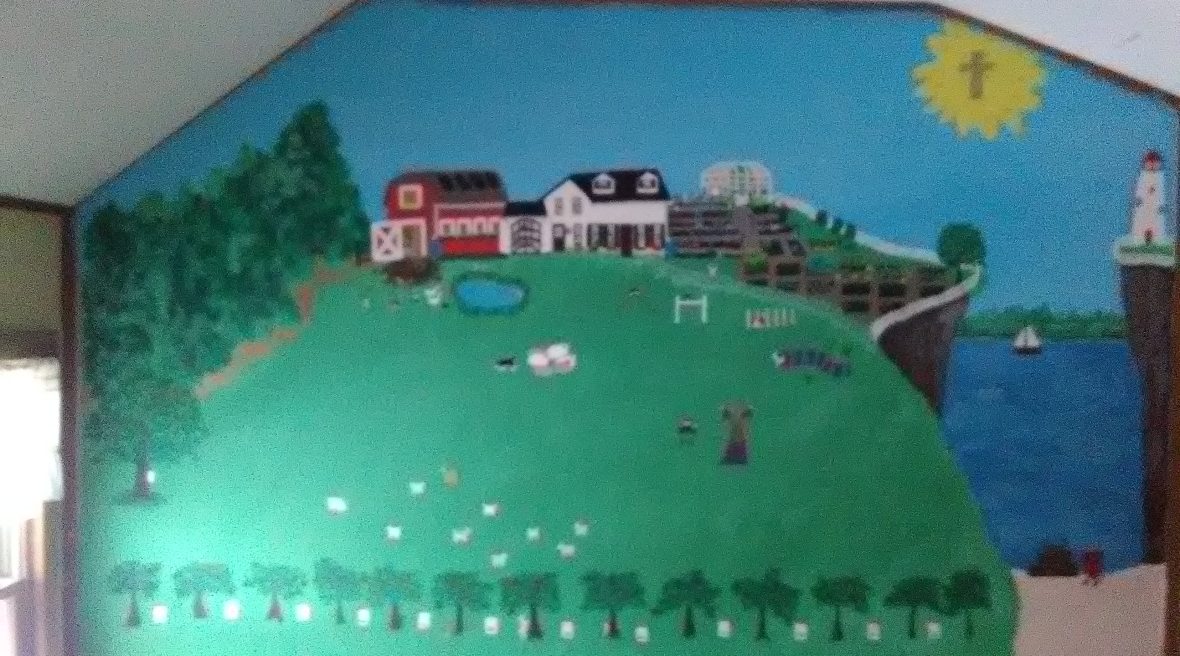
My property is just under an acre in size.  1/4 of it, including my front lawn, is being turned over for the raising of fruits, veggies and herbs to support my pesco-vegetarian diet using raised beds, container gardening, companion planting, crop rotation, vertical gardening (trellises, arbors, etc.), compost/vermicomposting, and natural pest control in the form of chickens and ducks (also for the egg production and free organic fertilizer!).  3/4 of an acre being given over to Pygora/Pycazz goats and Olde English Babydoll sheep (small breeds/small quantities), and Angora rabbits for fiber for hand-spinning and weaving. My first honeybees have been ordered for honey, beeswax candles and mead.  And my property is home to several maple trees for the syrup.  Natural rearing/diet for the animals.  I am an herbalist, having studied under Michael Ford of Apollo Herbs and Michael & Leslie Tierra of East West Herbs.  I am a Writer, Reflexologist, Reiki Master Teacher, Angel Light Messenger, I play guitar, dulcimer, sing, love acting and am fluent in American Sign Language.  I am hoping to add Tellington Touch, Ayurvedic medicine and homeopathy to the list and also petsitting as means of income.  I am hoping to add a little of this and a little of that and hope it all adds up.  In this economy with jobs being scarce, there’s nothing to lose and possibly everything to gain by living a more self-sufficient, self-supporting lifestyle.

This is my blog chronicling this journey.