Animals, Appreciation, Books, Christianity, ecosystems, Exhaustion, Faith, gardening, Gratitude, Herbs, Homesteading, Nature, Plants, Writing

Winding Down

“Except the Lord build the house, they labour in vain that build it: except the Lord keep the city, the watchman waketh but in vain. It is vain for you to rise up early, to sit up late, to eat the bread of sorrows: for so He giveth His beloved sleep.” (Psalm 127: 1-2)

As summer winds down, the garden–what little I planted–dies back, herbs and flowers go to seed, and at work, summer reading ends. On this last, we all breathe a sigh of relief. This year, we nearly tripled our participation, which fills me with joy to see so many neighbors and friends enjoying their summer with good books, fun games, prizes, and snacks.

On the homestead, I’m harvesting more cherry tomatoes than I know what to do with…except maybe as a healthier snack instead of reaching for chips or popcorn. Brussel sprouts are still growing, as is some cabbage (despite the cabbage larvae that nearly decimated both earlier in the season…). We have a few small sugar pumpkins, and some unnamed variety of heirloom bean drying in their pods on the vine. Something ate the peas. The green beans didn’t produce nearly as much as the amount of plants suggested. And it’ll be quite some time before I know if the American chestnuts (a hybrid designed to bring this legendary tree back from extinction by grafting it to a Japanese root stock that is resistant to the blight) survived the long winter in refrigeration and then into the ground.

Yes, we still talk about relocating…now more than ever due to the cost of living and the explosion of “urban development” in this once-rural community. But I leave it in His hands.

For now, I’m working towards making this place, this space, as self-sufficient as possible. The fixer-upper needs a ton of work, and now costs me far more each month to hold on to than it’s market value suggests. Perhaps there’s a solution down the road. Perhaps not. And between cats and herbs, we’ll need a Mack truck to do that relocating. Still, what is slowly happening here fills me with joy.

In addition to some veggies, I planted hibiscus, borage, bee balm (although it is not true Monarda didyma with it’s scarlet petals, but another hybrid with magenta petals; the hummingbirds don’t seem to mind…), catnip, calendula, rue, tarragon, and basil. This last, I simply love the smell…and the taste of fresh pesto mixed into some gourmet pasta. This weekend, there are plans to pick up some elderberry bushes from a friend who has an overabundance of them and doesn’t know what to do with them all. What a blessing!

Speaking of birds, though our little flock of chickens and ducks is down to just 7 geriatric birds, the wild birds are visiting in abundance. The birdhouses hosted new life yet again this year. The chickadees, cardinals, juncos, sparrows, titmice, nuthatches, and grackles are now joined by blue jays, mourning doves, orioles, woodpeckers and, yes, hummingbirds. And the mountain mint I planted a few years’ ago is covered with honey bees, bumblebees, and various other bees that I am unfamiliar with. I’m still waiting for the big bottle-blue wasps that tend to feast on mountain mint. I’ve only seen one on occasion this year. When I maintained the herb garden at the living history museum, their mountain mint was covered with these striking-looking wasps.

Again, what blessings! And I’m savoring every one…no matter how small they may seem.

The revisions on the first novel are about 3/4 of the way done. I’ve also started another book. This one, a Young Adult tome. So, despite once again neglecting this blog, it has not been due to laziness, or a lack of respect for any readers still out there. I’m hoping as we head into fall, and the work in the garden, the yard, etc. winds down, that I’ll have more time to devote to it, to develop some healthier, more sustainable habits so I won’t fall off the proverbial blogging wagon again.

Of course, this blog is also going through a little mental re-vamp as I go about my job at work, chores here on the farm, or write/revise books. All-in-all, I’m looking forward to the months ahead. This is my favorite time of year.

May God bless you & keep you!

19th century, Community, Friendship, gardening, Herbs, Homesteading, Minimalism, Nature, No-dig Gardening, Plants, Prepping, Scripture, Tradition, Wild Edibles

Locusts and Honey

“Now John wore a garment of camel’s hair and a leather belt around his waist, and his food was locusts and wild honey.” (Matthew 3:4)

I see John the Baptist as more of the doomsday prepper type than a homesteader in the Bible, yet his simple lifestyle as described in Matthew 3 above serves as an inspiration to anyone who walks this path. “Simple” is the operative word. We don’t need much. We don’t need fancy gadgets or expensive anything. We need the basics of food, clothing, and shelter, and as we walk this walk, we find our tribe, our community of support. That’s important, too.

I found a member of that tribe many years ago when I worked in living history. We’ve never “hung out” together. Rare have we socialized outside of our shared living history employment, but we also share a passion for growing food and medicine, and living a simpler life. He was my mentor when I served as a volunteer docent in the herb garden there. And he taught me a lot.

This weekend, Mom, Robert and I traveled over an hour and 20 minutes (in New England, that’s a long drive…chuckle!) to listen to a talk of his about preserving the harvest without electricity. Using time-honored practices of root cellaring, fermenting, and drying, he reminded me of so much that I had learned while working in living history, but he also had some modern adaptations for those of us without a root cellar. Who knew an old Styrofoam cooler filled with damp leaves could be just as effective, if not better, than a wooden box in a basement filled with wet sand for preserving carrots and parsnips?

However, the real reason we drove all that way (Bless you, Robert, for piloting that drive!) wasn’t so much about the talk, though that was informative and interesting. Instead, it was to pick up some seeds for planting here at The Herbal Hare Tomestead (No, that’s not a typo; writer & librarian here).

You see, Rich worked for the American Chestnut Foundation (ACF) for many years helping to revive and restore the American Chestnut, which was decimated by chestnut blight, a fungal disease that spread quickly throughout our Eastern forests in the early-20th century, making it extremely difficult for the trees to reproduce, migrate and evolve. ACF has been working towards a blight-resistant American chestnut tree for many years (learn more here: https://tacf.org).

Roasted chestnuts are delicious. Though a tree nut, they taste a bit like a baked sweet potato. They’re also good for you. They’re a great source of fiber, which is good for digestion. They can help control blood sugar levels as they are low on the glycemic index. They contain antioxidants and minerals, such as magnesium and potassium, which can reduce the risk of heart disease and stroke, and manganese, which can reduce the risk of cancer. They also contain copper to strengthen our bones and give a boost to the immunity system, and are loaded with B vitamins, which can help balance our nervous system and improve our brain function. They’re also gluten-free and help reduce inflammation.

Chestnuts were an important food in generations’ past. One healthy tree can produce, on average, up to 60 lbs. of nuts per year when fully mature (at about 20 years), but they start producing as early as 3-5 years. Hence, my desire to plant some here.

The Herbal Hare Tomestead is quite small at the moment (just under 1 acre). I don’t have room for the traditional fields of corn or wheat or rye (although I may grow a small patch of the latter at some point; more on that later). At present, I’m working towards raised beds for much of my herbs and vegetables, and a possible food forest where there is an overgrown half-acre filled with invasive species, such as Norway maples, Oriental bittersweet and Japanese knotweed. These last will have to be dealt with before planting, and maintained so they do not grow back, but the vision I have is possible with a lot of careful planning. I’m looking forward to the challenge.

I doubt I’ll be eating any locusts anytime soon (although I’ve heard they’re also delicious when roasted), but raising honey bees again is also part of the plan. And a food forest? Well, what better way to prep?

May God bless you & keep you!
Animals, Appreciation, Books, Christianity, Exhaustion, Family, Fiber Arts, Friendship, gardening, God/Jesus, Gratitude, Healing, Herbs, Homesteading, Plants, Prayer, Prepping, Reading, Religion, Sleep Deprivation, Spinning, Straw Braiding, Weaving, Writing, Yoga & Fitness

Keeping It Simple

“For God is not a God of confusion, but of peace.” (1 Corinthians 14:33)

I’m feeling my age…and the stress of the past year: navigating, and eventually, mitigating foreclosure; the loss of my beloved aunt and uncle; new job position that I absolutely love but, it also keeps me hopping with an ever-changing schedule; thesis courses demanding 15,000 new words to my first novel to be turned in every 4 weeks. And now, another beloved aunt struggling with health issues. I also have a cat under veterinary care right now and a geriatric goat with some special needs. To say that I am spent would be putting it mildly.

And yet, on the upside, through His grace, I have successfully navigated foreclosure and, at least for the moment, am keeping my home. I am blessed beyond measure to have aunts and uncles that I can call “beloved”. I am also blessed beyond measure in a still-tanking job market to have the job that I do. There’s a certain thrill to see the story in my head and in my heart coming out on paper. And it’s another kind of blessing to have pets to share my world, to care for each day.

But I’m still spent.

I stood up one of my best friends this week for an event that she and I were supposed to attend together. She was worried something bad might’ve happened. Then I forgot I had agreed to cover as Lector last week for a fellow parishioner. Father Ben teased me about it. He wasn’t angry, but I was angry with myself…for both instances.

I either need to simplify, or get better organized. Perhaps it’s a little of both. An accountability partner would be a blessing right now, too, but I can’t have everything…

“The Dream” section of this blog/website is still in my heart. Every time I think of simplifying, another point from that bulleted outline rears up and says, “Don’t forget me!”. And I don’t.

Still, there’s a shifting inside that is looking to modify it a little…at least until I’m through with college.

I’ve blogged before about how I overfill my time. I tend to have “scatter syndrome” from too much “busyness”. I forget things like dates with friends, additional commitments, and even prayer. The flip side is, if I simplify too much, the brain turns to mush and the forgetfulness increases, rather than decreases. I need to find that sweet balance.

Or a staycation where I can do some much-needed spring cleaning that’s nagging at me and get better organized.

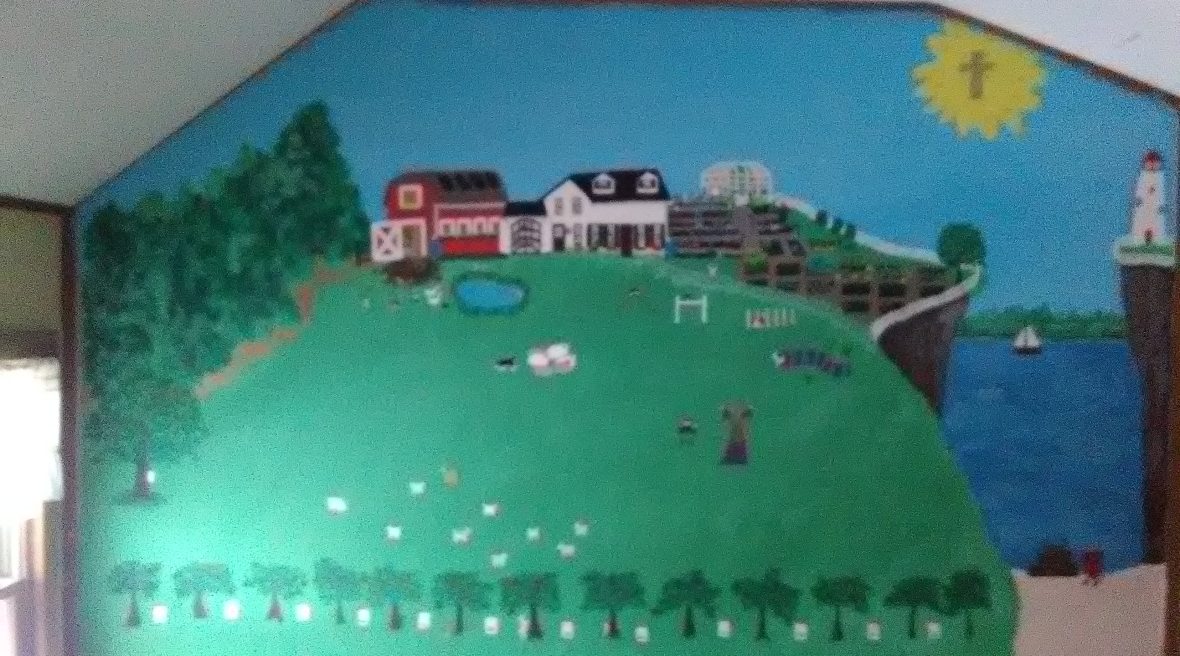
But, back to simplifying…if I stay right here in northeastern Connecticut, then The Herbal Hare may get whittled down to what everyone sees in the icon: Bunnies, herbs, and honeybees. I’ve already determined, unless I do find that place in Maine, Vermont, New Hampshire…or Missouri, then Felicity will be my last goat, and the few chickens and ducks I have left, also the last.

And does that ever cut!

But my life has become an endless litany of sacrifices. I sacrifice time with friends to keep up on my studies. I sacrifice writing time to help out somewhere. I sacrifice things like yoga, exercise, time with this blog, etc. to “catch up” on some much needed sleep. And then I beat myself up for not “making” the time for these other things. In short, with my time–and I have only 24 hours a day like everyone else–I am perpetually robbing Peter to pay Paul.

So, it’s time to prioritize. And then, once I’ve graduated, I can re-evaluate.

My priorities are likened to those times that prove, or have proven, to be the most satisfying to my soul:

Time spent in prayer.

Saturday evenings playing cards and Scrabble with Mom.

Chatting with my brother, sister-in-law and nieces on the phone.

Outings with friends to hike through the park, peruse the bookstore, visit a museum, share a meal.

Family get togethers.

Time spent on the water, either cruising the lake on my uncle’s pontoon, or sharing the paddle boat with a cousin or two.

Walks with my dogs…when I had dogs.

Bunny-time…when I had rabbits, the time spent each night in their room letting them free-range outside of their cages. Sometimes I would simply read while they stretched their legs. Most of the time, I laughed at their antics…especially when the cats joined in and all of them played and cuddled together.

When I worked in living history museums, the mornings spent walking through the herb garden I was in charge of with a cuppa tea in hand, deciding what “chores” needed to be done today while stopping to inhale the scents of my favorite plants.

Working in the garden.

Making tinctures, salves, decoctions, infusions, or spice blends.

Spinning wool into yarn, filling the niddy-noddy with it, or weaving new cloth.

Braiding straw with which to make hats.

A whole Sunday spent cooking and baking for the week.

Watching honeybees at work gathering their nectar.

Time spent in the barnyard.

Reading a passage of a book, or story, that I’ve written that came out particularly well.

Reading a good book.

Spending my early mornings with a cuppa tea and working on a blog post.

And, one of the most satisfying moments of my life was about 10 years’ ago. I cooked a simple meal of pasta, salad and bread, topped it off with a cup of hot chocolate. The pasta sauce had come from tomatoes I’d grown from seed and canned. Most of the salad fixings came from my own garden. The bread was made from scratch. And even the marshmallow I’d placed in my hot chocolate had been made from scratch. It was that feeling of accomplishment.

The new job has those moments, too, especially when I’m hosting a writer’s workshop, or a book club, or a knitting/crocheting group and that sense of community ensues.

These are the things that fill me with peace, things I long to get back to. And, anything in The Dream, or in present life, that does not lead me to one (or all) of these ends, will have to go. That’s a tall order, but it’s one worth filling.

May God bless you & keep you!

19th century, Books, Christianity, Community, gardening, Gratitude, Homesteading, Plants, Reading, Social Media, Writing

New Horizons

“Therefore thus saith the Lord, ‘If thou return, then will I bring thee again, and thou shalt stand before me: and if thou take forth the precious from the vile, though shalt be as my mouth: let them return unto thee, but return not thou unto them.” (Jeremiah 15:19)

I learned my lesson long ago not to talk too much about my “day” job(s). I’ve mentioned a time or two about being promoted to the directorship of a local public library, but I never mention that library by name. Though there’s nothing controversial about homesteading or herbs, still, I’m careful not to use their name whenever I post.

And I’m sticking to that rule.

However, though this has very little to do with homesteading outside of being the financial means in keeping that homestead running, I keep finding myself amazed at how many of the skills learned throughout the years that are being put to use here.

In the last year, I’ve put to use the budgeting and clerical skills learned at so many previous jobs; I’ve designed flyers and brochures, as I’ve done on the side for local businesses, and I create content almost daily for the library’s social media page. My master gardener skills have come into play in creating flower arrangements in the containers bracketing our front stairs. We’re housed in an old building so all of the interpreting and/or tour guide skills cultivated in more recent years have come to the fore. The workflow/coding skills I used in corporate America have their counterpart in catalogging books, and other materials, for the library. Even long ago inventory management skills get put to use in keeping track of everything we have to offer on our shelves. The only thing missing is the forklift!

This morning I started our first writer’s workshop. Despite advertising it on our Facebook page, so far, it’s been a bust. But I’m not dismayed. It’s only the first day and I’ll do my best to promote it more going forward. Ditto for the knitting and crocheting group that meets every 2nd Monday each month, and the book club that meets the 1st Monday each month. Perhaps the time isn’t good for many (10:00 a.m. for the workshop; 3 p.m. for the yarn and book clubs). I may have to tweak it going forward. But it’s lovely being able to share such skills and build a community from it. It’s lovely being able to offer programs like this to my neighbors. And, in time, I feel confident, each program will grow.

As will others I have planned for the future.

I may be the only one doing a free writing to warm up this morning, but I can easily envision a table surrounded by fellow writers, bloggers, poets, and bards.

Here’s to looking to the bright side of life and anticipating new horizons, a new future…and not just for myself, though I’m chuffed to start this new program, but for this warm and wonderful community I am privileged to serve each week.

May God bless you & keep you!

Brothers & Sisters, Christianity, Environment, Faith, God/Jesus, Herbs, Holistic Health, Homesteading, Nature, Plants, Prayer, Self-esteem

Wednesday’s “Weed” Walk: A Re-Cap of My First “Live” Weed Walk

“For the Spirit God gave us does not make us timid, but gives us power, love, and self-discipline.” (2 Timothy 1:7)

On Saturday, June 3, 2023 I found myself staring down Imposter Syndrome with more resolve than real strength and conviction. I had prepared for this…but maybe not enough. Maybe I didn’t know enough herbs. Maybe I didn’t know enough about them. I took notes. Would they see me as more of a fraud if I had to use them? I didn’t study the notes enough. I didn’t memorize every fact, fable, or theory about each plant. I didn’t know every. Single. Plant. In the forest.

Dang! Who am I to call myself an herbalist?

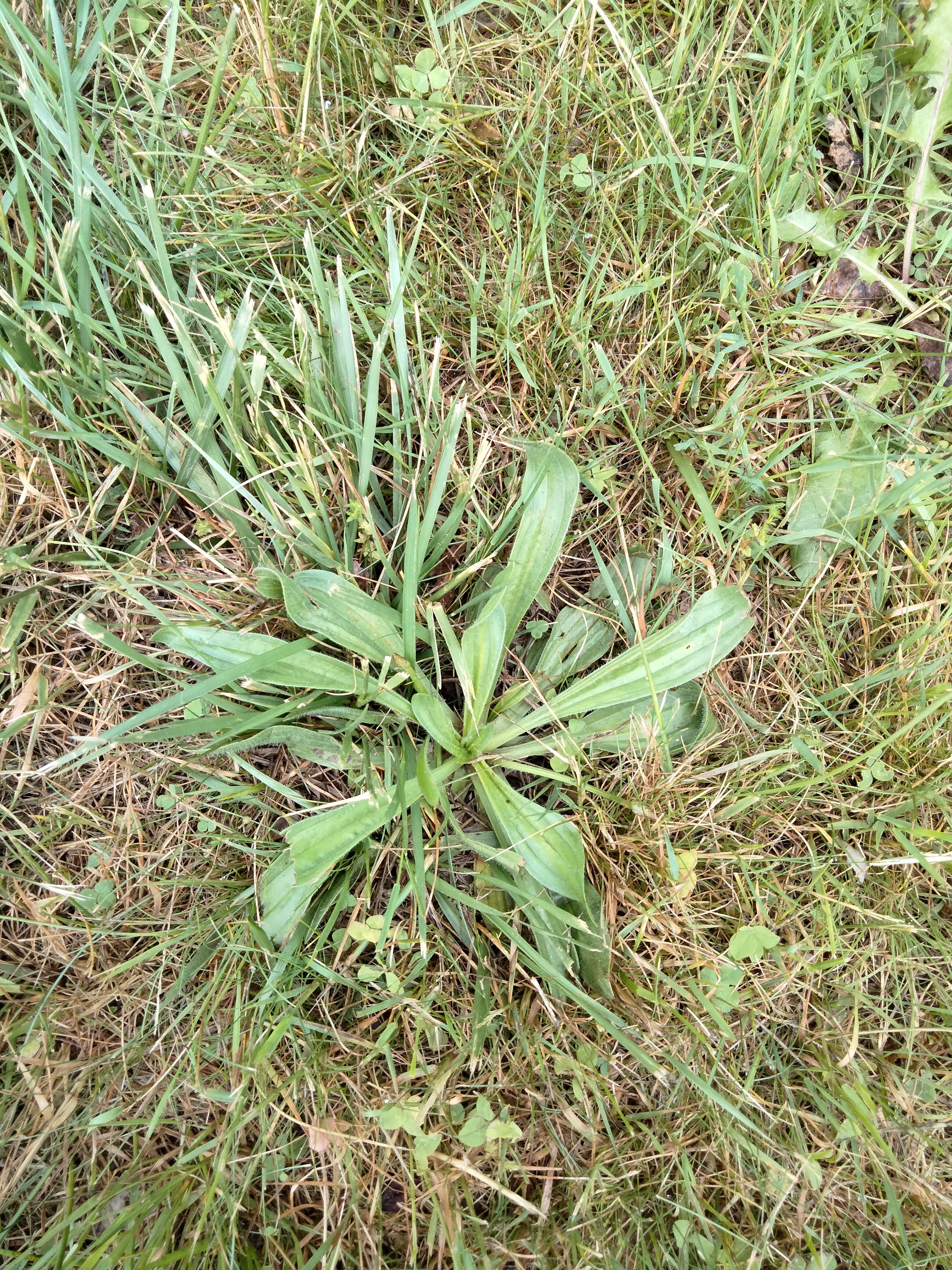
Salvation came whilst standing in the short strip of meadow while waiting for everyone to join me for this “weed” walk. There at my feet were two of my best known—and loved—herbs: a dandelion, and plantain. This last is not the banana-shaped fruit found in many grocery stores. It is a type of crabgrass. And the dandelion? There’s a reason my Jillian is holding a dandelion in her mouth as part of The Herbal Hare icon. I’ve been drawn to dandelions since the day I took my first steps…or near abouts. My mother and grandmothers all had little Dixie cups filled with dandelion blossoms lining their windowsills when I was a kid.

Plantain (Plantago lanceolata)

Relax. Breathe. I’ve got this…at least with these two.

From there, I led a small group of 6—counting the lovely Australian shepherd who joined us for the walk; she said she got all of this, too—through myriad forest paths, up steep inclines and over rocky, dried-out streambeds. And, while there were a few stretches where that Imposter Syndrome kept trying to creep in again (we had about a 10 minute walk along paths lined with nothing but poison ivy, jewelweed, and Virginia creeper), I found enough to keep it interesting. There was even a note of praise on the library’s Facebook page later that day for the fun everyone had learning about some of the plants that share our little corner of Connecticut.

Here’s a recap of what we saw: Plantain (Plantago lanceolate), Dandelion (Taraxacum officinalis), Multiflora Rose (Rosa multiflora), Jewelweed (Impatiens capensis), Cleavers (Galium aperine), Virginia Creeper (Parthenocissus quinquefolia), Hairy Solomon’s Seal (Polygonatum pubescens), Skunk Cabbage (Symplocarpus foetidus), Buttercup (Ranunculus acris), Dame’s Rocket (Hesperis matronalis) and Stinging Nettle (Urtica dioica). It might be fun over the next few weeks to feature each of these for a Wednesday’s Weed Walk—except the Dandelion and Plantain. I think I’ve done at least two blog posts for each; I’ll have to put a link to them in the coming weeks. 😉

May God bless you & keep you!

Brothers & Sisters, Emergency Preparedness, God/Jesus, Healing, Herbs, Holistic Health, Homesteading, Nature, Plants, Prepping, Scripture

Wednesday’s Weed Walk: (Toxicodendron radicans)

Then one went out into the field to gather herbs, and found a wild vine and gathered from it his lap full of wild gourds, and came and sliced them into the pot of stew, for they did not know what they were. So they poured it out for the men to eat. And as they were eating of the stew, they cried out and said, ‘O man of God, there is death in the pot.’ And they were unable to eat.” (2 Kings 4:39-40)

No, I’m not poisoning anyone. I’ve been poisoned…by poison ivy.

I spent the three day weekend doing yardwork with a friend. As many of you know, we’ve had both intermittent running water and an intermittent electrical line. Sometimes we have lights upstairs; sometimes, not. It seems to be most prevalent when it’s windy out. So our friend, who noticed some tree limbs hitting the power line coming into the house, decided to climb up the ladder and cut the offending limbs. I held the ladder…while standing in a patch of poison ivy.

So far, it’s not too bad. Itchy, yes. But it’s staying around the calf area only…unlike a few years ago when arms, legs, and even my face got nailed with it.

So what does an herbalist do?

Most of you probably know this little beauty:

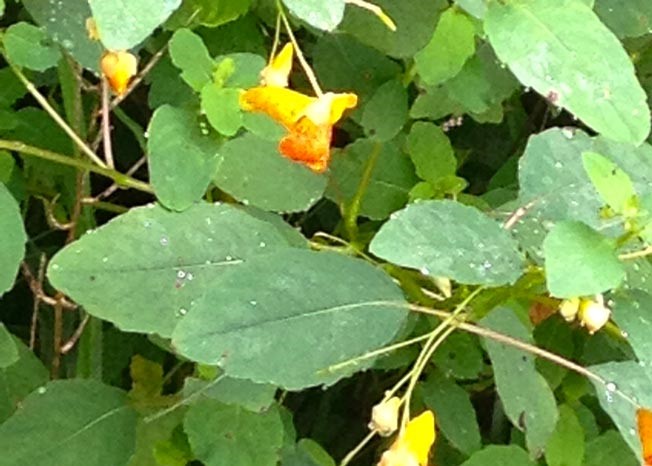
It is (Impatiens capensis) or, as it is more commonly known, Jewelweed. Jewelweed is quite the prolific spreader. It likes both woodland and moist areas, or so I’ve heard, though it seems just as content growing along roadsides, too. Interestingly, it is also often found growing alongside poison ivy; nature, when left to her own devices, often provides both the malady and cure side-by-side. But that’s neither here nor there. Inside it’s hollow stem is a watery mucilage. Just break it open and pat (do not rub) along any skin that may have come in contact with poison ivy (use a new stem for each area if more than one possibly infected). Often it is enough to prevent a breakout of the dreaded rash to begin with.

I, unfortunately, did not do that.

However, the stems can be chopped up, placed in a double boiler (see how to improvise without a double boiler Here) and slow simmered with a lid on for a couple of hours (keep a close eye that they do not scorch). Gently dab on the offending rash.

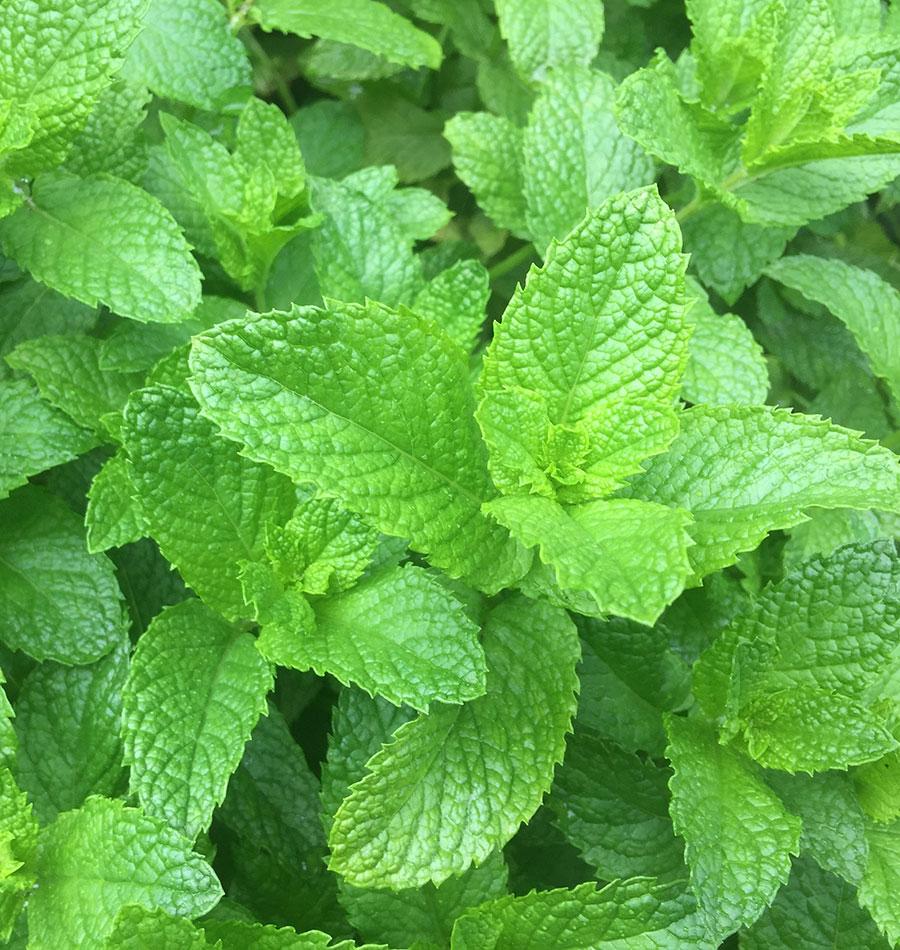
An alternative is to make an infusion (you can learn more about infusions at the same hyperlink above) of spearmint (Mentha spicata) leaves. You can gently dab the infusion on the same as with Jewelweed or, as I did this morning, I poured half of the infusion into a cup and added enough baking soda to make a paste. This keeps the infusion from dripping and the baking soda will help to dry it up the rash. Sadly, while this last will help clear it up faster, it has to be reapplied frequently to reduce the itch.

(Mentha spicata) Spearmint leaves

May God bless you & keep you!

Creativity, Emergency Preparedness, Faith, Folklore, Gaia, gardening, God/Jesus, Healing, Herbs, History, Holistic Health, Homesteading, Nature, Plants, Self-esteem, Self-improvement

A Saturday Weed Walk

“The Lord is my chosen portion and my cup; you hold my lot. The lines have fallen for me in pleasant places; indeed, I have a beautiful inheritance.” (Psalm 16: 5-6)

This one is live! As in, in-person…my first!

To say that I’m not feeling a bit of that “Imposter Syndrome” would be a lie. Yes, I am a certified herbalist…and a Master Gardener. Yes, I do know how to use herbs and make medicine, health & beauty aids. I know how to use herbs for scent and I have at least a rudimentary knowledge of how to make dyes with some. And, yes, there are certain ones I can readily identify in the wild.

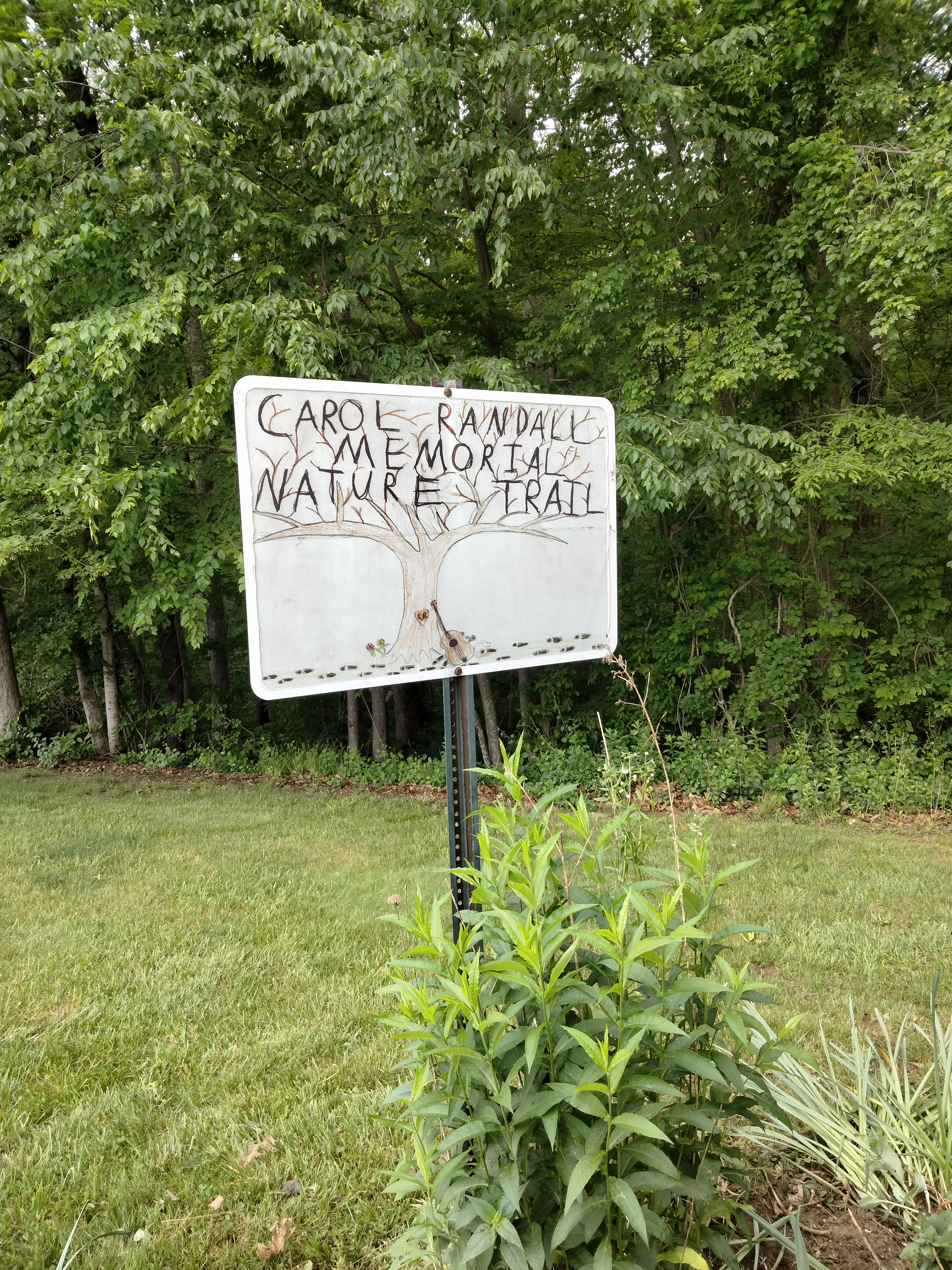
However, a recent walk through the nature trail that I will be working from at this live event revealed there are a lot of plants I don’t know. And, in this particular setting, there wasn’t a huge variety of plants…outside of some invasive species. That being said, I identified enough that I can put together an interesting walk.

At least I hope so…

Again, “Imposter Syndrome”–I am plagued with doubts. However, if I was too cocky and sure of myself, that would be the road to failure. A little nervousness is to be expected and, like all things, the more often I do this, the more comfortable I’ll get with it…and, in the future, I’ll make it a point to plan more “weed” walks through abandoned lots and sunny meadows rather than deep woods and dappled sunlight since most of the herbs I’m most familiar with are typically grown in sunnier locales. ;o)

Despite my nerves, I’m looking forward to the challenge of creating a fun and interesting experience for everyone who decides to join me on the walk.

If you live in northeastern Connecticut, the “weed” walk is part of an event being hosted by the Brooklyn Middle School in Brooklyn, CT between 10:00 a.m. and 12:00 p.m. on Saturday, June 3, 2023. Wear your walking shoes because the terrain is uneven, rocky in places, full of roots ready to trip you up, and steep in some areas.

May God bless you & keep you!

Animals, Christianity, God/Jesus, Healing, Herbs, Holistic Health, Homesteading, illness, Nature, Plants

Wednesday Weed Walk – Oils & Salves

“Then God said, ‘I give you every seed-bearing herb on the face of the whole earth and every tree that has fruit with seed in it. They will be yours for food.” (Genesis 1:29)

Another way you can use herbs is by decocting them in oil. This can be for culinary purposes to dress up some salad greens, or used topically to help heal cuts and scrapes, and moisturize the skin.

A few weeks’ ago I talked about using the double-boiler method to decoct herbs for medicine. Here we will use the same method but, instead of covering the herbs in the top pan with water, as we did in the previous post, we will cover them with some sort of oil.

Please do NOT use canola, sunflower, safflower, corn, or vegetable oil for this purpose; ditto for Crisco. All burn too hot and risk scorching the herbs, rendering them useless. The idea is to gently warm the oil, not fry the herbs. Olive, sweet almond, and grapeseed oils work best for this.

For those who may have missed the earlier post, if you don’t have a double-boiler, using a pair of sauce pans where one is slightly smaller than the other will suffice. You fill the larger pan about 1 1/2” – 2” with water then nestle the smaller sauce pan inside. There should be enough water in the bottom pan that the smaller sauce pan floats, but not so much that any water comes over the rim of it. You then measure your herbs into the smaller pan and, in this case, cover them with your oil of choice. Put a lid on it and slowly simmer for approximately 45 minutes, taking care that the oil doesn’t evaporate too much and the herbs do not scorch (as can happen even with these lighter oils); feel free to give them the occasional stir while they simmer, taking care to put the lid back on them as soon as you’re done. The medicinal properties will escape with the steam if the lid is left off.

As with a regular decoction, we also don’t use Teflon-coated pans, or cast iron, when making oils or salves. Both can leach into the final product. Teflon, if I remember correctly, has carcinogenic properties. It also flakes and chips and, even if new, there are chemicals in it that are best left out of either food or medicine. Cast iron is a great tool for cooking, but it can alter the medicinal properties of herbs, possibly changing their efficacy. I recommend either stainless steel, or enamel, when working with herbs.

If making an oil, simply strain the oil into a clean and sterile jar once it cools and store it in a cool, dark place until needed.

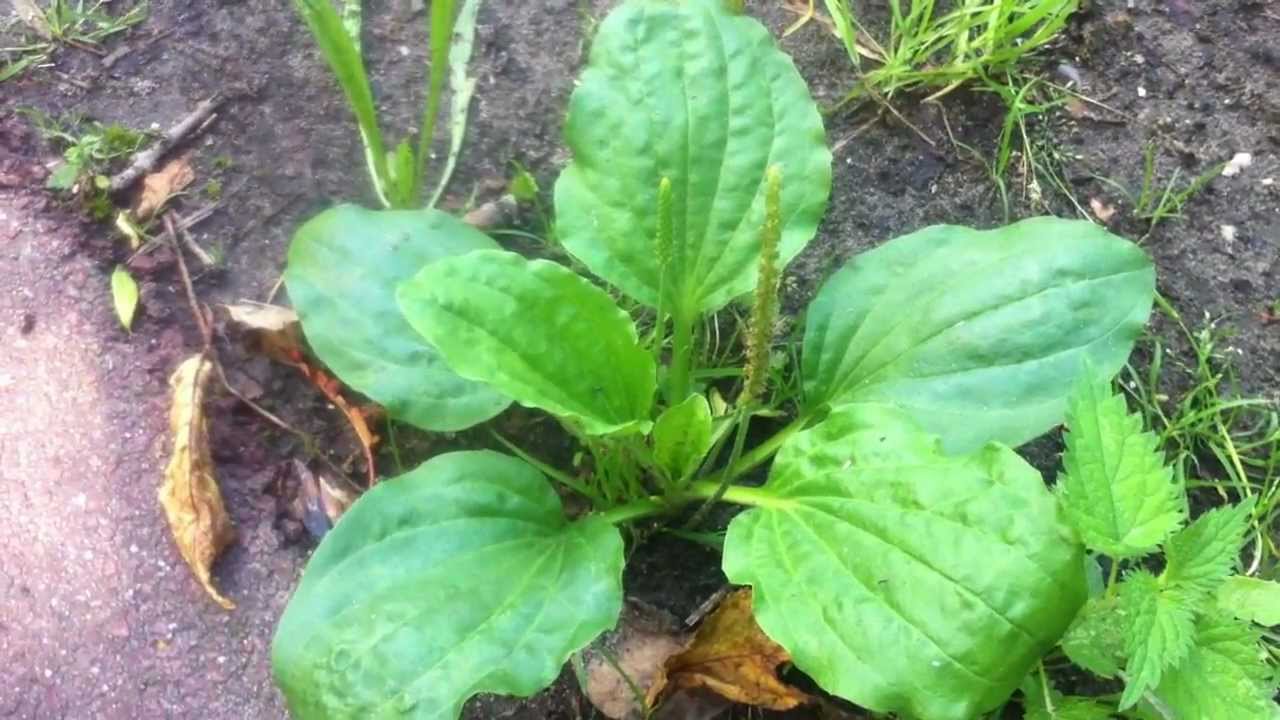
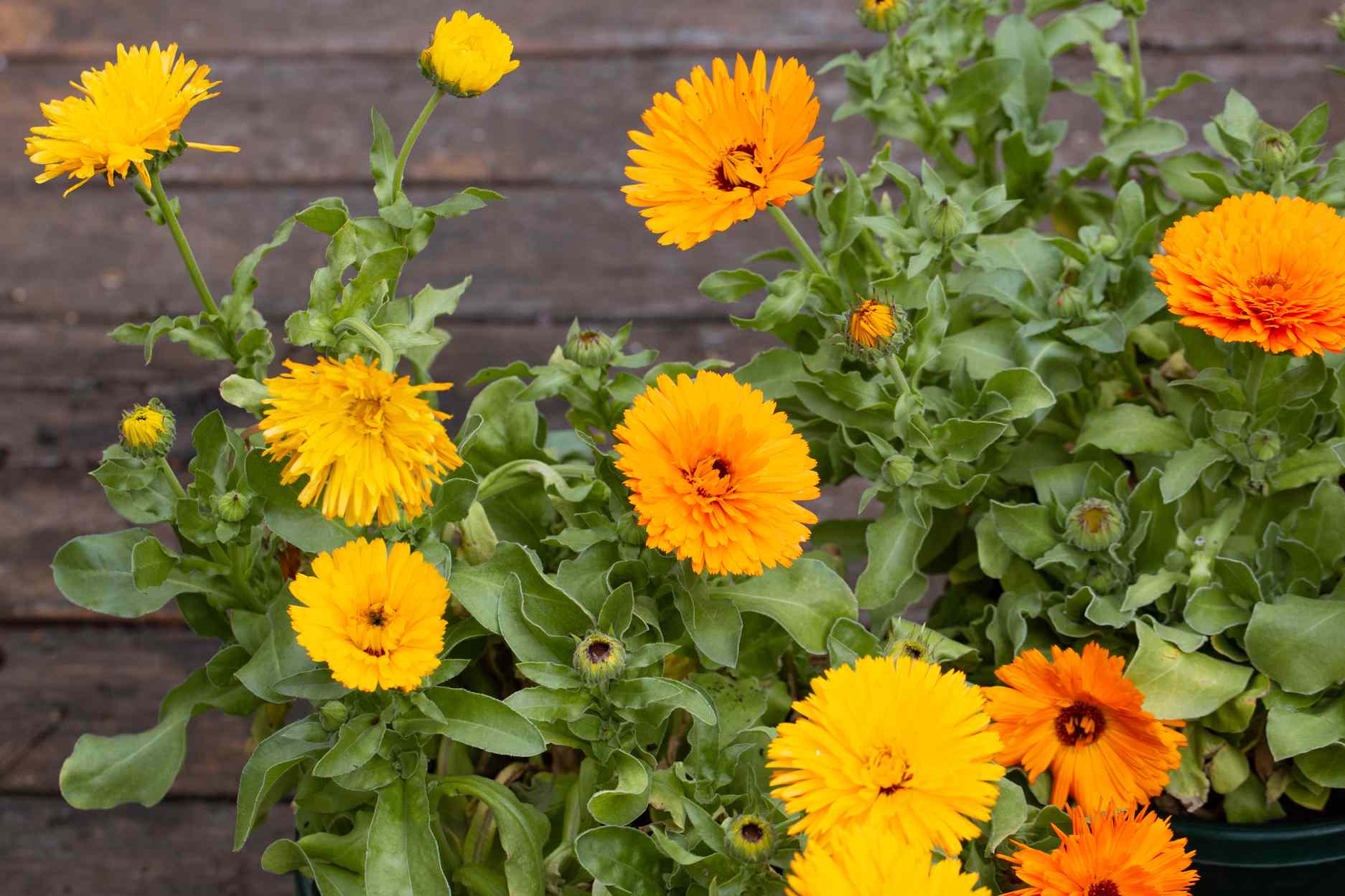
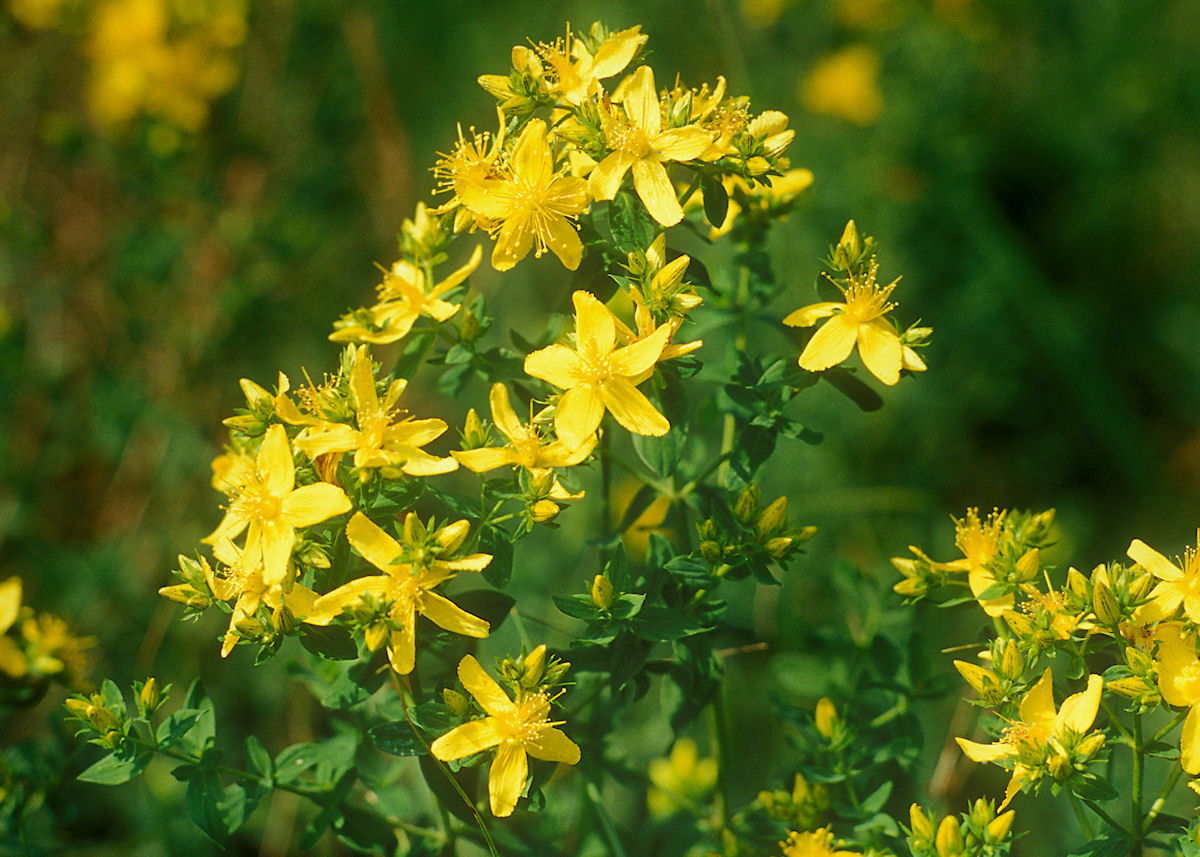
Herbs, such as plantain (not the banana-like fruit but the oft-mistaken-as-crab-grass) (Plantago major or Plantago lanceolata), are good for drawing out infection, slivers, and other foreign matter. Calendula (Calendula officinalis) works well for treating bruises, cuts and burns, as well as the minor infections they cause. St. John’s Wort (Hypericum perforatum) fights inflammation and has antibacterial properties; it’s also a good sunblock when used topically. Comfrey (Symphytum officinale) helps new skin cells grow, reducing scarring. Equal measures of each, simmered in an oil, and massaged into the skin before a shower, or bath, works as well as any spa treatment for combating dry skin, and even wrinkles, leaving your skin healthy, supple and glowing. The combination also works well for cuts, burns, scrapes, scratches, and rashes, including diaper rash, although you may want to take it a step further and make it into a salve, or ointment for this last purpose.

To turn your oil into a salve, once the oil has simmered for 45 minutes, leave it on low heat and melt approximately ¾” to 1” square of clean beeswax into the oil, stirring constantly to get a creamy consistency. Once the wax has melted completely, add a drop or two of vitamin E oil (2 capsules should suffice for an 8 oz. canning jar), stir, and pour it into clean jars (or tubes; you can make a great lip balm for chapped lips in winter this way, too).

A word of caution: do NOT pour any beeswax down your drain; you will stop it up. Do NOT wash any pans or utensils in the sink that have had beeswax melted in them; same reason. Take anything used for melting the beeswax outside and pour boiling water over it repeatedly until the wax has been scalded off. Beeswax is safe for the environment and will do no harm poured into the grass or dirt this way. Another thing to bear in mind is that beeswax is highly flammable. The little flame at the top of a candle is of little concern but, please pay close attention while heating on the stove. Put the phone down, avoid distractions. A friend of mine once burned his mother’s kitchen down because he left some beeswax melting unattended on the stove and went to answer the phone…back in the day when we still had push button and rotaries on the wall and were attached to a cord…(I’m showing my age…)

May God bless you & keep you!

PS You can modify the above salve to use for animals, too. Omit the calendula and St. John’s wort (they may lick the salve and these two should not be ingested by animals). Simply use equal parts of plantain and comfrey and follow the rest of the directions above. My Mom swears by it for our animals.

Plantago major (Plantain)
Symphytum officinale (Comfrey)
Calendula officinalis (Calendula) (Yahoo Images)
Hypericum perforatum (St. John’s wort) (Yahoo Images)

Works Cited

“Calendula.” Image. Yahoo Images, The Spruce, 2023. https://images.search.yahoo.com/search/images?p=images%2C+calendula&fr=mcafee&type=E211US0G0&imgurl=https%3A%2F%2Fwww.thespruce.com%2Fthmb%2Fya4XvTRXaP-lCwxTXQ89Zkmac7M%3D%2F1874x0%2Ffilters%3Ano_upscale%28%29%3Amax_bytes%28150000%29%3Astrip_icc%28%29%2Fgrowing-and-using-calendula-1402626-26-f3f6f07fcc594a79b1a792f863a4a8e6.jpg#id=19&iurl=https%3A%2F%2Fwww.thespruce.com%2Fthmb%2Fya4XvTRXaP-lCwxTXQ89Zkmac7M%3D%2F1874x0%2Ffilters%3Ano_upscale%28%29%3Amax_bytes%28150000%29%3Astrip_icc%28%29%2Fgrowing-and-using-calendula-1402626-26-f3f6f07fcc594a79b1a792f863a4a8e6.jpg&action=click

“St. John’s wort.” Image. Yahoo Images, Premier Seeds Direct, 2023. https://images.search.yahoo.com/search/images;_ylt=AwrNPwMJs2RkeVsfr.KJzbkF;_ylu=c2VjA3NlYXJjaARzbGsDYnV0dG9u;_ylc=X1MDOTYwNjI4NTcEX3IDMgRmcgNtY2FmZWUEZnIyA3A6cyx2OmksbTpzYi10b3AEZ3ByaWQDNXcyeVpSbWhUcmVGektGYlN2OENXQQRuX3JzbHQDMARuX3N1Z2cDMgRvcmlnaW4DaW1hZ2VzLnNlYXJjaC55YWhvby5jb20EcG9zAzAEcHFzdHIDBHBxc3RybAMwBHFzdHJsAzIzBHF1ZXJ5A2ltYWdlcyUyQyUyMFN0LiUyMEpvaG4ncyUyMFdvcnQEdF9zdG1wAzE2ODQzMjEyMjg-?p=images%2C+St.+John%27s+Wort&fr=mcafee&fr2=p%3As%2Cv%3Ai%2Cm%3Asb-top&ei=UTF-8&x=wrt&type=E211US0G0#id=5&iurl=https%3A%2F%2Fwww.premierseedsdirect.com%2Fwp-content%2Fuploads%2F2017%2F09%2F60501429.jpg&action=click

Abuse, Addiction, Brothers & Sisters, Christianity, Faith, God/Jesus, Gratitude, Healing, Herbs, Holidays, Plants, Religion, Tradition

Monday Meanderings

“To you, O Lord, I lift up my soul; in You I trust, O my God. Do not let me be put to shame, nor let my enemies triumph over me.” (Psalm 25:1-2)

With Easter come and gone for another year, the self-imposed dietary restrictions given for Lent have also come and gone. I lamented in a recent post that I failed to keep my vows 100% by partaking of a fortune cookie when Mom and I went out for Chinese food one night. I wasn’t even thinking of it as a “sweet”; it’s just part of the meal in my mind. But, otherwise, I did fairly well with avoiding traditional “junk” food.

I still haven’t mastered the other half of my vows: to read a chapter of Scripture each day. It’s been spotty at best. However, He’s still working in my life, still working through me and in me.

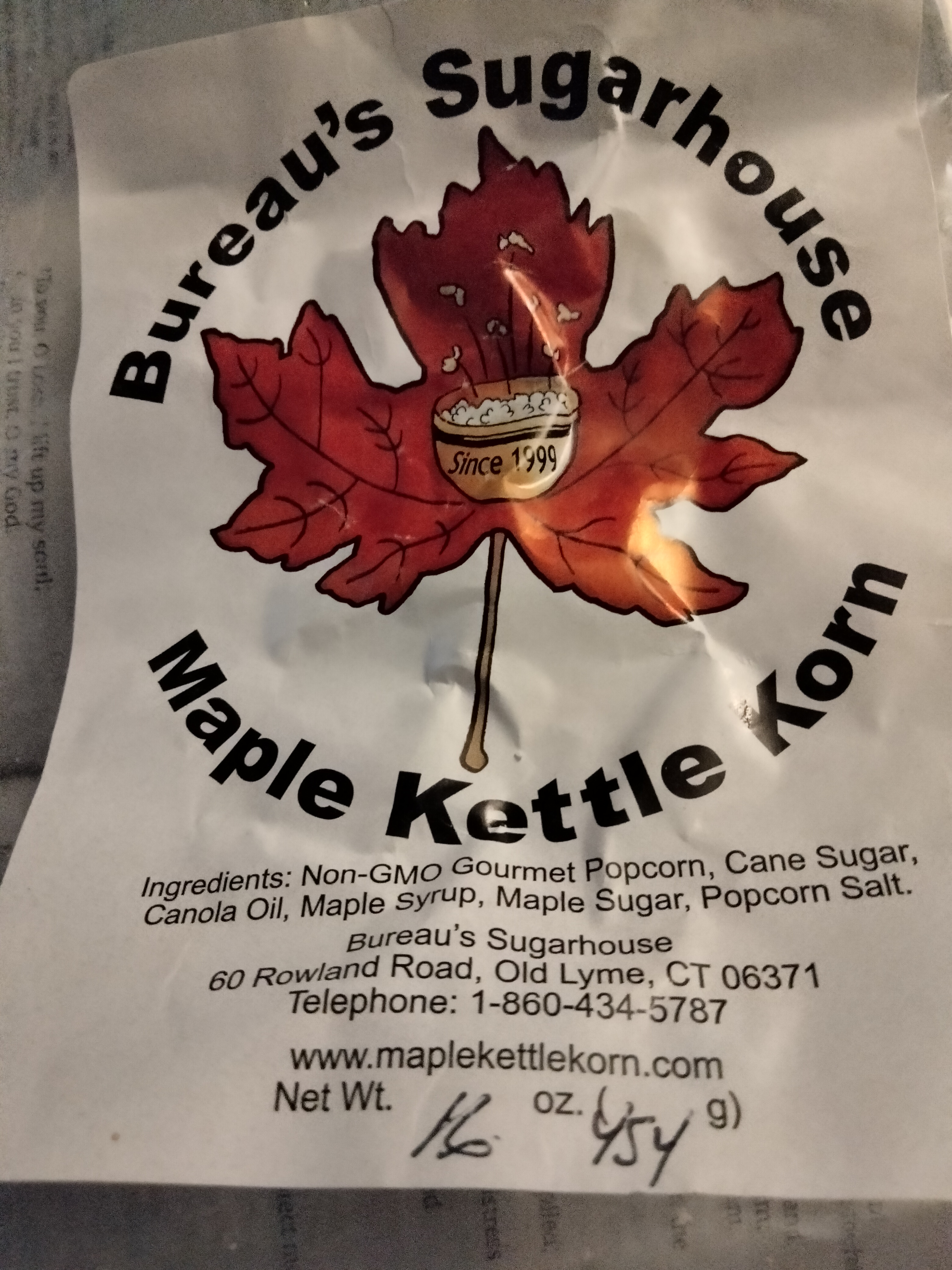
I just polished off a small bowl of Maple Kettle Korn from Bureau’s Sugarhouse in Connecticut. On Good Friday, Mom, Robert and I drove up to The Book Barn in Niantic, CT. I called ahead of time to confirm that they would be open on the holiday but, I neglected to check the time that they open. We got there about an hour beforehand. After a brief discussion, we decided to do an early lunch…and found the restaurant also wasn’t opening for another hour. We drove down the road some more and came to a place called Smith’s Acres, LLC.

What an amazing place!

It’s relatively small but they carry all manner of landscaping plants, succulents in their greenhouse, and floral arrangements. There’s a farmers’ market inside featuring fresh produce, jams, jellies, honey and maple syrup, all manner of sauces, and a refrigerator full of ice cream. If we added some herbs for growing, and homemade yarns, it could almost be the store of my dreams.

Mom found the Kettle Korn up by the register. We’ve been enjoying it since Easter and remarking how incredibly delicious it is. I didn’t realize until I went to toss away the empty bag that it was Bureau’s product.

Bureau’s Sugarhouse used to have a booth at the Woodstock Fair every year (they may still…). I worked at the Fair for several seasons (2012-2016) and, for one of my co-workers, purchasing a bag of their Maple Kettle Korn was an annual treat. After hearing her rave about it, I bought a small bag one year and fell in love with it. I haven’t had it since I left the fair.

That’s probably a good thing for my teeth and my waistline!

Where He’s working on me, is the return to “desserts” now that Lent has ended. While I’ve enjoyed the Kettle Korn, the bag of black licorice jelly beans (is there any other kind??), and a few other “sweets”, I’ve really been paying attention to my body since the return to them.

I felt better without them. I slept better, too. It’s also renewed my commitment to take better care of myself. Who knew?

I wrote about my dream homestead in my “About” section. And I’ve certainly talked about it on the blog many times. I want to be here to enjoy it. Once I’m back on my feet financially–and we’re getting there slow but sure since taking the director’s seat at the library–I believe I can accomplish that end.

I’m also learning to leave it in His hands. His plans are greater than my own. I want to be here to see that, too.

For anyone else who celebrated Lent by sacrificing in some way, what are some of the ways He’s blessed you? I’d be delighted if you’d share in the Comments’ section below.

May God bless you & keep you!

Animals, Christianity, gardening, Healing, Herbs, Holistic Health, Homesteading, illness, Nature, permaculture, Plants, Wild Edibles

Wednesday’s Weed Walk: Wood Sorrel

“And God said, Behold, I have given you every herb bearing seed, which is upon the face of all the earth, and every tree, in the which is the fruit of a tree yielding seed; to you it shall be for meat.” (Genesis 1:29)

As with many of the plants I feature on this website, Yellow Wood Sorrel is often regarded as a weed (hence, the title I use whenever I write about a plant, or herb). Most gardeners consider it a scourge because the roots go pretty deep and it can be difficult to get rid of. However, as with most “weeds”, I let it stay.

Miller, “Yellow Wood Sorrel”, Pere Marquette Rail Trail Wildflowers, n.d.

Yes, you know this one. It is often mistaken for a clover because of the similar, shamrock-y leaves. Oxalis stricta, however, is in the Oxalideae family, not the Fabaceae family–or bean family–as clover is, so they’re not even cousins. Interestingly, they can both fix nitrogen in your soil so not a bad thing to have in your garden. Like clover, wood sorrel also helps eliminate soil erosion by providing a natural ground cover that helps retain moisture. Even an obnoxious “weed” has its function.

Wood sorrel’s main claim to medicinal use is its help at reducing fever and inflammation. It increases the flow of urine and is particularly effective at treating urinary complaints. It may also help externally for treating eye complaints and scrofulous ulcers (de Bairacli-Levy 166). And, while Ms. de Bairacli-Levy writes this in a herbal for animals, it has the same effect on humans.

Renowned herbalist, Juliette de Bairacli-Levy, goes on to say that “goats and sheep seek its foliage, enjoying its refrigerant properties” (166). I, too, enjoy nibbling a few leaves whenever I’m working outside on a hot summer day. Yellow wood sorrel is a wild edible. It has a tart, lemony flavor that adds a nice punch to a salad or sandwich. If you haven’t guessed by its name, yellow wood sorrel has oxalic acid in it, which gives it its tart flavor. Many of our dark leafy greens, like spinach, beet greens, and Swiss chard also contain oxalic acid. As with anything, moderation is the key. Large quantities of yellow wood sorrel is said to lead to kidney stones (Taylor 1), but the same is also true of spinach, especially in sensitive individuals (Spritzler 1). Yellow wood sorrel also has some toxic, lookalike cousins so be sure of identification before consuming (Taylor 1).

These statements have not been evaluated by the FDA. This information is for educational purposes only. It is not intended to diagnose, treat, cure, or prevent any disease.

May God bless you & keep you!

Works Cited

de Bairacli-Levy, Juliette. The Complete Herbal Handbook for Farm and Stable. Faber and Faber Limited, 1952.

Miller. “Yellow Wood Sorrel.” Pere Marquette Rail Trail Wildflowers, n.d. Image. https://www.peremarquettewildflowers.com/flower/yellow-wood-sorrel

Spritzler, Franziska. “Oxalate (Oxalic Acid): Good or Bad?” Healthline. https://www.healthline.com/nutrition/oxalate-good-or-bad

Taylor, David. “Common Yellow Wood Sorrel (Oxalis stricta).” Plant of the Week, USDA, n.d. https://fs.usda.gov/wildflowers