
Basket Weaving, Coppicing, Creativity, ecosystems, Emergency Preparedness, Herbs, Homesteading, Nature, permaculture, Prepping, Scripture, Trees

Coppiced Hope

“For there is hope for a tree, if it be cut down, that it will sprout again, and that its shoots will not cease.” (Job 14:7)

I have a short stack of books checked out on coppicing trees. A few years’ ago, I watched a YouTube video about a man who coppices the trees on his land for firewood to heat his home. It struck a chord.

When I first started with the notion of homesteading, my original plan was to move to a bigger property. But then I started watching videos, reading blogs, magazine articles and books about people homesteading right where they are, right now. And it got me thinking: what can I do here?

Originally, I thought I could tap the many maple trees in my yard for syrup and sugar…until I learned the difference in maple trees and discovered that my maple trees are mostly Norway maples, an invasive species to Connecticut that does NOT produce maple syrup.

Despite their invasiveness, the Norway maples are beautiful. So I’ve let them stay.

However, one of the reasons they’re considered invasive is because they grow fast. They also throw their seeds everywhere and it doesn’t take long for a new sapling to grow up. I have a young one growing through my fence as we speak (definitely NOT optimum). A also have a few that grew close together over the years so that they appear to share one trunk that has split in multiple directions. A friend of mine cut a couple of those splits, leaving a few feet of trunk standing. This was years ago, and I was furious at the time, but new shoots have grown up from that cut stump. I have an endless supply of firewood right at my disposal…if I learn how to manage it all correctly.

I know about as much about coppicing as I did about maple syrup. Hence, the stack of books on coppicing that I have checked out from the library. About all I do know is I will have to invest in a chainsaw and, probably, a decent ladder. (Again, I’m a complete novice…)

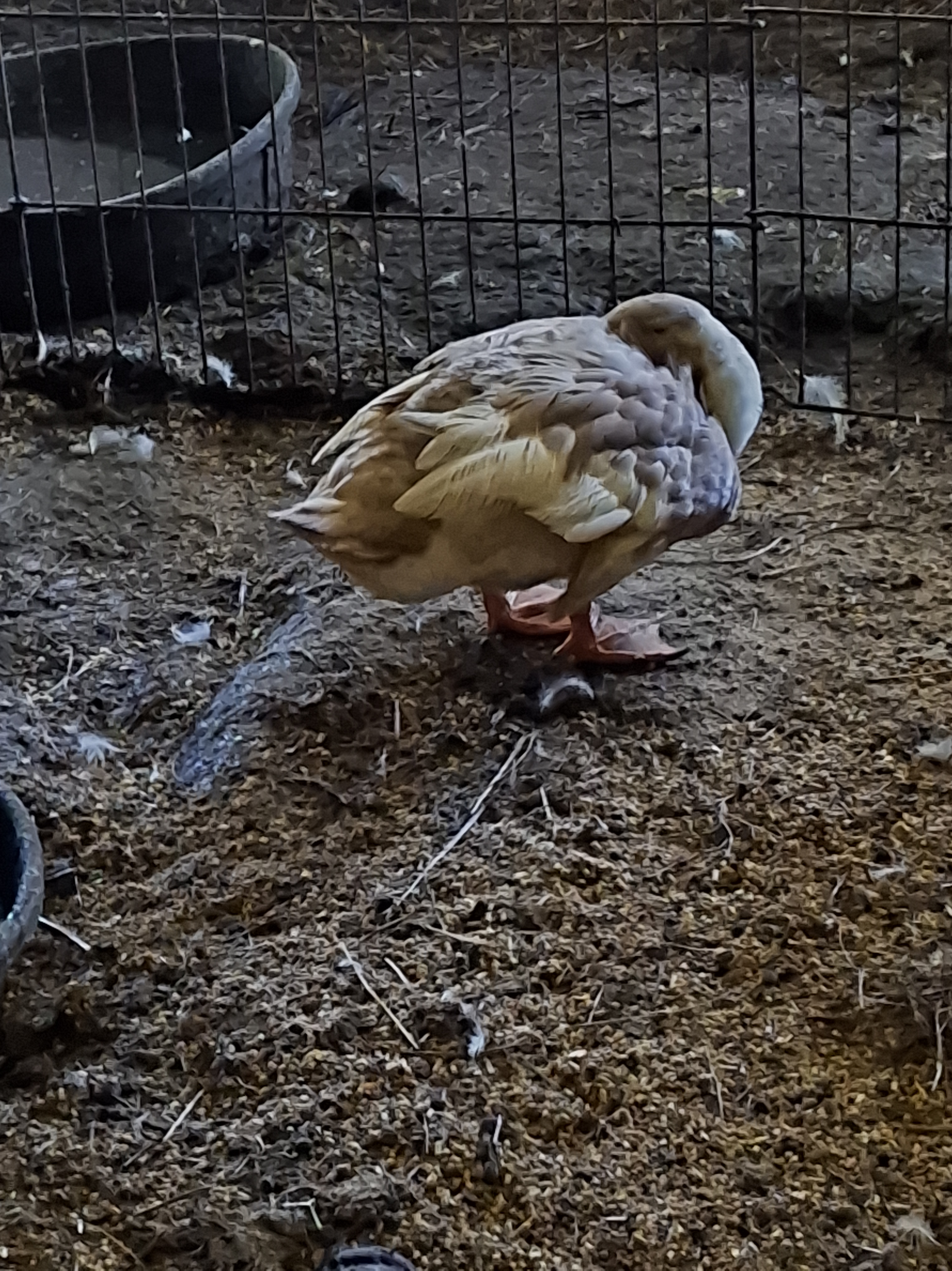
One of the books talks about planting willow where there’s a lot of wet, boggy land (Van Driesche 215-217). I have that, too, towards the back of the property. My ducks love it, but they’re about the only ones who do as the grass grows in thick tufts and any lawnmower gets stuck trying to cut it down (I’m also looking at learning how to use a scythe…). Willow can be debarked to make baskets. And the straight whips will also make good stakes for the garden when needed. I don’t know if I have enough boggy land for this last endeavor (although basket weaving is something I have enjoyed in the past…). It might behoove me to simply plant some water-loving herbs, like Joe Pye Weed, Black Cohosh and Solomon’s Seal (the latter doesn’t like its feet too wet…). That might be enough to mitigate the muddy mess.

But there’s hope springing in my heart as I contemplate the many potential ways I might make this little one acre holding work for me.

What are some of the possibilities you see from where you are right now? I guarantee you, if you put your mind to it, they may prove endless.

May God bless you & keep you!

Works Cited

Van Driesche, Emmet (2019). Carving Out a Living on the Land. Chelsea Green Publishing, Vermont.

Animals, Appreciation, Christianity, Community, Faith, Family, gardening, God/Jesus, Gratitude, Herbs, Homesteading, No-dig Gardening, Prepping, Scripture

Here or There?

“Put your outdoor work in order and get your fields ready; after that, build your house.” (Proverbs 24:27)

Well, that about sums it up. I have trays of chestnuts bedded in soil in the refrigerator with the hopes that they will germinate, putting down roots to be potted out next spring (yeah, there’s a metaphor somewhere in there…). There are plans afoot to purchase some dwarf varieties of fruit trees as well…and maybe an arborist to come look at my apple trees, those that came with this house 20+ years ago, and tell me if they’re worth saving (I hope so! RI Greenings are a pretty awesome tasting apple…).

Planting a tree of any kind is a symbol of hope for the future, a future I may not see, but one I plant anyway.

Oh, I’d love for “The Dream” I’ve shared of more acreage and more animals and endeavors to become a reality. And maybe that’s in His plan for me. Someday…

But, for now, here is home. And it may be the last home I ever have here on earth. I know that sounds morbid, but we never know the number of our days. Here there is a full-time job that I love. More importantly, it’s close to family and friends, and a community of which I enjoy being a part. A community that has been there for me during the tough times, as well as the joyful ones.

That’s nothing to sneeze at.

Yeah, Maine would be awesome. But I’m older now. Do I have it in me to build that home out of cob? Is it even still allowed there? It’s been a long while since I first started planning all of this. And, considering the chestnut trees I’m starting, if it’s to be Maine, I would have to move pretty quick on that dream.

I’m not sure I want to…but I will, of course, go wherever He leads.

The chestnut trees will be potted for their first few years anyway, so it’s still early enough to take them with me…ere the ruminations keep churning round and round.

This house needs some serious work. The sills are rotted in places. The roof needs replacing. The exterior needs a serious paint job…and it’s asbestos siding so, a costly job. Inside, it needs new flooring, new ceilings in some of the rooms, and the walls all need new paint…or wallpaper, which I prefer. But a new paint job will do and it’s the easiest out of that list…it’s also the last one I need worry about.

As the Bible verse above says, I’m getting my outdoor work in order and my fields ready. More raised beds, painted pale green, are going up from as many salvaged materials as I can lay hands on. And then the food forest on that overgrown half-acre. What lines much of the supermarket shelves doesn’t even disguise itself as food anymore so growing my own, especially with the threat of more supply chain interruptions, is important.

Having access to organically-grown natural remedies is also important. The bulk of those raised beds in the front yard will be herbs, most of which flower and look quite attractive.

Then there’s the zoning issues that I thought resolved if I’m to ever raise goats here again, or to consider sheep.

None of this is impossible. Sometimes I think it would be easier to start somewhere else but, I’m starting with here. Because here is what I’ve got. And I am ever so grateful for here.

It’s in His hands, as ultimately everything always is. If there is a “there” in my future, I trust that He will lead me to it, and pave the way to get “there”.

There are endless possibilities no matter which way I look. Amazing to think just a little over a year ago, hope was such a tenacious thing hanging by the most gossamer strands of faith…

May God bless you & keep you!

Abuse, Alcoholism, Appreciation, Emergency Preparedness, Finances, God/Jesus, Gratitude, Homesteading, Prepping

Preparing for the Future

“Wealth gathered hastily will dwindle, but whoever gathers little by little will increase it.” (Proverbs 13:11)

I am not fully recovered financially from the past decade or so of financial hardship, but there’s definitely an upward climb for which I am grateful. Until very recently the focus has been on simply paying down debt and earning enough to keep home and hearth together.

However, I am mindful of the journey that started in 2008. Like so many people, I was seriously impacted by the Great Recession. Despite having a 401K account, a savings (albeit a modest one), a budget, and a modest amount of debt outside of my mortgage, I still got clubbed at the knees. How much worse was the recession for people without those benefits and resources? And, just when I thought I was getting back on my feet, I got clubbed at the knees again in 2019 with an injury.

Today’s inflation bites. I don’t care what the reason for it is…well, except for the impact it may have on who I vote for in a few weeks. But, for those who are still struggling to recover from the recession (which is almost everyone), there really is an underlying amount of stress controlling our every financial decision.

So, suggesting that we learn to save, even if it’s just the change in your pocket each week in a jar, may seem like a laugh. But even change adds up.

In my case, I can’t say if it stems from growing up with alcoholism and abuse in the house or not, but I have a bad habit of waiting until the end of the month to put something away for that rainy day instead of paying myself first. I wonder if the $20-$30 that I can afford right now seems too small to make much of a difference so why bother?

Yes, it does seem that the minute you save a few bucks, the kids get sick or the pets do, the car hiccoughs in a threatening way and there goes whatever ground you feel like you’ve gained.

But what if you were saving that $20 a week/biweekly (whatever you can afford) all along? Sure, you may have only saved $100 by the time this thing reared its ugly head, but it would be $100 easier to face. $100 less of feeling victimized. And, if enough time elapsed between those hiccoughs, there would be even more to lesson that feeling.

It’s the bigger picture that I’m looking at. It’s also the whole reason I’ve turned to homesteading and prepping. What happens with the next plandemic? What happens with the next supply chain lapse? What happens if the WEF succeeds in orchestrating those 15 minute cities? If we’re not herded into them like sheep, I really do want that off-grid homestead up on a mountain somewhere. Having ready cash on hand is a way of reducing our vulnerability to whatever life hands us.

So, I’m making a vow to myself to set aside some amount each month for that rainy day. It doesn’t have to be a lot. I have to quit looking at that $20, that $10 bill, that jar of change as something pathetic, but rather hopeful. Because every little bit really does make a difference. Next paycheck that $10 becomes $20 or $20 becomes $40 and so on and so forth until we can draw a deeper breath each night before bedtime…and thank God even for the small blessings.

May God bless you & keep you!

19th century, Community, Friendship, gardening, Herbs, Homesteading, Minimalism, Nature, No-dig Gardening, Plants, Prepping, Scripture, Tradition, Wild Edibles

Locusts and Honey

“Now John wore a garment of camel’s hair and a leather belt around his waist, and his food was locusts and wild honey.” (Matthew 3:4)

I see John the Baptist as more of the doomsday prepper type than a homesteader in the Bible, yet his simple lifestyle as described in Matthew 3 above serves as an inspiration to anyone who walks this path. “Simple” is the operative word. We don’t need much. We don’t need fancy gadgets or expensive anything. We need the basics of food, clothing, and shelter, and as we walk this walk, we find our tribe, our community of support. That’s important, too.

I found a member of that tribe many years ago when I worked in living history. We’ve never “hung out” together. Rare have we socialized outside of our shared living history employment, but we also share a passion for growing food and medicine, and living a simpler life. He was my mentor when I served as a volunteer docent in the herb garden there. And he taught me a lot.

This weekend, Mom, Robert and I traveled over an hour and 20 minutes (in New England, that’s a long drive…chuckle!) to listen to a talk of his about preserving the harvest without electricity. Using time-honored practices of root cellaring, fermenting, and drying, he reminded me of so much that I had learned while working in living history, but he also had some modern adaptations for those of us without a root cellar. Who knew an old Styrofoam cooler filled with damp leaves could be just as effective, if not better, than a wooden box in a basement filled with wet sand for preserving carrots and parsnips?

However, the real reason we drove all that way (Bless you, Robert, for piloting that drive!) wasn’t so much about the talk, though that was informative and interesting. Instead, it was to pick up some seeds for planting here at The Herbal Hare Tomestead (No, that’s not a typo; writer & librarian here).

You see, Rich worked for the American Chestnut Foundation (ACF) for many years helping to revive and restore the American Chestnut, which was decimated by chestnut blight, a fungal disease that spread quickly throughout our Eastern forests in the early-20th century, making it extremely difficult for the trees to reproduce, migrate and evolve. ACF has been working towards a blight-resistant American chestnut tree for many years (learn more here: https://tacf.org).

Roasted chestnuts are delicious. Though a tree nut, they taste a bit like a baked sweet potato. They’re also good for you. They’re a great source of fiber, which is good for digestion. They can help control blood sugar levels as they are low on the glycemic index. They contain antioxidants and minerals, such as magnesium and potassium, which can reduce the risk of heart disease and stroke, and manganese, which can reduce the risk of cancer. They also contain copper to strengthen our bones and give a boost to the immunity system, and are loaded with B vitamins, which can help balance our nervous system and improve our brain function. They’re also gluten-free and help reduce inflammation.

Chestnuts were an important food in generations’ past. One healthy tree can produce, on average, up to 60 lbs. of nuts per year when fully mature (at about 20 years), but they start producing as early as 3-5 years. Hence, my desire to plant some here.

The Herbal Hare Tomestead is quite small at the moment (just under 1 acre). I don’t have room for the traditional fields of corn or wheat or rye (although I may grow a small patch of the latter at some point; more on that later). At present, I’m working towards raised beds for much of my herbs and vegetables, and a possible food forest where there is an overgrown half-acre filled with invasive species, such as Norway maples, Oriental bittersweet and Japanese knotweed. These last will have to be dealt with before planting, and maintained so they do not grow back, but the vision I have is possible with a lot of careful planning. I’m looking forward to the challenge.

I doubt I’ll be eating any locusts anytime soon (although I’ve heard they’re also delicious when roasted), but raising honey bees again is also part of the plan. And a food forest? Well, what better way to prep?

May God bless you & keep you!

Animals, Appreciation, Books, Christianity, Exhaustion, Family, Fiber Arts, Friendship, gardening, God/Jesus, Gratitude, Healing, Herbs, Homesteading, Plants, Prayer, Prepping, Reading, Religion, Sleep Deprivation, Spinning, Straw Braiding, Weaving, Writing, Yoga & Fitness

Keeping It Simple

“For God is not a God of confusion, but of peace.” (1 Corinthians 14:33)

I’m feeling my age…and the stress of the past year: navigating, and eventually, mitigating foreclosure; the loss of my beloved aunt and uncle; new job position that I absolutely love but, it also keeps me hopping with an ever-changing schedule; thesis courses demanding 15,000 new words to my first novel to be turned in every 4 weeks. And now, another beloved aunt struggling with health issues. I also have a cat under veterinary care right now and a geriatric goat with some special needs. To say that I am spent would be putting it mildly.

And yet, on the upside, through His grace, I have successfully navigated foreclosure and, at least for the moment, am keeping my home. I am blessed beyond measure to have aunts and uncles that I can call “beloved”. I am also blessed beyond measure in a still-tanking job market to have the job that I do. There’s a certain thrill to see the story in my head and in my heart coming out on paper. And it’s another kind of blessing to have pets to share my world, to care for each day.

But I’m still spent.

I stood up one of my best friends this week for an event that she and I were supposed to attend together. She was worried something bad might’ve happened. Then I forgot I had agreed to cover as Lector last week for a fellow parishioner. Father Ben teased me about it. He wasn’t angry, but I was angry with myself…for both instances.

I either need to simplify, or get better organized. Perhaps it’s a little of both. An accountability partner would be a blessing right now, too, but I can’t have everything…

“The Dream” section of this blog/website is still in my heart. Every time I think of simplifying, another point from that bulleted outline rears up and says, “Don’t forget me!”. And I don’t.

Still, there’s a shifting inside that is looking to modify it a little…at least until I’m through with college.

I’ve blogged before about how I overfill my time. I tend to have “scatter syndrome” from too much “busyness”. I forget things like dates with friends, additional commitments, and even prayer. The flip side is, if I simplify too much, the brain turns to mush and the forgetfulness increases, rather than decreases. I need to find that sweet balance.

Or a staycation where I can do some much-needed spring cleaning that’s nagging at me and get better organized.

But, back to simplifying…if I stay right here in northeastern Connecticut, then The Herbal Hare may get whittled down to what everyone sees in the icon: Bunnies, herbs, and honeybees. I’ve already determined, unless I do find that place in Maine, Vermont, New Hampshire…or Missouri, then Felicity will be my last goat, and the few chickens and ducks I have left, also the last.

And does that ever cut!

But my life has become an endless litany of sacrifices. I sacrifice time with friends to keep up on my studies. I sacrifice writing time to help out somewhere. I sacrifice things like yoga, exercise, time with this blog, etc. to “catch up” on some much needed sleep. And then I beat myself up for not “making” the time for these other things. In short, with my time–and I have only 24 hours a day like everyone else–I am perpetually robbing Peter to pay Paul.

So, it’s time to prioritize. And then, once I’ve graduated, I can re-evaluate.

My priorities are likened to those times that prove, or have proven, to be the most satisfying to my soul:

Time spent in prayer.

Saturday evenings playing cards and Scrabble with Mom.

Chatting with my brother, sister-in-law and nieces on the phone.

Outings with friends to hike through the park, peruse the bookstore, visit a museum, share a meal.

Family get togethers.

Time spent on the water, either cruising the lake on my uncle’s pontoon, or sharing the paddle boat with a cousin or two.

Walks with my dogs…when I had dogs.

Bunny-time…when I had rabbits, the time spent each night in their room letting them free-range outside of their cages. Sometimes I would simply read while they stretched their legs. Most of the time, I laughed at their antics…especially when the cats joined in and all of them played and cuddled together.

When I worked in living history museums, the mornings spent walking through the herb garden I was in charge of with a cuppa tea in hand, deciding what “chores” needed to be done today while stopping to inhale the scents of my favorite plants.

Working in the garden.

Making tinctures, salves, decoctions, infusions, or spice blends.

Spinning wool into yarn, filling the niddy-noddy with it, or weaving new cloth.

Braiding straw with which to make hats.

A whole Sunday spent cooking and baking for the week.

Watching honeybees at work gathering their nectar.

Time spent in the barnyard.

Reading a passage of a book, or story, that I’ve written that came out particularly well.

Reading a good book.

Spending my early mornings with a cuppa tea and working on a blog post.

And, one of the most satisfying moments of my life was about 10 years’ ago. I cooked a simple meal of pasta, salad and bread, topped it off with a cup of hot chocolate. The pasta sauce had come from tomatoes I’d grown from seed and canned. Most of the salad fixings came from my own garden. The bread was made from scratch. And even the marshmallow I’d placed in my hot chocolate had been made from scratch. It was that feeling of accomplishment.

The new job has those moments, too, especially when I’m hosting a writer’s workshop, or a book club, or a knitting/crocheting group and that sense of community ensues.

These are the things that fill me with peace, things I long to get back to. And, anything in The Dream, or in present life, that does not lead me to one (or all) of these ends, will have to go. That’s a tall order, but it’s one worth filling.

May God bless you & keep you!

Brothers & Sisters, Emergency Preparedness, God/Jesus, Healing, Herbs, Holistic Health, Homesteading, Nature, Plants, Prepping, Scripture

Wednesday’s Weed Walk: (Toxicodendron radicans)

Then one went out into the field to gather herbs, and found a wild vine and gathered from it his lap full of wild gourds, and came and sliced them into the pot of stew, for they did not know what they were. So they poured it out for the men to eat. And as they were eating of the stew, they cried out and said, ‘O man of God, there is death in the pot.’ And they were unable to eat.” (2 Kings 4:39-40)

No, I’m not poisoning anyone. I’ve been poisoned…by poison ivy.

I spent the three day weekend doing yardwork with a friend. As many of you know, we’ve had both intermittent running water and an intermittent electrical line. Sometimes we have lights upstairs; sometimes, not. It seems to be most prevalent when it’s windy out. So our friend, who noticed some tree limbs hitting the power line coming into the house, decided to climb up the ladder and cut the offending limbs. I held the ladder…while standing in a patch of poison ivy.

So far, it’s not too bad. Itchy, yes. But it’s staying around the calf area only…unlike a few years ago when arms, legs, and even my face got nailed with it.

So what does an herbalist do?

Most of you probably know this little beauty:

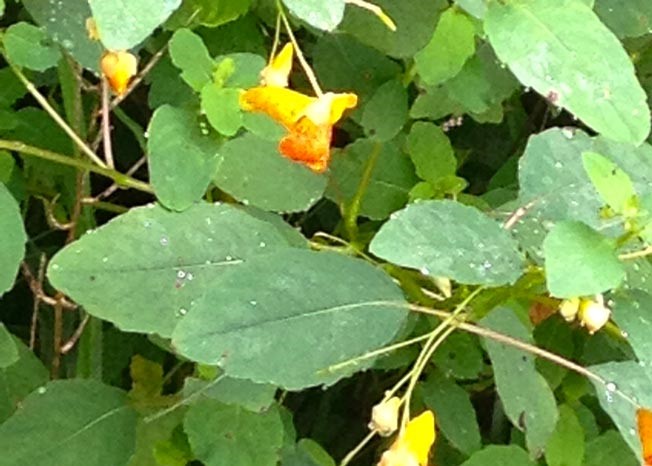
It is (Impatiens capensis) or, as it is more commonly known, Jewelweed. Jewelweed is quite the prolific spreader. It likes both woodland and moist areas, or so I’ve heard, though it seems just as content growing along roadsides, too. Interestingly, it is also often found growing alongside poison ivy; nature, when left to her own devices, often provides both the malady and cure side-by-side. But that’s neither here nor there. Inside it’s hollow stem is a watery mucilage. Just break it open and pat (do not rub) along any skin that may have come in contact with poison ivy (use a new stem for each area if more than one possibly infected). Often it is enough to prevent a breakout of the dreaded rash to begin with.

I, unfortunately, did not do that.

However, the stems can be chopped up, placed in a double boiler (see how to improvise without a double boiler Here) and slow simmered with a lid on for a couple of hours (keep a close eye that they do not scorch). Gently dab on the offending rash.

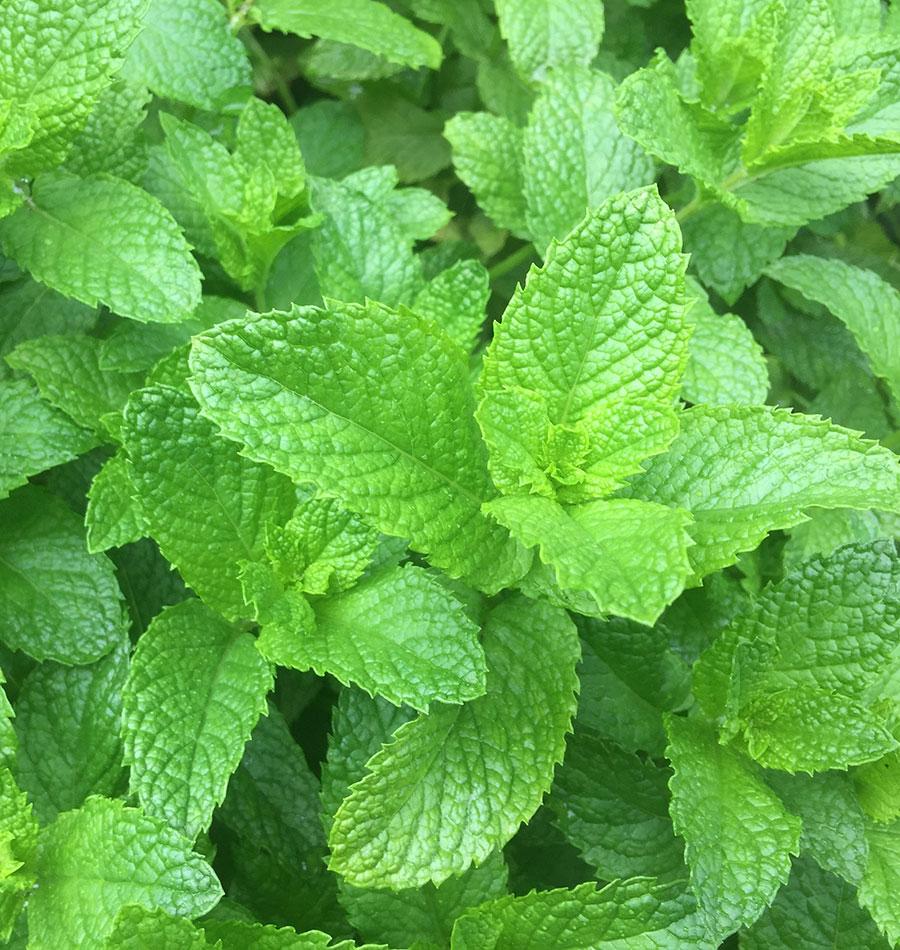
An alternative is to make an infusion (you can learn more about infusions at the same hyperlink above) of spearmint (Mentha spicata) leaves. You can gently dab the infusion on the same as with Jewelweed or, as I did this morning, I poured half of the infusion into a cup and added enough baking soda to make a paste. This keeps the infusion from dripping and the baking soda will help to dry it up the rash. Sadly, while this last will help clear it up faster, it has to be reapplied frequently to reduce the itch.

(Mentha spicata) Spearmint leaves

May God bless you & keep you!

Brothers & Sisters, Christianity, Emergency Preparedness, Finances, Frugality, Homesteading, Minimalism, Prepping

Frugal Fridays – The Budget

“Command those who are rich in this present world not to be arrogant nor to put their hope in wealth, which is so uncertain, but to put their hope in God, who richly provides us with everything for our enjoyment.” (1 Timothy 17)

Washing out a bread wrapper to repurpose it as a sandwich wrap. Buying a book of matches to keep in the bathroom as a quick and inexpensive way to eliminate odors. Wearing a pair of jeans twice before washing them. Combining errands to save on gasoline. None of these practices by themselves will make a big dent in your budget. However, when combined with a host of other money saving practices, they may.

Another important practice—probably the most important one—is budgeting.

Yes, I know that’s almost a “dirty” word for many people. However, this is a skill that should be taught from grammar school on up through college until it is second nature. I cannot tell you how many people I know who don’t know how to manage money. The concept is completely foreign to them.

One of my ex-husbands (yeah, one of those rare times I’m bringing one of them up!) looked at his paycheck each month. For the sake of this exercise, let’s say he earned $2000 each month. His rent/mortgage payment was $1200. He paid $150 per month for electricity, $300 for groceries, $50 for his phone, and $150 for heat. A cable company offered him this great-sounding package for $150 each month, all the movie channels. He’d jump on it. He can afford it. He makes $2000 a month. Forgotten was the grand total for all the other expenses he had: $1850. Yes, there’s another $150 available there. But, he neglected to include gasoline for his car. Ditto for taxes, oil changes, tires, etc. He smoked. He drank beer. None of that was budgeted either. He maxed himself out and then, when something broke and needed repair or replacement, he had nothing to fall back on, and nothing saved. Instead, he’d fall behind, robbing Peter to pay Paul.

Sometimes that happens anyway, no matter how carefully we budget. Layoffs, recessions, injuries, illnesses, even some discriminatory actions that may crop up from time to time, may have an impact even with a budget. My own circumstances are like that. The new mortgage payment, amortizing in all the overdue payments from the injury in 2019, is quite high and doesn’t leave a lot of wiggle room…especially with intermittent running water requiring Mom and I to buy it in. But, this overall circumstance didn’t arise from a lack of budgeting. It’s been a lack of income. You cannot budget what isn’t there in the first place. However, having a budget–complete with some sort of savings plan–certainly helps. Having a budget lets you see just where you might be able to cut some corners to ease some of the burden.

Having a budget can also help when looking for a new job. If you need $2000 a month just for your most basic needs, you need a job that pays at least that much. Or you need to find something you can do on the side to generate supplemental income.

I used to pet sit on the side. Having a budget helps with side hustles, too. The client may be willing to pay you $20 a day to take care of their pets for them but, if you have to drive an hour each way to care for them, you’ll lose money on the gasoline you’re using. If things are tight, will you even have the gas money to put into your tank in the first place so you can get to the job?

A budget is a means of preparing for as many eventualities as you can. It won’t shield you from every calamity but, having a budget—especially one that includes some sort of savings (even if it’s just spare change; amazing how quickly that adds up)—is one of the most empowering skills you can have. Budgeting takes you from being a victim of circumstance to being a survivor…and a confident one at that.

May God bless you & keep you!

Abuse, Addiction, Alcoholism, Animals, Brothers & Sisters, Christianity, Compassion, Exhaustion, Faith, Frugality, God/Jesus, Gratitude, Herbs, Homesteading, Minimalism, Politics, Prayer, Prepping, Proofreading, Religion, Scripture, Spinning, Weaving, Writing, YouTube

Going Forward

“You have rejected us, O God, and burst forth upon us; you have been angry–now restore us! You have shaken the land and torn it open; mend its fracturs, for it is quaking. You have shown your people desperate times; you have given us wine that makes us stagger. But for those who fear you, you have raised a banner to be unfurled against the bow. Selah” (Psalm 60: 1-4)

            The water’s out again. It’s happening more frequently these days. We’ll have running water for a few days, and then the taps will run dry for 2, 3…one time 9 days’ straight. We’ve considered that a combination of local drought, mixed with the flood we had last year, may have run the well dry—or semi-dry. That’s a scary thought but, a credible one. Of course, it could still be that I need to replace the pump, or the resident rodent population chewed a wire somewhere. At this point, we simply don’t know. And the means to find out exactly what’s wrong, and actually get it fixed, is beyond me at the moment. We could be talking tens of thousands of dollars when all is said and done.

As I said in a previous post, I am bodaciously tired of all of this. The struggle has become unbearable. Moving would be our best option. This may be home but, home needs way more TLC than I can give it to make it comfortable and safe again. The problem is my credit is toast at this point. Can I hang in here long enough to rebuild my credit before home becomes completely uninhabitable? We’re almost there now.

            So many things, so many worries…I still have some juvenile felines that need spaying. The roof still leaks. Even when the water runs, there’s no hot water; the tank died a year and a half ago. We heat water for bathing on the stove…or rather the hot plate. The stove no longer works either. The house is a fright. This last because I’ve allowed depression to get the better of me. The task is too enormous and there never seems to be enough time. It’s nothing some serious elbow grease wouldn’t fix but, still, it can be overwhelming with all that needs doing and fixing. I’d love to rent the biggest dumpster imaginable and just toss almost everything in it, start anew, and less is best.

            On the plus side, my friend’s little boy made his First Communion yesterday. What a cause for rejoicing! His little face was aglow as he accepted the body of Christ for the first time. Quite a lot of extended family came to church to celebrate with him, including his older brother home from college. The only downside was the low number of children making that First Communion. I praise God for the 5 who received it. However, I remember the long line of children making their First Communion when I was a child. Sad that people do not make religious education a priority today. Maybe we’d have fewer shootings, fewer suicides, less drug addiction and abuse. Maybe not but, even a tiny seed of hope planted in the heart can do wonders. That’s what Jesus does for you; He fills you with hope. When you have Him, no earthly concern can truly hurt you.

            I’m also doing a weed walk next month, my first. I hope to create new business cards beforehand so I can pass them out to any who join the walk. I’m hoping to build a local following before I start uploading videos to YouTube. I want to get comfortable with the teaching aspect of it before I have to do it on camera. There’s also the whole technical learning curve before YouTube becomes a *thing* in my life. I will, of course, share the link once I finally do hit YouTube. In the meantime, there’s local weed walks and workshops…and a renewed commitment to build a brand through my blogs.

Yes, blogs…with an S.

Most who have been following me for a while know I also have an author’s page. I’m still working on the first novel but, I occasionally do book reviews on my author’s page. I am looking to get more intentional with that, too. The link is https://lisaburbank.wordpress.com

Then there’s the latest blog. This one started as a classroom assignment. We were asked to build a website for selling your product(s) and/or services online as a freelance writer. Well, I confess, I don’t sell any services as a freelance writer. Maybe in time I will. I’m pretty good at editing. And I’m gaining some experience with grant writing since becoming the director of a library. But, as a student, even having scaled back to part-time studies, the time needed to edit another’s work, or assist someone in the grant writing process, would be overwhelming. And, to be honest, when I consider selling those services, it makes more sense to me to do so through my author’s page.

However, that didn’t fly with the professor; I tried. It had to be a new website.

Now that the boring bibliography-about-nothing-in-particular is gone, I can revamp it.

Over the years, The Herbal Hare has been such a hodge-podge of *stuff*. I’m looking to get more intentional with what I include here vs. what should probably go somewhere else. For example, some years’ ago, I wrote a piece about growing up with alcoholism in the home and how it affects the whole family, sometimes for generations. I received a lot of new followers but, it didn’t have anything to do with homesteading, herbs, or prepping, and I lost a lot of those followers who didn’t like the new direction. I’ve also gotten social/political a time or two…and alienated some readers with that. I’m hoping that https://auntielisaspeaks.com will be an alternative. The Herbal Hare will remain a blog about herbs, homesteading, prepping, fiber arts, frugal living, minimalism, antiquated skills, animal husbandry and, yeah, still a bit of a hodge-podge. Homesteading encompasses a lot of ground.

Auntie Lisa Speaks will be one-part memoir, one-part social commentary, and one-part call to action to remember that no matter the issue, there’s a real person on the other end of the screen. Their thoughts and feelings do matter, and their struggles are real. Part of that call to action will also be a call to follow Christ; our country really needs God back at the center of things again.

May God bless you & keep you!

Christianity, Compassion, Emergency Preparedness, Frugality, God/Jesus, Prepping

Frugal Friday: Water Source

“A good man leaves an inheritance to his children’s children, and the wealth of the sinner is stored up for the righteous.” (Proverbs 13:22)

Having to buy in water can get pretty costly, and it’s certainly not sustainable long-term. A gallon jug of water averages around $1.50 – $2.00 here in Connecticut. I’ve shared how Mom and I have had intermittent water service here at home due to either a faulty well-pump (it’s lasted over 20 years so I guess we’re due to replace soon…), or a chewed wire somewhere. In addition to providing drinking water for Mom and I, we have goats, chickens, ducks, cats, and a feisty old Cockatiel named Smoky Bones for which to provide. We also have to bathe and, well, yes, without a functioning water source, flushing becomes an issue, too.

I may have shared this before but, it bears repeating if I did. With inflation, the threat of both nuclear war, and at least a recession, on the horizon, knowing what to do when the most basic systems go down is pretty important. Of course, if systems go down, this particular source will not be there either but, for lesser disasters, such as the one Mom and I are currently experiencing, it works…at least for the short-term.

Walmart has a refill service.

They have one-, two- and five-gallon jugs that can be refilled in store. I normally take 15 jugs in to refill every couple of days. It’s still an expense I’d rather avoid but, until I can replace/repair everything, it’s considerably less than buying new gallons every few days. You can either purchase a few refillable jugs from the company that provides the reverse osmosis machine, or Walmart will also allow customers to refill their “Great Value” jugs for the same inexpensive price of .39 cents (at least the local Walmart allows this; hopefully, yours does, too). The same 15 gallons costs me less than $6.00…instead of almost $17.00 for new.

Incidentally, many of the cashiers have expressed appreciation for writing “REFILL” on the jugs when you bring them back for refilling; it helps with ringing them up. Otherwise, you might get charged for new ones. I use a regular Sharpie. It shows up big and bold.

I do not wish this existence on anyone but, it’s always good to know where to go, and what to do, when these things do happen.

May God bless you & keep you!

Alcoholism, Christianity, Cooking, Emergency Preparedness, Frugality, Healing, Herbs, Holistic Health, Homesteading, Organic, Prepping, Recipes, Religion, Scripture, Spices

Wednesday’s Weed Walk: Tinctures

“And God said, Behold, I have given you every herb bearing seed, which is upon the face of all the earth, and every tree, in the which is the fruit of a tree yielding seed; to you it shall be for meat” (Genesis 1:29)

Though it is a couple of weeks’ late, as promised, this week’s Wednesday Weed Walk isn’t so much about a specific herb but, about a way to preserve the herbs for future use when not in their growing, or harvest, seasons.

A tincture is, in my opinion anyway, the easiest way to make medicine. You can tincture a single herb, or blend them. I tend to do the latter…except when I’m making my own vanilla extract (recipe below).

To tincture herb(s), you need a clean, sterile container (repurposed glass Mason jars work well!) and, preferably, 100 proof alcohol of some kind. I use 100 proof vodka to tincture my herbs but other mediums, such as rum, would also work. You can use an 80 proof and broaden the selection of spirits but, you will need a few capsules of vitamin E oil added against spoilage, as anything less than 100 proof may mold. Apple cider vinegar (ACV), also with added vitamin E oil, will work for short-term storage. With ACV, you will have to store your tinctures in the refrigerator and they will only keep for 2 weeks, at best. When tincturing in 100 proof alcohol, your tinctures remain shelf-stable for up to 2 years. However, if you, or someone you love, is susceptible to alcoholism, or for young children, ACV may be the better option for you.

Tincturing is simple. You measure your herbs into a jar and pour the alcohol, or ACV, over them until they are covered with the liquid. Then you put a lid on the jar, label it with the contents, ingredients, the date you started the tincturing, and the batch #. This last isn’t 100% necessary but, if you decide to sell herbal products, having a running batch # is helpful should any adverse reactions occur. Depending upon the medium you used, you place the tincture into the refrigerator, or in a dark cabinet (too much light will destroy the healing properties), and shake it daily for two weeks. At the end of those two weeks, you can either leave the spent-herbs inside, and strain as you use it, or strain them now, at the two week mark, into another clean and sterile jar, or dark-colored bottle.

You can use fresh herbs, or dried. If using dried, remember the herbs will have a higher concentration of medicinal properties to them. 1/3 of the amount of dried herbs suffices. So, if you normally measure 1 tablespoon of, say, fresh chamomile, you would only use a teaspoon of the dried.

Making medicine is the part I like the best but, you can also use this method to create extracts for the kitchen, such as vanilla. To make vanilla extract, you will need a dark jar/bottle of some kind (you can find online, or many herb shops will sell them), or a dark cabinet to store them if using clear glass. It doesn’t need to be a large bottle. A couple of ounces suffices. Think of the tiny bottles that vanilla extract comes in at the grocery store. Anyway, take 2-3 vanilla beans, slice them in half lengthwise, and put them in the bottle (if bottle is short, you may also need to cut them in half the other way, too). Fill the bottle with 100 proof alcohol, screw on the cap, give it a shake and let it tincture for two weeks. Once the two weeks are over, however, in this case, you will NOT be straining the liquid into another container. Instead, keep the vanilla beans in the liquid. As you use it, you can simply top it off with more 100 proof alcohol, and/or add more vanilla beans over time. Also, in this case, the ACV will NOT work. However, any concerns over the alcohol content should be unfounded as the alcohol burns off in the cooking/baking process.

This same method will work for almonds, lemon peels, etc. too.

May God bless you & keep you!