Alcoholism, Christianity, Cooking, Emergency Preparedness, Frugality, Healing, Herbs, Holistic Health, Homesteading, Organic, Prepping, Recipes, Religion, Scripture, Spices

Wednesday’s Weed Walk: Tinctures

“And God said, Behold, I have given you every herb bearing seed, which is upon the face of all the earth, and every tree, in the which is the fruit of a tree yielding seed; to you it shall be for meat” (Genesis 1:29)

Though it is a couple of weeks’ late, as promised, this week’s Wednesday Weed Walk isn’t so much about a specific herb but, about a way to preserve the herbs for future use when not in their growing, or harvest, seasons.

A tincture is, in my opinion anyway, the easiest way to make medicine. You can tincture a single herb, or blend them. I tend to do the latter…except when I’m making my own vanilla extract (recipe below).

To tincture herb(s), you need a clean, sterile container (repurposed glass Mason jars work well!) and, preferably, 100 proof alcohol of some kind. I use 100 proof vodka to tincture my herbs but other mediums, such as rum, would also work. You can use an 80 proof and broaden the selection of spirits but, you will need a few capsules of vitamin E oil added against spoilage, as anything less than 100 proof may mold. Apple cider vinegar (ACV), also with added vitamin E oil, will work for short-term storage. With ACV, you will have to store your tinctures in the refrigerator and they will only keep for 2 weeks, at best. When tincturing in 100 proof alcohol, your tinctures remain shelf-stable for up to 2 years. However, if you, or someone you love, is susceptible to alcoholism, or for young children, ACV may be the better option for you.

Tincturing is simple. You measure your herbs into a jar and pour the alcohol, or ACV, over them until they are covered with the liquid. Then you put a lid on the jar, label it with the contents, ingredients, the date you started the tincturing, and the batch #. This last isn’t 100% necessary but, if you decide to sell herbal products, having a running batch # is helpful should any adverse reactions occur. Depending upon the medium you used, you place the tincture into the refrigerator, or in a dark cabinet (too much light will destroy the healing properties), and shake it daily for two weeks. At the end of those two weeks, you can either leave the spent-herbs inside, and strain as you use it, or strain them now, at the two week mark, into another clean and sterile jar, or dark-colored bottle.

You can use fresh herbs, or dried. If using dried, remember the herbs will have a higher concentration of medicinal properties to them. 1/3 of the amount of dried herbs suffices. So, if you normally measure 1 tablespoon of, say, fresh chamomile, you would only use a teaspoon of the dried.

Making medicine is the part I like the best but, you can also use this method to create extracts for the kitchen, such as vanilla. To make vanilla extract, you will need a dark jar/bottle of some kind (you can find online, or many herb shops will sell them), or a dark cabinet to store them if using clear glass. It doesn’t need to be a large bottle. A couple of ounces suffices. Think of the tiny bottles that vanilla extract comes in at the grocery store. Anyway, take 2-3 vanilla beans, slice them in half lengthwise, and put them in the bottle (if bottle is short, you may also need to cut them in half the other way, too). Fill the bottle with 100 proof alcohol, screw on the cap, give it a shake and let it tincture for two weeks. Once the two weeks are over, however, in this case, you will NOT be straining the liquid into another container. Instead, keep the vanilla beans in the liquid. As you use it, you can simply top it off with more 100 proof alcohol, and/or add more vanilla beans over time. Also, in this case, the ACV will NOT work. However, any concerns over the alcohol content should be unfounded as the alcohol burns off in the cooking/baking process.
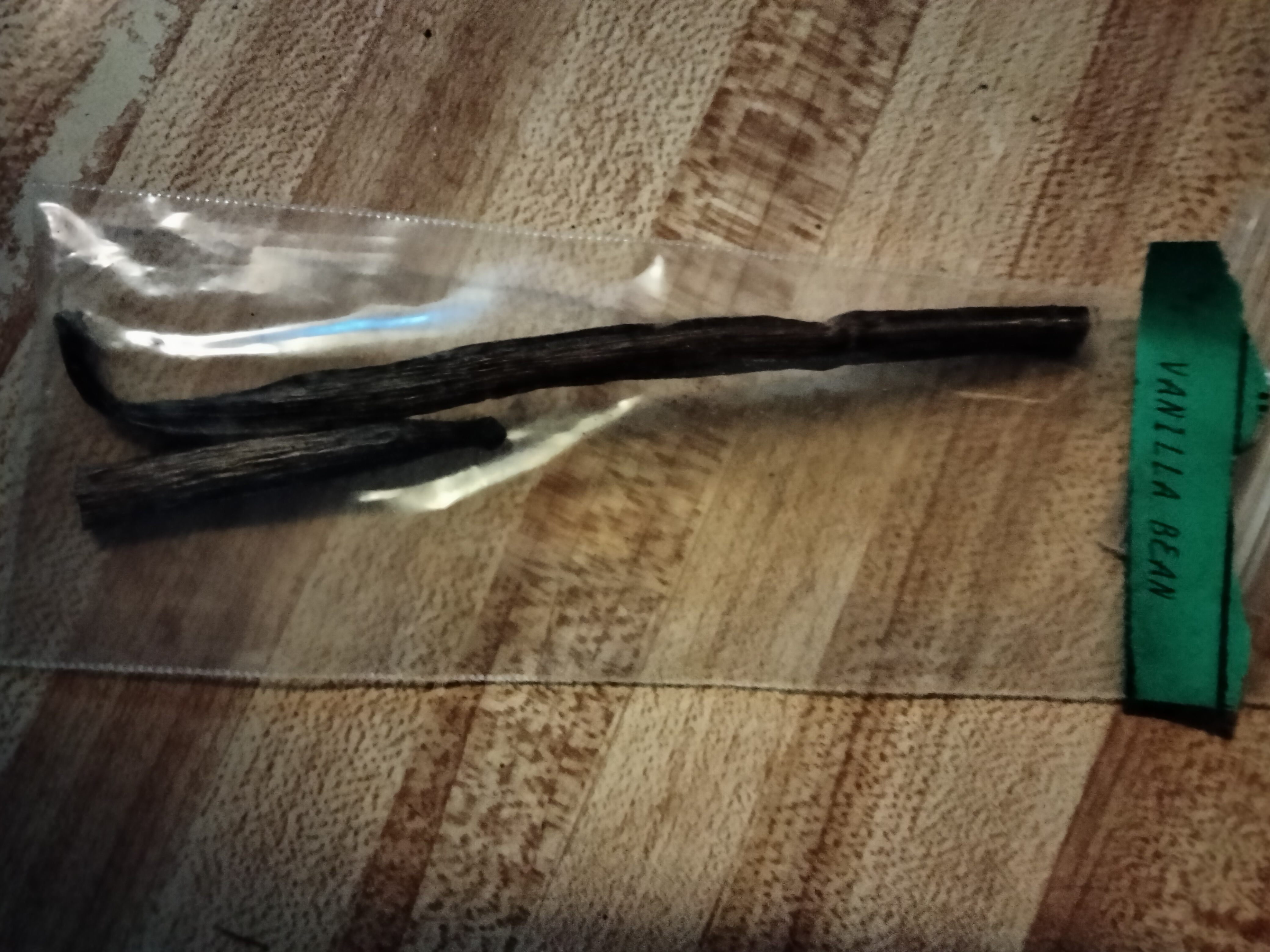
This same method will work for almonds, lemon peels, etc. too.

May God bless you & keep you!

Christianity, Cooking, Creativity, ecosystems, Emergency Preparedness, Frugality, gardening, Homesteading, Human rights, illness, Minimalism, Nature, Politics, Poverty, Prayer, Prepping, Self-improvement

The Best Investment Made on the Homestead

“The Mighty One, God, the Lord, speaks and summons the earth from the rising of the sun to the place where it sets. From Zion, perfect in beauty, God shines forth. Our God comes and will not be silent; a fire devours before Him, and around Him a tempest rages.” (Psalm 50:1-3)

In an earlier blog post, I talked about how when under extreme amounts of stress we often get “stupid”. Or, perhaps a better way of putting it, the feeling of being overwhelmed becomes so great that staying on top of even the littlest thing becomes a challenge. Translation: yours truly has been seriously off her game for way too long.

I didn’t check the level of oil in the furnace this weekend past. My bad!

Yesterday, Mom thought the house was starting to feel a little chilly. She fired up the woodstove, which is fine. Temps are supposed to be minus zero this weekend and I had purchased some bundles of wood to supplement the oil. Prices are ridiculous, which is probably why some part of me didn’t check the gauge: avoidance. This is the first year in a long time without full heating assistance. With my new salary, we no longer qualify. That’s not a lamentation; I am extremely grateful, especially after so many years of want. But this winter is an adjustment…and yes, I dropped the ball.

We are out of oil.

I called George at the local oil company and he will deliver later this morning. However, unlike so many others who would be in dire straits in such brutal cold, we weathered it just fine because we are not bound by one source of heat. The woodstove I purchased back in 2011 has been the best investment into this homestead that I have made so far. Power outages, extreme temperatures, and yes, even human error have proven to me time and again what a valuable investment it was. It has more than paid for itself in the last 12 years. When I can’t afford cords of wood, deadfall, bio-bricks, which you can make yourself (more on that in another post…), or even old pallets cut up will do in an emergency. I can even heat water, or cook, on it in a pinch.

We are also not 100% reliant on “the system”.

This is the real reason why so many people turn to homesteading and prepping. I know this last is often associated with negative connotations. “Prepper”, to some, may conjure up images of some guy in camo, fully armed, living off roots and reindeer carcasses in the wilderness. Sure, this stereo-type is ready for anything–supposedly–but, prepping is just homesteading taken a step beyond. We’re not just reducing our dependency on modern systems, such as food, heating, and transportation; we’re also planning and preparing for a total system shutdown. And, if that last word conjures images of 2020 2.0, you would be right.

The pandemic should’ve be a lesson to us all. Systems break down. Supplies don’t always get through on time. Illnesses, injuries, and natural disasters happen. There is no way of knowing when, or for how long, these things will last, the toll that they may take. Inflation, and a potential world war, may be our next breakdown of systems; prepping, to my mind, is the only sensible course to take.

That being said, financial difficulties in recent years have put me behind on my prepping. Prepping kept me solvent for over 2 years after losing all 3 jobs that I had been working when the Great Recession hit. Unless your last name is Gates, Fauci, or Schwab, no human being’s finances will last them forever…no matter how carefully we plan, save, or how frugally we live. But careful planning, frugal living, and saving will serve you well for much longer than any government assistance that may, or may not, be forthcoming in a crisis.

For those who rent, no, installing a woodstove may not be an option for you. However you may be able to create a small grocery budget for, say, $10.00 extra each month to purchase extra canned and frozen foods. No, not the healthiest options but, it’s always good to have them around. Organize them by expiration dates. Those that will expire first, place at the front of the cabinet, drawer, or closet. Add new products to the back so you don’t take them first and allow older food to spoil. Even if you don’t garden, learn how to can and ferment food. When able, take advantage of sales and can, or ferment, whatever your family won’t eat before it all spoils. You can do this with food donations from a food pantry, too, if you are in such dire straits as to need them. It’s nothing to be ashamed of; Mom and I have had to rely on such extra ourselves in recent years. It falls under the heading of “sh** happens”. And, as much of the gifts received from a food pantry may be day-old and won’t last so long, canning or fermenting will extend the shelf life. You can also extend the life of canned goods nearing their date. Heat them up, or pre-cook meals, and freeze them in serving-sized bowls to be re-heated at a later date. Be sure to label them and, like the canned goods on your shelves, place newer additions to the back of the freezer. They should be fine for up to 3 months in the freezer. Peruse army/navy surplus stores for cold weather gear. Purchase a small tent that can be put up in your living room, or bedroom, to help you conserve heat should systems fail. Keep a supply of bottled water, extra pet food, candles and/or oil lamps with their oil, and matches on hand.

And don’t vote for anyone who wants to take away your right to grow and/or preserve food for yourself and your family, or heat your home with a fuel that grows naturally and can be found by a quick walk through nature. This isn’t conspiracy theory; it’s common sense. It is much easier to hold onto the freedoms we already have than to get back any we’ve lost. Government may make it look more attractive, such as with these 15 minute cities where everything is conveniently within a 15 minute walk from home, but the cost is always higher than the convenience is truly worth.

When all else fails, pray without ceasing…in fact, pray without ceasing before it all fails.

May God bless you & keep you!

Christianity, Cooking, Creativity, Frugality, Homesteading, Minimalism, Poverty

Learning to Live on Less

“Sing praises to the Lord, enthroned in Zion; proclaim among the nations what he has done. (Psalm 9:11)

I’ve talked a lot about my financial difficulties over the last couple of years (probably ad nauseum for many!) If this is your first visit here, I fractured my shoulder in 2019 and lost my job due to time missed recovering. For those who have been following for a while, you also know the extent of those difficulties. It’s been stressful and frustrating and downright scary at times; still is. But, the significant number of missed mortgage payments notwithstanding, how have we been surviving? We is my mother, a small farm complete with livestock and pets, and myself.

For starters, the wi-fi I’m using right now is the only “luxury” we have. If it wasn’t for my classes (50-something returning for my Masters in Creative Writing), I could eschew wi-fi, too. We don’t have cable or satellite (i.e. no paid TV). We don’t pay for any streaming services. And, since coming to work in a library, I seldom buy books…unless I’ve already checked it out a few times and know I’ll read it again. Neither of us is fond of movie theaters or sports.

So what do we do for entertainment?

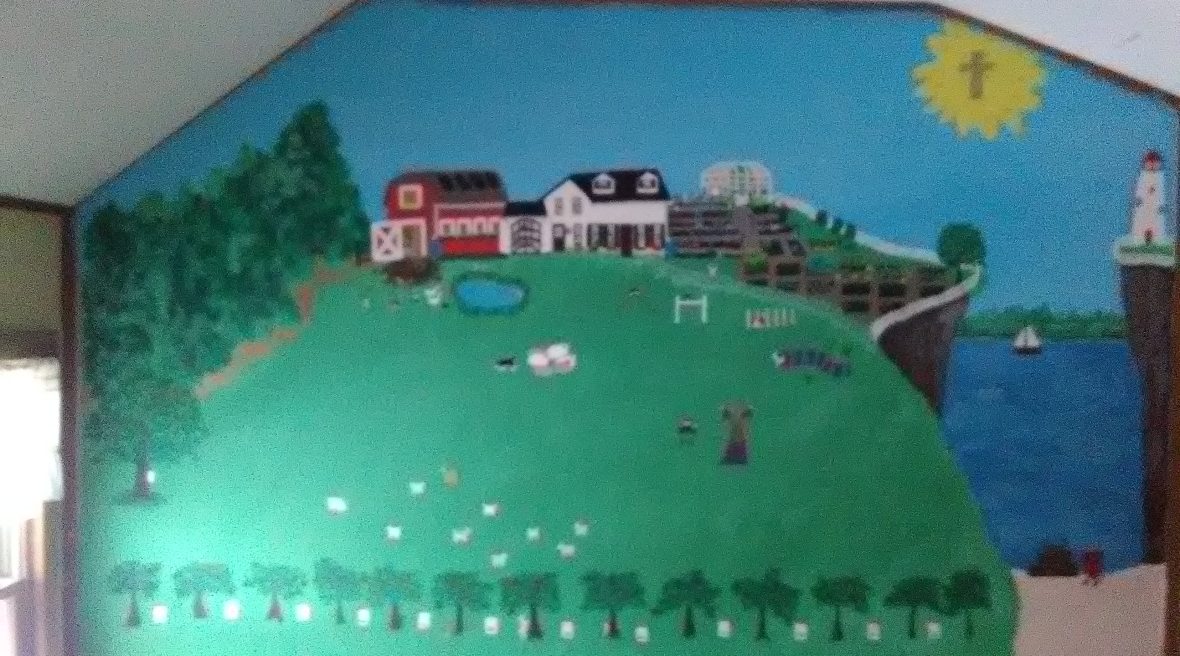
Well, we read a lot. We play board games. Scrabble is our favorite. We play cards, mostly Rummy. We took a $10 art class through the church a couple of years ago and painted our first acrylic landscapes. I came home thinking I was Monet and painted a mural on the wall of my office.

In short, living on less means getting creative and also, connecting with others. Sure, we still do a lot of screen time. Mom has a lot games downloaded onto the tablet she got for either Christmas or her birthday. I, of course, write.

Entertainment is a big chunk of expense for many people.

We don’t have a washer and dryer. I take everything to the laundromat. Yes, the machines are a bit pricy. However, my electric bill is lower. If I had town water instead of a well, my water bill would be significantly less, too. We hand wash many things, especially in the summer when they can dry outside on a line, or on a clothing rack.

We don’t have a dishwasher either. I know many so-called “experts” claim it uses less water than doing it by hand. That’s only true if you leave your faucet running non-stop instead of turning it off between rinses. What a waste of water and resources! It may seem like pennies but, those pennies add up. They’re better off in you pocket, or in an old jar to turn in at the bank when it’s full.

I save bread wrappers. I rinse them out and allow them to air dry. Then I use them for wrapping sandwiches to take to work for lunch. And, yes, I brown bag it. Unless your employer provides free lunch every day, those lunches out can add up pretty quick.

Ditto for the coffee and donuts on the way into the office. Give yourself time in the morning to eat a good breakfast and brew extra at home to pour into a travel mug. Speaking of which, that fancy Keurig machine? I won’t even allow one in the house. Ditch it. It’s costing you too much for coffee. A 40.3 oz. canister of Folger’s coffee costs $11.97 at Walmart. Each canister makes approximately 380 cups. Divide 11.97 by 380 and you get a little over .03 per cup. A 48 pack of Folger’s K-Cups costs $26.72 at Walmart. Divide $26.72 by 48 and you get around .56 per cup. Or, another way to figure it is to get the same number of cups of coffee from the K-Cups, you would have to purchase 7.9 cases of 48 at a grand total of $211.62. That’s almost $200 more for the same amount of coffee. You’re paying all that extra for convenience. A heaping tablespoon of coffee for every cup you’re brewing will produce a great-tasting cup.

When you’ve mastered freshly-brewed coffee, move onto cooking and baking from scratch. I believe there’s another blog post in the archives where I break down the savings on a loaf of homemade bread. It came out to, like, .30 per loaf.

These are just some of the things we do, or have done, to live on less. Your wallet will thank you. And, in these uncertain times, those few pennies really do add up.

May God bless you & keep you!

Animals, Bereavement, Brothers & Sisters, Christianity, Climate Change, Community, Cooking, Culture, Emergency Preparedness, Faith, Family, Fashion, Fiber Arts, Fleece, Frugality, gardening, God/Jesus, Healing, Herbs, History, Homesteading, Human rights, Humanity First, Introvert, Minimalism, Nature, Politics, Prepping, Wool, YouTube

The Call to Homestead

“I will lie down and sleep in peace, for you alone, O Lord, make me dwell in safety.” (Psalm 4:8)

The need to become more self-sufficient has moved from yearning to this almost panic-filled need. We’re running out of time. Both economic depression and the threat of nuclear war loom, and our leaders fly off to Davos to plot how to take everything away from the average working class citizen. There have been countless headlines quoting Mr. Schwab as saying we will own nothing and we will be happy about it. I’m probably paraphrasing a bit but, the overall gist is there. Yes, I can play devil’s advocate here a moment and say, sure, maybe it’s propaganda, a conspiracy theory. But, what if it isn’t? What if the goal really is a 15 minute city where we will own nothing for ourselves?

Would we be happier without ownership?

First of all, as a Christian, anything I own I do so by the grace of God. What I have truly belongs to Him. Would I be happier having those gifts taken away?

Despite the new position at the library, I’m still staring foreclosure in the face. It’s a lengthy and stressful process and there’s no guarantee that I will be successful in my endeavors. One could argue that, if I wasn’t a homeowner, this stress would not exist. I wouldn’t be fretting about losing everything that I have worked for in my life up to this point. And that is true. There’s also the multitude of repairs that fall on my shoulders as homeowner…repairs that have gotten out of hand in recent years. There’s the zoning issue still hovering over me like a black cloud. In short, the more you have, the more you stand to lose.

But, let’s spin this around a bit.

If we don’t own anything, what is the point of working, of setting goals? Whether we own a house, a car, etc. doesn’t change the fact that we still have to have food to eat. That is also true. But isn’t the purchasing of food a form of ownership? If you don’t own the place where you live, it is likely your landlord will not allow you to put in a garden. You won’t be able to raise livestock for eggs, for dairy, for meat…if you eat such things. I was a vegetarian for over 20 years. I know one can survive without consuming animal flesh. However, the loss of certain B vitamins, especially B-12, wreaks havoc with your nervous system. Stress, anxiety, depression often stem from a lack of these vitamins. And supplements are expensive. The purchase of such is also a form of ownership.

Now let’s go back to the garden. You can’t have one. You don’t own the land upon which your leased/rented home sits. What if you truly enjoy gardening? And what if you’re an introvert, like me, and the thought of a community garden makes you feel physically ill at times? If it’s not YOUR garden alone, you may be limited by what you can plant there. If you’re a herbalist like me, growing purely medicinal plants would likely be prohibited. Big Pharma doesn’t like competition, or a loss of control. So you don’t own the land. You can’t garden, which brings you joy. You can’t grow the types of food you enjoy eating. You can’t grow and make your own medicines, or even health and beauty aids. You’ll have to buy from big box stores, or online retailers. What’s in that food? That medicine? That skincare supplement?

Okay. You’re not a gardener. Maybe you like swimming in a pool, hosting backyard barbecues. Guess what? You can’t do that either. It’s not your land. And the people at Davos, who fly around in their private jets, just decreed that barbecues are environmentally unfriendly. The smoke produces too much CO2. As do cows. No steak. No hamburgers. No cheese to melt over that petrie dish substitute.

What if you’re not an outdoors kind of person at all? You don’t own your home. The landlord doesn’t allow pets. He/she doesn’t want you painting the walls. Your place isn’t big enough for a workshop to build things, like furniture. And your kitchen only consists of a microwave and a single induction burner. Baking, canning what you grew at the community garden, or cooking healthy meals is next to impossible (microwaves destroy all of the wholesome goodness in the food cooked in them). You can’t knit. Raising livestock is outlawed (that CO2 thing again) so no wool, angora, or mohair to work with. Acrylics will disappear, too, since we’re no longer drilling for oil.

Maybe you like taking the occasional long drive in the country. Yes, improvements in batteries for electric vehicles (EV) are happening all the time these days. But at what cost to the environment? No, oil and gasoline are not infinite resources. Neither are cadmium or nickel, or any other precious metal. Yes, drilling for oil does tremendous harm to the environment. But so does mining for these metals. Like coal, mountains are dug out, and run-off from the mining pollutes the soil and water. However, to get back on subject, you want to take that drive. But you don’t own a vehicle–EV or otherwise–and the EVs left at the community garage are all in use today. Sorry.

Does this sound like a happy existence?

If we own nothing, we also cease to own our joy. By owning nothing, we give up our right to choose for ourselves. I don’t know about you, but I don’t want some wrinkled up prune in Davos telling me I can’t pick a few dandelion leaves to feed to my rabbits, or even a salad for myself. I don’t want anyone telling me I can’t take a road trip someday to visit my brother in Tennessee because he’s outside of my 15 minute zone. I don’t want to eat synthetic, processed foods, or wear plastic clothing. I want the freedom to make truly healthy choices for me, my family, my pets, and my community.

I also don’t want to be at the mercy of the “system”. What happened in 2020 will last in my memory forever. The walk into the grocery store and seeing aisles of completely empty shelves. Companies, stores, libraries completely shutdown. Places of worship closed until further notice. Loved ones denied the right to say a proper “goodbye” to those they lost. The loss of employment for so many because they refused to become human guinea pigs in their real-world experiments. And now, watching so many young people–healthy, young athletes–dropping after accepting a jab to the arm as part of that experiment.

The less dependent on that “system” we are, the less that fabricated shortages, shutdowns, and experiments will hurt us. Even a window box will produce some food and reduce some of that dependence. It may not be enough to sustain you completely, but start there. Learn how to can food and pick up produce at a farmer’s market. Or even on sale at the grocery store. Learn how to make pet food from scratch. If you can, invest in a chest freezer. Find someone in your community who knows how to find and identify wild edibles. Visit your local library and check out books on the Great Depression. Or comb YouTube for videos on the same. What did our ancestors do to make it through? There is a sense of pride that comes with being able to make your own way in the world, in being able to cook from scratch, grow a few tomatoes and herbs in a pot, split wood for a fire in a stove.

There is a sense of pride in owning a home, too. Yes, you can become a slave to that ownership, especially during hard times. And there’s no denying the cost. Not everyone can afford homeownership and that is the real tragedy in our society today. Houses have gotten progressively bigger and more expensive. At the risk of sounding like one of those conspiracy theorists, perhaps that’s part of the plan from some of our leaders. But the freedom to live as one chooses is worth the fight.

Even Jesus gives us the right to choose.

May God bless you & keep you!

19th century, Animals, Christianity, Climate Change, Compassion, Cooking, Creativity, Culture, ecosystems, Emergency Preparedness, Environment, Exhaustion, Faith, Fashion, Fiber Arts, Fleece, Frugality, gardening, Global Warming, God/Jesus, Greenhouse, Herbs, History, Holistic Health, Homesteading, Human rights, Minimalism, Nature, Nostalgia, Organic, Prayer, Scripture, Spices, Spinning, Straw Braiding, Weaving, Wool, Writing, Zero Waste

Yearnings

“I know how to live on almost nothing or with everything. I have learned the secret of contentment in every situation, whether it be a full stomach or hunger, plenty or want; for I can do everything God asks me to with the help of Christ who gives me the strength and the power” (Philippians 4:12-13)

The above passage from Scripture is almost true for me: No material girl here, but I do know how to live on almost nothing. The last decade or so has taught me well…as did a good portion of my childhood. I don’t need much. In fact, growing up on the lower end of the socioeconomic scale, and being both financially and occupationally challenged in current years, has developed in me a bit of a tightwad. No, I won’t skimp on your birthday or Christmas presents. I will buy you lunch, or tea/coffee, from time to time. I’m extremely frugal but, hopefully, not selfish or stingy. I give what and when I can.

But I perpetually yearn for a simpler life.

If you’ve followed my blog for more than a few months, you know I worked in living history, first as a volunteer for many years, and then as paid staff for a little over a year and a half. My deepest yearnings are for that kind of simpler life in these modern times.

Yup. Maybe I am a few fries short of a Happy Meal. I wouldn’t be the first to over-romanticize an earlier time. But, working in living history, I found a satisfaction in the skills that I learned…and a certain sense of rightness in each of them. Somehow spinning wool on a great wheel, refilling bobbins on a loom tool (smaller spinning wheel designed to load the bobbins for the looms), weaving, braiding straw, cooking and baking on a hearth came naturally to me. Whether this is some sort of ancestral memory, or maybe there is something to reincarnation after all, I don’t know. However, it wasn’t quite so easy for others who learned along with me.

Even the fashions of those earlier days proved to me to be much more comfortable and satisfying than today’s idea of fashion. First of all, the garments were made with natural fibers, which is healthier for us, and for the planet. In those long, full dresses I felt more attractive, more feminine, than in any other attire. So much so that I’ve been perusing websites for similar styles…either purchased ready made (someday when I’m back on my feet, not now that I’m struggling through financial hardship and zoning issues), or for patterns to make myself. There’s a part of me that would love to make several of the work gowns we wore for living history and maybe jazz them up a bit, a modern twist on an antiquated style. And, no, this may not jive with most people’s idea of frugality if I’m talking about purchasing new clothes, but we must wear something on our bodies. Why not something we truly love rather than conforming to modern expectations?

I remember some years’ back writing a post about how satisfying it was to sit down to a meal where the vegetables had been grown completely by my hand in the garden, the bread baked from scratch, the eggs from the chickens I raised, etc. I can’t help thinking that someday it might be just as satisfying to don an outfit that I either grew the cotton or flax, or raised the sheep; sheared/picked, cleaned, dyed, carded, spun, wove, and stitched all by myself. Yes, maybe that is a bit of pride, but I am of the mindset that maybe when we hear that “pride goeth before a fall” it’s not because having pride in one’s appearance, work, or living space will cause us to fall, but that, oftentimes, the only thing left someone has is their pride, and when they lose even that, that’s when they fall…sometimes never to truly get back up again. It’s tough to hold your head up when things are falling apart in your life. And Esther didn’t plead the cause for her people in rags; she dressed to the nine’s. She took pride in her appearance and made a statement. For me, that statement would be to embrace the comfort, simplicity and femininity of a simpler time.

Getting off a soapbox that threatens to get into a discourse on feminism, and going back to one of my beginning statements about yearning for a simpler life, I am referring to the whole reason I started homesteading in the first place. I’m tired of the rat race. I’m tired of killing myself, searching for a 9-to-5 that no longer exists, that will also leave me miserable, with no time to write, create, or work a homestead, and still not pay the most basic of bills. I’m tired of being dependent on the power grid, of our factory farm-to-grocery store food system. I’m tired of synthetic, plastic clothing poisoning our water and soil…and maybe even our bodies; can’t be healthy. I’m tired of all the additives to our foods, the pesticides and herbicides used to grow and preserve our food…and even the genetically-modified organisms that do not resemble food at all. I’m tired of watching species of life disappear, of honey bees struggling to exist. I’m tired of seeing advertisements for prescriptions that cause more maladies than the illnesses, or conditions, they were supposedly developed to alleviate. Our modern day lifestyle, the systems that have been put in place, make us vulnerable to them. This Covid-19 pandemic has shown us that. The power outages following each hurricane, tornado, or other natural disaster have shown us that, too. How many of us have friends or family members, especially the elderly, who start taking one pill for, say, high blood pressure then have to take another pill for bloating, or water retention, and then another as cholesterol skyrockets, etc?

Yeah, a bit of a rant today. I’m beating my head into the wall, preaching to the choir, because there are many things that I cannot change no matter how much I rant and rave, and seek to fight an uphill battle.

That doesn’t mean I give up entirely though.

My dream home has a hearth in the kitchen. It requires a hand-pump to draw water up from the well. It has a spinning wheel and a loom, a loom tool and a few niddy-noddies. It has a dough box for starting bread to rise. And a hand wringer for doing my laundry. It is lit with candles and/or oil lamps, and has a composting toilet if allowed (this last is often prohibited in many towns across the nation). My dream home is small and well-insulated with natural fibers, but sits on land large enough to support a decent-sized herd of goats for both fiber and dairy, sheep, chickens, ducks, honey bees and rabbits. There is a large herb and vegetable garden; a couple of greenhouses and/or hoop houses for year-round growing and for warm-climate spices. My dream home has an agility course because there are Border Collies sharing that home, too. Maybe there’s even a small pond for my ducks and geese, and for paddling a canoe once in awhile, because being on the water is such a great way to relax…even for those of us who cannot swim(!).

The yearning for such a life comes about as I navigate through this zoning and foreclosure nightmare I’ve been swimming through for too long now, always circling back to it just when I think I’ve finally got it licked. It’s where I go to escape, or better yet, to manifest? I know much of this is beyond me as building codes require certain regulations to be met, but to the extent I can get away with and still remain within the law, this is where I hope to go.

For too long now, a peaceful, simple, fairly self-sufficient life has been a dream only. I’m tired of the rat race. It’s time to live the life I was meant to live, a life lived with intention. And I pray the same thing for each and every soul reading this post…no matter how different your intentional life is from mine.

May God bless you & keep you!

19th century, Alcoholism, Christianity, Climate Change, Cooking, Creativity, Culture, Emergency Preparedness, Exhaustion, Frugality, Gratitude, Healing, Herbs, History, Holistic Health, Homesteading, illness, Minimalism, Nostalgia, Open-mindedness, Organic, Spices, Spinning, Straw Braiding, Weaving, Wool

Instead of Gatorade, Try Haymakers’ Punch

“For I will give you abundant water for your thirst and for your parched fields. And I will pour out my Spirit and my blessings on your children.” (Isaiah 44:3)

There are many things I miss about working in living history. I miss “my” herb garden. I miss spinning wool into yarn on the Great, or Walking, Wheel. I miss filling the bobbins on the loom tool (another type of spinning wheel). I miss weaving. I miss braiding straw for making hats. I miss cooking and baking on the hearth. And I miss the clothing.

Except when it was 90+ degrees outside and I had to get a fire going both on the hearth and in the bake oven (that little beehive-shaped cavity next to the kitchen fireplace).

Housewives in the 19th century did bake…even in summer. Southern ladies had summer kitchens; those were rarer in New England. However, New England housewives were sensible enough to rise early and get their baking done before that afternoon sun rolled directly overhead. In 2018, in a living history museum, where you have to demonstrate during normal business hours, you simply endured.

Or not.

I remember one afternoon that I felt extremely tired, and even a little dizzy, after baking all day. During the long walk back to my car after the work day was done, I was hailed by a fellow co-worker. I turned to greet her and almost fell over. She looked at me funny. I think I mumbled something about heat exhaustion but that was all. Exhausted, I drove the 30+ miles home and figured a good night’s sleep would have me feeling better in the morning.

The next morning the alarm went off. I sat up in bed, intent on turning it off, and the whole room spun. I nearly passed out again. Instead, I sat there, chilling, thinking it was the longest minute in history before the alarm stopped on its own. Finally, I got up but I felt weak and shaky, and I had to cling tightly to the banister as I made my way downstairs. It took me 45 minutes to feed the barnyard; normally, it was a 25 minute job. I decided to call in; there was no way I could interpret for visitors this day.

I also decided I needed to go to the hospital.

Now, one would think I would’ve had the sense to call a friend, to wake Mom, etc. to take me to the hospital. There’s a reason why dehydration is equated with inebriation: both make you stupid.

After calling work, I got in the car and backed out of the driveway. At the end of the driveway, I turned my head to look both ways for traffic and the whole road spun out…much like my room had done when I first awakened. As soon as it was clear, I drove myself to the hospital (yes, folks, we’re out there…).

The folks in the lobby must’ve seen me zigzagging like a drunk across the parking lot. They had a wheelchair waiting for me.

I must add here, for the benefit of future heat exhausted patients, that emergency room workers should NOT run with their patients down to the ER. As I was hurled along those stark green and white fluorescently-lit halls, it was all I could do not to “hurl” in another sense.

Long story short, two hours’ later, the doc told me that I had flushed most of the electrolytes out of my body the day before. You see, I thought I was okay, all but immune to dehydration, because I had been sipping water all day. Apparently, when it’s 90+ degrees and you’ve got a couple of infernos going behind you…and you’re wearing three layers of clothing…you need to replace those electrolytes, not just slake the thirst.

The doc recommended either Pedialyte or Gatorade; I prefer something a little healthier…and less expensive.
Fortunately, folks in earlier centuries made something called Haymakers’ Punch, or Switchel. I got to try some while visiting another living history museum in New Hampshire over a dozen years’ ago and they gave me the recipe. It’s an acquired taste for some. Others, like myself, think it’s delicious. Here it goes:

1 cup apple cider vinegar
¾ cups of honey (preferably locally grown)
4 teaspoons of molasses
¼ teaspoon of ginger (there’s that ginger again…)

Place all of the above ingredients in a cup of warm water, stirring constantly until dissolved. Pour the mixture into a 1 gallon container (preferably glass or ceramic; I don’t recommend plastic for any recipe). Fill the rest of the container with water. Keep in the refrigerator.

A word to the wise: Switchel is meant to be sipped, not gulped, or drank straight down.

Though it does not have all the fancy labeling, coloring, and artificial flavorings of either Pedialyte or Gatorade, Switchel will keep you hydrated during those hot summer days when you need a little more than just plain water to keep your cool. And it’s definitely an inexpensive alternative.

May God bless you & keep you!

19th century, Appreciation, Brothers & Sisters, Christianity, Cooking, Creativity, Culture, Diversity, Frugality, Gaia, gardening, God/Jesus, Gratitude, Healing, Herbs, Holistic Health, Homesteading, illness, Irritable Bowel Syndrome, Nature, Open-mindedness, Organic, Plants, Recipes, Religion, Scripture, Self-improvement, Spices, Spirituality, Wicca

Wednesday’s Weed Walk – Zingiberis officinalis

“And God said, ‘Behold, I have given you every herb bearing seed which is upon the face of all the earth, and every tree, in the which is the fruit of a tree yielding seed to which it shall be for meat’.” (Genesis 1:29)

I use ginger (Zingiberis officinalis) for everything! It’s in the asthma tincture I shared about recently; it’s in my digest tea (see recipe below); it’s in the golden milk I drink to control my Irritable Bowel Syndrome. I put it in a winter tonic. I also make and eat gingerbread and ginger snap cookies (or small cakes, as we used to say in the 19th century). I mean, it is so versatile and I’ll bet most of the people reading this have it in their spice cabinet right now.

Ginger has many healing properties. It is said to be a “stimulant, diaphoretic, carminative, emmenagogue, expectorant, antiemetic, analgesic, antispasmodic, stomachic, antipyretic, and antimicrobial (Tierra, 2003, p. 87). It has been used to treat motion sickness. It’s great for any lung complaint, such as asthma, bronchitis, and even pneumonia. It’s a stimulant for people with poor circulation. It has been used in poultices to ease the pain of arthritis. It’s capable of soothing sore throats and easing menstrual cramps. It’s also good for indigestion, nausea and flatulence. In fact, if you’ve ever had candied ginger, this was one of the earliest “treats” found in the local “country” or “general” store, along with horehound and lemon drops. Candying these “medicines” was a way to get children to take them. Think of Mary Poppins and her “spoonful of sugar” to help the “medicine go down”.

The FDA has not evaluated these statements. This blog post is for informational purposes only and is not intended to diagnose, treat, cure, or prevent any diseases.

Despite being a Christian, I have spent years studying Wicca and have a lot of respect for this religion. According to their traditions, ginger is said to “lend power” when “performing spells” as ginger is warming by nature and is particularly effective for “love spells” (Cunningham, 2006, p. 125). Supposedly, if you plant the whole root, you will attract money into your life, too. It is also recommended that you sprinkle some powdered ginger into your pockets, which could be interesting, to say the least ;).

Though we had ginger growing in the herb garden at the living history museum I used to work at, I have never tried growing it at home. My garden is still in the landscaping stages owing to when I have the necessary resources, such as time or money, to finish…or I dig down into that Yankee ingenuity to re-purpose something for the job. However, it seems to grow just fine in New England and overwinters with a healthy layer of mulch covering it. The only issues we had at the museum was that the groundhogs liked it a little spicy; we could never keep either the ginger root (it’s the root we use, not the leaves or other aerial parts) or the horseradish completely free of their nibbling. Surrounding it with chicken wire might do the trick. It’s worth a shot.

Whether you’re healing a bout of indigestion, casting a love spell, or baking some gingerbread to enjoy with family and friends, planting some ginger root in the garden, or simply buying some powdered organic, I’m confident you’ll find some new and effective uses for this little powerhouse.

May God bless you & keep you!

Digest Tea

1 tablespoon chamomile
½ tablespoon fennel
1/8 teaspoon of ginger
1 pinch of cardamom (with both the ginger and the cardamom, this is more to taste rather than science)

Heat water in a stainless steel kettle or sauce pan (water should be hot but not boiling; I often bring it to a boil and then let it sit for a few minutes so as not to damage the healing properties in each plant). Pour over the measured herbs/spices. Cover with a lid and allow it to steep for 20 minutes. Strain (or you may use a tea ball) and, if desired, add some honey to sweeten.

This is great about ½ hour before a meal…or as a soothing treat before bed.

REFERENCES

Cunningham, Scott (2006). Cunningham’s Encyclopedia of Magical Herbs, 2nd edition. Woodbury, MN: Llewellyn Publications.

Tierra, Lesley (2003). Healing with the Herbs of Life. Berkeley, CA: Crossing Press.

Christianity, Cooking, Creativity, Emergency Preparedness, Environment, Frugality, gardening, Herbs, Homesteading, Lasagna Gardening, No-dig Gardening, Spices, Zero Waste

Hey, Don’t Throw That Away!

“The wise man saves for the future, but the foolish man spends whatever he gets.” (Proverbs 21:20)

I have to caution myself. I come a long line preppers, pack rats, and even hoarders. There’s often a thin line between the intentional prepper saving for the apocalypse, the pack rat saving for “a rainy day” and the hyper-attachment to filling up any empty space…just in case. However, one can prep and save…and even hoard some extra ____________ (fill in the blank) without it becoming unhealthy.

Back when I was in my teens, I babysat for a couple who were foster parents. The third floor of their home was filled with children’s clothes. Every size and style; every color and texture. In their situation, it makes sense. They never knew when a new child would come in who might need a few changes.

A fellow musician friend has so many boxes and totes full of “stuff”, it is impossible to navigate from her living room to the bathroom without turning sideways and shuffling through with one’s gut sucked in.

We can go to extremes with everything. If you have the space, like in the first scenario shared above, to set aside for food, clothing, craft supplies, etc. without compromising safety or sanity, by all means. However, though the title of this post is “Hey, Don’t Throw That Away,” please do if you find yourself doing the sideways’ shuffle, or having to move bags of saved “stuff” to find a place to sit down. Such truly can be hazardous to your health (think tripping, falling, bruises, etc.), or a fire hazard, and even a mental health hazard as this overwhelming stash, well, overwhelms one’s senses.

For me, saving “stuff” falls under the heading of frugality. If I don’t have to buy something to accomplish something else, then it’s worth saving…again, within reason.

First on my list? If you’re a baker, do NOT throw away the outer wax papers of your sticks of butter. Place an old Mason jar, a mug, etc. on the door of your refrigerator and, once you’ve unwrapped the butter, place said wrapper into the jar/mug. When you’re ready to bake again and have to grease the pan(s), instead of reaching for new butter, grab a saved wrapper, open it up and wipe it around the pan or muffin tin. Bits of butter still clinging to it, even residual “grease” on the inside of that wrapper, will help to grease your pan while keeping your fingers pretty grease-free. PS You may need more than one; don’t sweat it! It would’ve gone into the trash anyway.

Toilet paper rolls make great compostable seed pots. Cut 1 to 1 and ½ inch slits along one end of the roll; fold sections inward to make the bottom. Fill with potting soil and place in a plastic, or metal, tray. You can plant them right into the garden without having to remove the seedling at all. (However, you may want to tear off the folded bottom to allow the roots to spread out; toss the bottom into the compost pile when done). They work much like the peat pots we see in the store…except your pocketbook doesn’t get any lighter and they’re much easier on the environment than peat harvesting.

Buying glass storage containers can be expensive…and the plastic/rubber lids often don’t hold up. Glass jars, especially those with wider mouths, whether we’re talking canning jars, or pickle jars from the grocery store, etc., are great for storing leftovers in the fridge. Rather than tossing them out, wash both the jar and lid well and tuck them into a top shelf, out of the way. You will have to ladle the contents into a sauce pan, or a microwave-safe dish, to re-heat but, it’s worth it to save both money and the environment. Besides leftovers, I use Mason jars for storing dried herbs and spices, for tincturing herbs, for making my own body oils. They can be used to sprout seeds. You can also fill them with water and use them to root plants or as a cheap vase for cut flowers; they’re pretty versatile.

If you have a woodstove or fireplace, newspaper rolled into knots is a great fire starter. You can use it in the garden (minus the shiny advertisements). Make sure it’s not a windy day when you do this but, you can layer pages of newspaper over a particularly grassy, or weedy, area and pile compost and/or topsoil on top to smother the weeds. You can plant directly into this. You can also use cardboard boxes. The cardboard actually fixes nitrogen in your soil (go to YouTube, Charles Dowding, No Dig Gardening). Newspaper can also be a folksy way of wrapping gifts, especially if you save the comics, or any puzzles, for this. People get a kick out of it. And, lastly, and again, provided you omit the shiny advertisements, it makes a great lining for bird cages for catching any droppings. You can compost the whole thing when you clean the cage.

Last on the list is plastic yogurt cups. While not as eco-friendly as the toilet paper rolls, they are roughly the same size and shape as seed starting containers sold in stores for exorbitant rates. These cannot be “planted” or composted later on but, they can be re-used for several seasons. Just poke a few drainage holes in the bottoms with a tack, or small nail, and wash them carefully after each use. Most stack neatly together and can be tucked away out of sight, out of season.

Eh, we all like to save a few bucks here and there. What are some of the ways you up-cycle what might have been another person’s trash?

May God bless you & keep you!

19th century, Abuse, Addiction, Alcoholism, Animal Rights, Animals, Appreciation, aquaponics, Art, Bereavement, Biodynamic, Birthday Wishes, Book signing, Books, Brothers & Sisters, Christianity, Chronic Epstein Barr, Chronic Fatigue Syndrome, Climate Change, Compassion, compost, Cooking, Creativity, Culture, Diversity, ecosystems, Emergency Preparedness, Enlightenment, Environment, Exhaustion, Faith, Family, Fashion, Fiber Arts, Fleece, Forgiveness, Freedom Dividend, Friendship, Frugality, Gaia, gardening, Ghosts, Global Warming, God/Jesus, Gratitude, Greenhouse, Grief, Gun Control, Hauntings, Healing, Heavy Metal Music, Herbs, History, Holidays, Holistic Health, Homesteading, Human rights, Humanity First, illness, Irritable Bowel Syndrome, Lasagna Gardening, Lent, LGBTQ, Love, Memories, Minimalism, Mother Mary, Music, Nature, No-dig Gardening, Nostalgia, OCD, Open-mindedness, Organic, permaculture, Plants, Politics, Potted Plants, Prayer, Puzzles, Reading, Recipes, Reflexology, Reiki, Religion, Rock & Roll, Scripture, Self-esteem, Self-improvement, Sleep Deprivation, Social Media, Sophia, Spices, Spinning, Spirituality, Straw Braiding, Summer Rayne Oakes, Supernatural, Touch for Health, Understanding, Universal Basic Income, vermicomposting, Weaving, Wicca, Wool, Word Search, Worm castings, Worm Tea, Writing, Yoga & Fitness, YouTube, Zero Waste

Stay tuned…

…our regularly scheduled program will be back as soon as I’ve finished my final exam this week! =)

Stay safe, stay healthy…May God bless you & keep you!

Appreciation, Books, Cooking, Creativity, Emergency Preparedness, Frugality, Gratitude, Herbs, Homesteading, Irritable Bowel Syndrome, Minimalism, Organic, Reading, Recipes, Self-improvement, Spices, Zero Waste

A Thrifty Thursday – Leftover Rice

“You feed them with blessings from your own table and let them drink from your rivers of delight.” (Psalms 36:8)

I consider The Tightwad Gazette by Amy Dacyczyn to be one of my secular bibles. When I first purchased it many years ago, I poured through it with all of the enthusiasm of a school girl with her first crush. I mean, who can’t appreciate some tips for saving money? And the ideas contained therein are relevant even 20+ years after its publication.

Mom made wild rice the other day. Rice is truly one of those thrifty foods anyway. A little bit goes a long way. However, because it is also filling (though not heavy and bloating in nature like pasta), there is usually some left over for another day.

If it is plain rice, either white, brown, basmati, etc., I like to re-heat it in the morning by placing the rice in a saucepan with some melted butter and sauteing it. Once heated through, I may add just a little more butter and 1/2 tsp of organic cane sugar sprinkled and stirred through. It makes a hearty, satisfying breakfast and keeps me going for much of the morning.

However, Mom made wild rice. This was an organic packaged rice. Even organic “packaged” isn’t the healthiest choice, but it’s better for someone with Irritable Bowel Syndrome than pasta (though I love the latter equally as much). It would also not, in my opinion, lend itself well as an alternative to, say, oatmeal first thing in the a.m. so I pulled out The Tightwad Gazette and flipped through the back index until I found what I was looking for: a recipe for turning your leftover rice into a savory “pie crust” for quiche. It’s simple. Grab a mixing bowl. Combine the leftover rice with an egg and a bit of shredded cheese (you may omit the latter if you don’t have any; the egg holds it together) then mold it into a pie plate and pop it in an oven heated to–it says 425 degrees for 20 minutes. I set my dial at 400, because my oven tends to run hot, and only baked for 10 minutes. I have found that if I go longer, it comes out a little too crispy. While it baked, I rummaged through the refrigerator, pulled out the leftover broccoli and cheese, some fresh spinach, and heated them both in a skillet with some garlic and chives, then scrambled some eggs. When the “pie crust” was done, I poured the vegetables and herbs into it and then poured the egg over them. I used 3 eggs; depending on the size of your pie pan, you may opt for more. Then I popped everything in the oven, same 400 degree temperature, and baked for 50 minutes…or until a knife inserted in the center comes out clean. It was delicious.

Bon appetit!

May God bless you & keep you!

REFERENCES

Dacyczyn, Amy (1998). The Complete Tightwad Gazette: Promoting Thrift as a Viable Alternative Lifestyle. New York, NY: Villard Books, an imprint of The Random House Publishing Group.