19th century, Animals, Christianity, Climate Change, Compassion, Cooking, Creativity, Culture, ecosystems, Emergency Preparedness, Environment, Exhaustion, Faith, Fashion, Fiber Arts, Fleece, Frugality, gardening, Global Warming, God/Jesus, Greenhouse, Herbs, History, Holistic Health, Homesteading, Human rights, Minimalism, Nature, Nostalgia, Organic, Prayer, Scripture, Spices, Spinning, Straw Braiding, Weaving, Wool, Writing, Zero Waste

Yearnings

“I know how to live on almost nothing or with everything. I have learned the secret of contentment in every situation, whether it be a full stomach or hunger, plenty or want; for I can do everything God asks me to with the help of Christ who gives me the strength and the power” (Philippians 4:12-13)

The above passage from Scripture is almost true for me: No material girl here, but I do know how to live on almost nothing. The last decade or so has taught me well…as did a good portion of my childhood. I don’t need much. In fact, growing up on the lower end of the socioeconomic scale, and being both financially and occupationally challenged in current years, has developed in me a bit of a tightwad. No, I won’t skimp on your birthday or Christmas presents. I will buy you lunch, or tea/coffee, from time to time. I’m extremely frugal but, hopefully, not selfish or stingy. I give what and when I can.

But I perpetually yearn for a simpler life.

If you’ve followed my blog for more than a few months, you know I worked in living history, first as a volunteer for many years, and then as paid staff for a little over a year and a half. My deepest yearnings are for that kind of simpler life in these modern times.

Yup. Maybe I am a few fries short of a Happy Meal. I wouldn’t be the first to over-romanticize an earlier time. But, working in living history, I found a satisfaction in the skills that I learned…and a certain sense of rightness in each of them. Somehow spinning wool on a great wheel, refilling bobbins on a loom tool (smaller spinning wheel designed to load the bobbins for the looms), weaving, braiding straw, cooking and baking on a hearth came naturally to me. Whether this is some sort of ancestral memory, or maybe there is something to reincarnation after all, I don’t know. However, it wasn’t quite so easy for others who learned along with me.

Even the fashions of those earlier days proved to me to be much more comfortable and satisfying than today’s idea of fashion. First of all, the garments were made with natural fibers, which is healthier for us, and for the planet. In those long, full dresses I felt more attractive, more feminine, than in any other attire. So much so that I’ve been perusing websites for similar styles…either purchased ready made (someday when I’m back on my feet, not now that I’m struggling through financial hardship and zoning issues), or for patterns to make myself. There’s a part of me that would love to make several of the work gowns we wore for living history and maybe jazz them up a bit, a modern twist on an antiquated style. And, no, this may not jive with most people’s idea of frugality if I’m talking about purchasing new clothes, but we must wear something on our bodies. Why not something we truly love rather than conforming to modern expectations?

I remember some years’ back writing a post about how satisfying it was to sit down to a meal where the vegetables had been grown completely by my hand in the garden, the bread baked from scratch, the eggs from the chickens I raised, etc. I can’t help thinking that someday it might be just as satisfying to don an outfit that I either grew the cotton or flax, or raised the sheep; sheared/picked, cleaned, dyed, carded, spun, wove, and stitched all by myself. Yes, maybe that is a bit of pride, but I am of the mindset that maybe when we hear that “pride goeth before a fall” it’s not because having pride in one’s appearance, work, or living space will cause us to fall, but that, oftentimes, the only thing left someone has is their pride, and when they lose even that, that’s when they fall…sometimes never to truly get back up again. It’s tough to hold your head up when things are falling apart in your life. And Esther didn’t plead the cause for her people in rags; she dressed to the nine’s. She took pride in her appearance and made a statement. For me, that statement would be to embrace the comfort, simplicity and femininity of a simpler time.

Getting off a soapbox that threatens to get into a discourse on feminism, and going back to one of my beginning statements about yearning for a simpler life, I am referring to the whole reason I started homesteading in the first place. I’m tired of the rat race. I’m tired of killing myself, searching for a 9-to-5 that no longer exists, that will also leave me miserable, with no time to write, create, or work a homestead, and still not pay the most basic of bills. I’m tired of being dependent on the power grid, of our factory farm-to-grocery store food system. I’m tired of synthetic, plastic clothing poisoning our water and soil…and maybe even our bodies; can’t be healthy. I’m tired of all the additives to our foods, the pesticides and herbicides used to grow and preserve our food…and even the genetically-modified organisms that do not resemble food at all. I’m tired of watching species of life disappear, of honey bees struggling to exist. I’m tired of seeing advertisements for prescriptions that cause more maladies than the illnesses, or conditions, they were supposedly developed to alleviate. Our modern day lifestyle, the systems that have been put in place, make us vulnerable to them. This Covid-19 pandemic has shown us that. The power outages following each hurricane, tornado, or other natural disaster have shown us that, too. How many of us have friends or family members, especially the elderly, who start taking one pill for, say, high blood pressure then have to take another pill for bloating, or water retention, and then another as cholesterol skyrockets, etc?

Yeah, a bit of a rant today. I’m beating my head into the wall, preaching to the choir, because there are many things that I cannot change no matter how much I rant and rave, and seek to fight an uphill battle.

That doesn’t mean I give up entirely though.

My dream home has a hearth in the kitchen. It requires a hand-pump to draw water up from the well. It has a spinning wheel and a loom, a loom tool and a few niddy-noddies. It has a dough box for starting bread to rise. And a hand wringer for doing my laundry. It is lit with candles and/or oil lamps, and has a composting toilet if allowed (this last is often prohibited in many towns across the nation). My dream home is small and well-insulated with natural fibers, but sits on land large enough to support a decent-sized herd of goats for both fiber and dairy, sheep, chickens, ducks, honey bees and rabbits. There is a large herb and vegetable garden; a couple of greenhouses and/or hoop houses for year-round growing and for warm-climate spices. My dream home has an agility course because there are Border Collies sharing that home, too. Maybe there’s even a small pond for my ducks and geese, and for paddling a canoe once in awhile, because being on the water is such a great way to relax…even for those of us who cannot swim(!).

The yearning for such a life comes about as I navigate through this zoning and foreclosure nightmare I’ve been swimming through for too long now, always circling back to it just when I think I’ve finally got it licked. It’s where I go to escape, or better yet, to manifest? I know much of this is beyond me as building codes require certain regulations to be met, but to the extent I can get away with and still remain within the law, this is where I hope to go.

For too long now, a peaceful, simple, fairly self-sufficient life has been a dream only. I’m tired of the rat race. It’s time to live the life I was meant to live, a life lived with intention. And I pray the same thing for each and every soul reading this post…no matter how different your intentional life is from mine.

May God bless you & keep you!

19th century, Animal Rights, Animals, Books, Christianity, Chronic Fatigue Syndrome, Climate Change, ecosystems, Environment, Exhaustion, Faith, Fiber Arts, Fleece, gardening, God/Jesus, Herbs, Homesteading, Human rights, Open-mindedness, Plants, Self-esteem, Self-improvement, Spices, Spinning, Weaving, Wool, Writing

Running the Gamut

“He shall judge between many peoples and impose terms on strong and distant nations; they beat their swords into plowshares, and their spears into pruning hooks; one nation shall not raise the sword against another, nor shall they train for war again. Every man shall sit under his own vine or under his own fig tree, undisturbed; for the mouth of the Lord of hosts has spoken” (Micah 4:3-4)

Looking at the number of weeks since my last post, I am appalled that I have allowed this latest legal “drama” to derail me from everything else in my life. And that’s literally what has been happening. I have run the gamut of emotions: anger, outrage, sorrow. I feel betrayed by my local government who refuses to honor the work I did in 2009. I feel betrayed by the zoning attorney who may have given me some bad advice, which I acted upon, and who has set the bar (no pun intended) for any further interaction with another zoning attorney going forward. And yet, should I lay down and let this new neighbor walk all over me, force me out of my home entirely?

Of course, there are still the financial issues to deal with. I’m behind over a year. In order to turn this mortgage thing around, I would need to magically find at least $25,000 to get out of hock and, at this point, if I did magically find it, I would likely use it as a down payment in a more farm-friendly community. Why throw money away if there’s no certainty that I will win my case against this new neighbor?

So, to that end, I’ve looked at a site called Billy Land that has mixed reviews and may take longer than I have to finalize any deals. I’m keeping it on a back burner but it’s not my first choice of options. I’ve been looking into buying just land, with Mom and I considering boon-docking in a second-hand RV until we can afford to build a home. Not every town will allow it but, again, our focus has been unincorporated townships where there aren’t any zoning regulations. Maine still has a few of these and I’m sure there are others. Owner-financing is another possibility. We would need a decent down-payment so I’m focusing on saving as much as I can towards that end. But it’s a harrowing ride.

My chronic fatigue syndrome (CFS) is off the Richter scale. Amazingly, the other stress-related health issues are seemingly okay but the CFS is biting me in the backside. It’s been a struggle to stay on top of things, and I confess to failing miserably. Of course, there is also the very real fatigue–hence, its name–to factor in that, once triggered, I have little control over. It, too, has to run the proverbial gamut. (I vaguely remember asking the Lord to teach me patience…is He ever!)

More mainstream-minded individuals would advise re-homing everyone permanently and just sucking up the heartache while re-doubling my efforts to get right-side up on the mortgage. But I am as far from a mainstream mindset as one can get when it comes to my animals. With the loss of my goats, chickens and ducks, goes my reason for being, my reason for wanting to homestead in the first place; the heart will just go out of me. With the loss of my goats, chickens and ducks, goes the myriad cottage industries I’ve been trying to build to get off the mainstream grind, or at least to supplement the part-time income that seems to be the norm in today’s economy. With the loss of my goats, chickens and ducks, goes every hope and dream I possess.

Yes, I am a writer. Despite everything I’ve written above, I’ve chosen to “escape” for an hour or two each day by focusing on better character and plot development for my book. I’ve also started journaling again. Both have been extremely therapeutic while I navigate these troubled waters. Finishing my book and getting it published, possibly having a career as a writer that I can take anywhere I go in this world, is the ultimate.

But that’s only part of the dream.

As anyone who has been following this blog for a while knows, I worked in living history for a number of years. First, as a volunteer, and then as a paid staff member. The Herbal Hare isn’t just the name of this blog and this homestead, it’s also a future business venture making and selling herbal, apian and natural fiber products. I learned spinning and weaving while working in living history. The goal has been to grow as many of the herbs as this climate will support, maybe extend to adding a greenhouse in the future for growing spices and warmth-loving herbs, to raise honey bees and start a pollinator garden, and to raise animals for fiber, such as goats, sheep and Angora rabbits. All of these animals would require regular shearing but this would not harm them in any way. In fact, the opposite would be true because sheep and Angora goats and rabbits will develop a fungus on their skin if one does not shear them. Their fiber would be spun to make yarn and, as a tie in with the herbs, my herb garden would also grow many of the plants earlier generations used for dyes, like French marigolds, wild indigo, and Queen Anne’s lace.

Of course, there is also a much larger dream that this homestead will not support even if I can swing zoning and get the mortgage right-side up again: the dream of using goats to clear land. I would need a much larger herd than I currently possess…and more land to support that larger herd through the winter months when using living brush hogs isn’t an option. There are lot of these operations out West where forest fires are more prevalent but, here in New England, they’re few and far between. Goats are an eco-friendly way of mitigating forest fires because goats will eat the “fuel” for those fires: the heavy brush and undergrowth. They are also effective for removing overgrowth along highways and byways where steep inclines might be prohibitive for larger, heavier equipment. Or for clearing land for new building and development. Goats are incredibly agile and can make short work of such jobs without the noise, the fossil fuel pollution, or soil compaction that heavy equipment ultimately brings. Instead, they’re liable to leave behind some natural fertilizer as an extra bonus.

How’s that for a sales’ pitch?

Maybe it’s time to quit running another gamut of emotions: the fear and insecurity that has kept me from reaching for these dreams. Maybe it’s time to put to use the grant writing skills I’ve developed throughout my tenure in college these last 7 years and look for some angel investors. Maybe it’s also time to put my faith to the test and see if that door really will open when I knock upon it.

May God bless you & keep you!

Christianity, Emergency Preparedness, gardening, Healing, Herbs, History, Holistic Health, Homesteading, illness, Nature, Plants

Wednesday’s Weed Walk: Elderberry

“And God said, ‘Behold, I have given you every herb bearing seed, which is upon the face of all the earth, and every tree, in the which is the fruit of a tree yielding seed to which it shall be for meat.” (Genesis 1:29)

In the midst of this pandemic, I have heard more times than I can count: “Have you been taking your elderberry?” My mother swears by Elderberry (Sambucus nigra).

Elderberry, which is often shortened to Elder, has a wonderful history in treating all manner of colds and flus, sinusitis and even night sweats (Tierra 78-79). Mom and I both take elderberry as a means of staving off colds and flus as the berries are high in vitamin C. I confess, it is definitely one of the more pleasing herbs to take. The berries can be used in teas, jams, juices, syrups, wines…and, of course, the occasional shot of Black Sambucca. It is delicious no matter what form it takes. The berries can even be given to your dog. Renowned herbalist, Juliette de Bairacli Levy, recommends mixing either crushed elderberries, or an infusion (tea) of elderberries, into your dog’s food if they become anemic (150-151).

The flowers may be used in salves for the treatment of “burns, rashes, minor skin ailments and to diminish wrinkles” (Tierra 133). (And, of course, having just found this last benefit of elder, I’m itching to add some to some facial cream…)

The FDA has not evaluated these statements. This blog post is not intended to diagnose, treat, cure, or prevent any diseases.

Now, all of that being said, a word of caution: please make sure it is black elderberry (Sambucus nigra, or Sambucus canadensis) that you are using. There is a red elderberry (Sambucus racemosa) and it is highly toxic so take care to get your elderberry from a reputable source if you cannot grow it yourself. Also, consuming the unripe fruit, or an “excessive use of the leaves, root or bark can cause nausea, diarrhea, dizziness, tachycardia and convulsions” (Tierra 78-79).

However, there are no known issues with the ripened fruit. Mom and I use it daily and we really do avoid a lot of the illnesses that come and go each cold and flu season.

Some interesting folklore: elder is often called the “Tree of Music” as the hollowed branches are used to make flute pipes and whistles. They can even be used as pea shooters! Bound together, they make great mason bee hotels, too.

Of course, elder was also said to house witches and spirits. In ancient times, people would kneel before the elder tree and recite: “Lady Ellhorn (one of its folk names), give me of thy wood, and I will give thee of mine, when I become a tree” before making that first cut. This was said to give any residents time to escape. The cut branches were hung over doors and windows to protect against evil spirits, robbers and snakes; the berries, carried on one’s person, were said to protect from negativity (I might recommend the dried berries for this last…). Grown in the garden, it will protect against the ravages of sorcery and shields the home from lightning (Cunningham 108-109). It will also bring prosperity into the home.

With all of these wonderful attributes, if you have room to grow it, I would highly recommend it. It is said to be fairly easy to grow. In fact, it has a reputation for being quite prolific. It’s worth a try.

May God bless you & keep you!

Works Cited

Cunningham, Scott. Cunningham’s Encyclopedia of Magical Herbs. Llewellyn Publications, a Division of Llewellyn
Worldwide, Ltd.

De Bairacli Levy, Juliette. The Complete Herbal Handbook for the Dog and Cat. Faber and Faber Limited, 1955.

Tierra, Lesley. Healing with the Herbs of Life. Crossing Press, 2003.

Tierra. Michael. The Way of Herbs. Pocket Books, a Division of Simon & Schuster, 1980.

Animals, Appreciation, Christianity, Creativity, Emergency Preparedness, gardening, Gratitude, Herbs, Homesteading, Minimalism, Plants, Self-improvement

Feeding My Passions

“An empty stable stays clean–but there is no income from an empty stable.” (Proverbs 14:4)

Today was a rambling sort of day. I ran a few errands in the morning then spent some time in the garden. I weeded the strawberry bed, one of my edible perennials’ beds (Egyptian onions, broad-leaf chives and lamb’s quarters all grow there), and the rhubarb bed. The rhubarb was bolting so I clipped off the flowers and noticed that the soil level in this raised bed is getting rather low, which would explain why it is bolting. Rhubarb is a heavy feeder. I also noticed a new Mullein (Verbascum thapsis) rosette growing in behind it so I transplanted it. Most consider it a weed but, as it’s one of the main ingredients in my asthma tincture, I let it stay; I also love the yellow flowers that will form its second year. I clipped back the invading bittersweet and Japanese Knotweed from the border mix of flowering shrubs and small fruits, and fed some of the latter to Chester, one of my Nigerian Dwarf goats (a beloved treat!). Then the more common chives got clipped and brought in; they’re in the dehydrator now to preserve for use later in the year. The broad-leaf ones will get clipped once these are through drying.

Later I collapsed with a cup of Chai tea in front of YouTube and fed some of my other passions: tiny houses, and both agility and heelwork competitions for dogs. As most of the contestants are usually Border Collies–my favorite–I get a good fix.

I have been following the tiny house movement almost since its inception. I am fascinated with this minimalist lifestyle. I think one of the reasons is how economical it is. In such a small space, you use less heating/cooling, less electricity, and, potentially, less water. I also have too much “stuff” and think how much I would love to unload much of it, going all Marie Kondo by keeping only those special treasures that truly bring me joy. It can be overwhelming. Bigger isn’t always better; neither does having more of everything bring more contentment. Of course, I have almost no carpentry skills; no electrical or plumbing skills, and no place to park it. However, I am still fascinated. And I doubt I’ll ever lose that fascination…until I actually muster up the courage, or the confidence, to take that first step forward.

As for the agility and/or heel work competitions? This one’s a little more obtainable, if I can ever get completely back on my feet again. I loved working with my St. Bernards when they were going through obedience training. It was great fun for all of us…and a great way to bond with these two rescues when I adopted them in 2006. A little older now, though the gentle giants will always have a special place in my heart, I’m leaning more towards something a little smaller, such as the Border Collie, the Corgi, the Bearded Collie, the Australian shepherd or Australian cattle dog. As all of these are herding breeds and extremely energetic, they do well with both agility and heel work. And what a way to express some creativity by choreographing and then training the dog to “dance” with you.

I’m still feeling grateful for this extended shutdown, for the ability to dream and to continue feeding my passions.

May God bless you & keep you!

19th century, Appreciation, Brothers & Sisters, Christianity, Cooking, Creativity, Culture, Diversity, Frugality, Gaia, gardening, God/Jesus, Gratitude, Healing, Herbs, Holistic Health, Homesteading, illness, Irritable Bowel Syndrome, Nature, Open-mindedness, Organic, Plants, Recipes, Religion, Scripture, Self-improvement, Spices, Spirituality, Wicca

Wednesday’s Weed Walk – Zingiberis officinalis

“And God said, ‘Behold, I have given you every herb bearing seed which is upon the face of all the earth, and every tree, in the which is the fruit of a tree yielding seed to which it shall be for meat’.” (Genesis 1:29)

I use ginger (Zingiberis officinalis) for everything! It’s in the asthma tincture I shared about recently; it’s in my digest tea (see recipe below); it’s in the golden milk I drink to control my Irritable Bowel Syndrome. I put it in a winter tonic. I also make and eat gingerbread and ginger snap cookies (or small cakes, as we used to say in the 19th century). I mean, it is so versatile and I’ll bet most of the people reading this have it in their spice cabinet right now.

Ginger has many healing properties. It is said to be a “stimulant, diaphoretic, carminative, emmenagogue, expectorant, antiemetic, analgesic, antispasmodic, stomachic, antipyretic, and antimicrobial (Tierra, 2003, p. 87). It has been used to treat motion sickness. It’s great for any lung complaint, such as asthma, bronchitis, and even pneumonia. It’s a stimulant for people with poor circulation. It has been used in poultices to ease the pain of arthritis. It’s capable of soothing sore throats and easing menstrual cramps. It’s also good for indigestion, nausea and flatulence. In fact, if you’ve ever had candied ginger, this was one of the earliest “treats” found in the local “country” or “general” store, along with horehound and lemon drops. Candying these “medicines” was a way to get children to take them. Think of Mary Poppins and her “spoonful of sugar” to help the “medicine go down”.

The FDA has not evaluated these statements. This blog post is for informational purposes only and is not intended to diagnose, treat, cure, or prevent any diseases.

Despite being a Christian, I have spent years studying Wicca and have a lot of respect for this religion. According to their traditions, ginger is said to “lend power” when “performing spells” as ginger is warming by nature and is particularly effective for “love spells” (Cunningham, 2006, p. 125). Supposedly, if you plant the whole root, you will attract money into your life, too. It is also recommended that you sprinkle some powdered ginger into your pockets, which could be interesting, to say the least ;).

Though we had ginger growing in the herb garden at the living history museum I used to work at, I have never tried growing it at home. My garden is still in the landscaping stages owing to when I have the necessary resources, such as time or money, to finish…or I dig down into that Yankee ingenuity to re-purpose something for the job. However, it seems to grow just fine in New England and overwinters with a healthy layer of mulch covering it. The only issues we had at the museum was that the groundhogs liked it a little spicy; we could never keep either the ginger root (it’s the root we use, not the leaves or other aerial parts) or the horseradish completely free of their nibbling. Surrounding it with chicken wire might do the trick. It’s worth a shot.

Whether you’re healing a bout of indigestion, casting a love spell, or baking some gingerbread to enjoy with family and friends, planting some ginger root in the garden, or simply buying some powdered organic, I’m confident you’ll find some new and effective uses for this little powerhouse.

May God bless you & keep you!

Digest Tea

1 tablespoon chamomile
½ tablespoon fennel
1/8 teaspoon of ginger
1 pinch of cardamom (with both the ginger and the cardamom, this is more to taste rather than science)

Heat water in a stainless steel kettle or sauce pan (water should be hot but not boiling; I often bring it to a boil and then let it sit for a few minutes so as not to damage the healing properties in each plant). Pour over the measured herbs/spices. Cover with a lid and allow it to steep for 20 minutes. Strain (or you may use a tea ball) and, if desired, add some honey to sweeten.

This is great about ½ hour before a meal…or as a soothing treat before bed.

REFERENCES

Cunningham, Scott (2006). Cunningham’s Encyclopedia of Magical Herbs, 2nd edition. Woodbury, MN: Llewellyn Publications.

Tierra, Lesley (2003). Healing with the Herbs of Life. Berkeley, CA: Crossing Press.

Animals, Appreciation, aquaponics, Books, Christianity, Creativity, ecosystems, Emergency Preparedness, Family, Fiber Arts, Freedom Dividend, Friendship, gardening, God/Jesus, Gratitude, Greenhouse, Grief, Healing, Herbs, Holistic Health, Homesteading, Humanity First, illness, Open-mindedness, permaculture, Plants, Reflexology, Self-esteem, Self-improvement, Spices, Spinning, Universal Basic Income, Weaving, Writing

These Dreams…

“As a hungry man dreams of eating, but is still hungry, and as a thirsty man dreams of drinking, but is still faint from thirst when he wakes up, so your enemies will dream of victorious conquest, but all to no avail.” (Isaiah 29:8)

I am grateful for this Covid-19 shutdown.

No, I haven’t lost my marbles. I know people are sick, dying, or have lost loved ones to this pandemic. I would be an insensitive clod to be grateful for that. Far too many people also don’t know where their next meal, or rent/mortgage payment, is coming from while they wait until it is truly safe to venture out again in numbers greater than 10. Without some serious assistance from our government, which doesn’t seem to be forthcoming anytime soon, far too many people are at risk of losing their homes. I’m not grateful for that either.

What I am grateful for is the stop of nearly everything “normal” in life.

You see, somehow along the line my life got “stuck” in survival mode. It’s been driven by purpose, by necessity, by the sheer panic that a potential foreclosure can instill in someone. Yes, I write my blog, my book, take care of my animals during “normal” times. Mom and I play games together, too, when there isn’t a pandemic.

But I don’t “stop”.

I can’t remember the last time I just sat and listened to music. Not while I’m playing games or doing housework, but just sat and listened. And dreamed. I can’t remember the last time that I woke up without an alarm and got to lay there and…yes, dream. Where do I want to go? What do I really want to do this day?

Daydreams…

Imaginings…

Manifesting…

Planning for the future…

During this crazy pandemic, I’ve actually been thinking about a future again. I’m looking at what I have, where I want to go, and allowing myself to dream about it…sort of like I did when I was a young girl just starting out in life with everything open before me. That is a gift, if we will only choose to look at it as such.

No, I don’t plan on wasting a whole day doing nothing but dreaming, but allowing one’s self to dream from time to time, actually opens our imagination. We start thinking about making the impossible, well, possible.

So, what do I dream about? What do I see when that imagination opens up?

Besides a few novels gracing the best sellers’ list, I’m imagining how my whole front lawn is going to look once I’m done landscaping. I’m envisioning all manner of herbs, small fruits, vegetables and flowers…a veritable food and medicinal forest. I’m seeing a stand along the roadside with cut flowers, herbs and plants for sale. I’m imagining that other half-acre fenced in and providing more ranging space for the goats, chickens and ducks. I see an agility course and several Border and Bearded Collies, and Welsh Corgis, running through lickety-split. I’m dreaming of a Great Wheel, a loom and a loom tool (another type of spinning wheel), and a number of Angora rabbits and goats providing fiber for spinning and weaving.

Sometimes, though, that dream isn’t here, but in another place…kind of murky and undefined, but larger, with room for more goats, and sheep. I see some greenhouses for growing spices, like cardamom and turmeric, year-round. I’m envisioning an aquaponics’ system and racks of microgreens and sprouts. When I’m really being far out, I see a greenhouse full of mulberries and silkworms…and the necessary apparatus for spinning their silken threads. I’m thinking of a thriving Reflexology practice–not just the occasional client–and herb classes hosted in my own extensive herb garden.

More, I dream of hosting potlucks and quiet nights spent with loved ones around a campfire.

Yes, all of this probably demands more energy, time, etc. than I have these days. This run-down, ramshackle abode has become a money pit; it would take too much to make such happen. Or would it? Maybe what it needs is simply for me to take a few more steps forward…and to really start thinking about that transition from impossible to possible.

That’s another thing to be thankful for: I have some time on my hands to do some of the work for those things I can do here and now. And I’m being honest enough with myself that I may not get all that I’d like to accomplish done, but I can certainly make a dent in it.

In the meantime, I’m enjoying not having to make a mad dash through life. We’ve got to take the silver linings where we can find them.

May God bless you & keep you!

Christianity, Cooking, Creativity, Emergency Preparedness, Environment, Frugality, gardening, Herbs, Homesteading, Lasagna Gardening, No-dig Gardening, Spices, Zero Waste

Hey, Don’t Throw That Away!

“The wise man saves for the future, but the foolish man spends whatever he gets.” (Proverbs 21:20)

I have to caution myself. I come a long line preppers, pack rats, and even hoarders. There’s often a thin line between the intentional prepper saving for the apocalypse, the pack rat saving for “a rainy day” and the hyper-attachment to filling up any empty space…just in case. However, one can prep and save…and even hoard some extra ____________ (fill in the blank) without it becoming unhealthy.

Back when I was in my teens, I babysat for a couple who were foster parents. The third floor of their home was filled with children’s clothes. Every size and style; every color and texture. In their situation, it makes sense. They never knew when a new child would come in who might need a few changes.

A fellow musician friend has so many boxes and totes full of “stuff”, it is impossible to navigate from her living room to the bathroom without turning sideways and shuffling through with one’s gut sucked in.

We can go to extremes with everything. If you have the space, like in the first scenario shared above, to set aside for food, clothing, craft supplies, etc. without compromising safety or sanity, by all means. However, though the title of this post is “Hey, Don’t Throw That Away,” please do if you find yourself doing the sideways’ shuffle, or having to move bags of saved “stuff” to find a place to sit down. Such truly can be hazardous to your health (think tripping, falling, bruises, etc.), or a fire hazard, and even a mental health hazard as this overwhelming stash, well, overwhelms one’s senses.

For me, saving “stuff” falls under the heading of frugality. If I don’t have to buy something to accomplish something else, then it’s worth saving…again, within reason.

First on my list? If you’re a baker, do NOT throw away the outer wax papers of your sticks of butter. Place an old Mason jar, a mug, etc. on the door of your refrigerator and, once you’ve unwrapped the butter, place said wrapper into the jar/mug. When you’re ready to bake again and have to grease the pan(s), instead of reaching for new butter, grab a saved wrapper, open it up and wipe it around the pan or muffin tin. Bits of butter still clinging to it, even residual “grease” on the inside of that wrapper, will help to grease your pan while keeping your fingers pretty grease-free. PS You may need more than one; don’t sweat it! It would’ve gone into the trash anyway.

Toilet paper rolls make great compostable seed pots. Cut 1 to 1 and ½ inch slits along one end of the roll; fold sections inward to make the bottom. Fill with potting soil and place in a plastic, or metal, tray. You can plant them right into the garden without having to remove the seedling at all. (However, you may want to tear off the folded bottom to allow the roots to spread out; toss the bottom into the compost pile when done). They work much like the peat pots we see in the store…except your pocketbook doesn’t get any lighter and they’re much easier on the environment than peat harvesting.

Buying glass storage containers can be expensive…and the plastic/rubber lids often don’t hold up. Glass jars, especially those with wider mouths, whether we’re talking canning jars, or pickle jars from the grocery store, etc., are great for storing leftovers in the fridge. Rather than tossing them out, wash both the jar and lid well and tuck them into a top shelf, out of the way. You will have to ladle the contents into a sauce pan, or a microwave-safe dish, to re-heat but, it’s worth it to save both money and the environment. Besides leftovers, I use Mason jars for storing dried herbs and spices, for tincturing herbs, for making my own body oils. They can be used to sprout seeds. You can also fill them with water and use them to root plants or as a cheap vase for cut flowers; they’re pretty versatile.

If you have a woodstove or fireplace, newspaper rolled into knots is a great fire starter. You can use it in the garden (minus the shiny advertisements). Make sure it’s not a windy day when you do this but, you can layer pages of newspaper over a particularly grassy, or weedy, area and pile compost and/or topsoil on top to smother the weeds. You can plant directly into this. You can also use cardboard boxes. The cardboard actually fixes nitrogen in your soil (go to YouTube, Charles Dowding, No Dig Gardening). Newspaper can also be a folksy way of wrapping gifts, especially if you save the comics, or any puzzles, for this. People get a kick out of it. And, lastly, and again, provided you omit the shiny advertisements, it makes a great lining for bird cages for catching any droppings. You can compost the whole thing when you clean the cage.

Last on the list is plastic yogurt cups. While not as eco-friendly as the toilet paper rolls, they are roughly the same size and shape as seed starting containers sold in stores for exorbitant rates. These cannot be “planted” or composted later on but, they can be re-used for several seasons. Just poke a few drainage holes in the bottoms with a tack, or small nail, and wash them carefully after each use. Most stack neatly together and can be tucked away out of sight, out of season.

Eh, we all like to save a few bucks here and there. What are some of the ways you up-cycle what might have been another person’s trash?

May God bless you & keep you!

Christianity, compost, Emergency Preparedness, Exhaustion, Frugality, gardening, Gratitude, Herbs, Homesteading, Humanity First, Lasagna Gardening, No-dig Gardening, Organic, Plants, Potted Plants, Self-improvement, YouTube

Growing Hope

“There is a right time for everything: A time to be born, a time to die; a time to plant; a time to harvest.” (Ecclesiastes 3:1-2)

A reprieve from academia last week led to a whirlwind of activity here on The Herbal Hare Homestead. We have been inundated with rain and eggs. The former has led to overgrown grass, lots of mud and weeds. The latter, a never-ending query of where are we going to put them? Grocery shopping suddenly brought on a flurry of angst as cartons of eggs lined first one shelf, then another, and moved into the top shelf. Worse, the frugal fanatic here started cringing about the potential waste.

Not wanting to profit during a pandemic when millions of people are out of work and struggling, I hesitated about advertising them. However, the desire not to waste food won out. I posted a message on Facebook that I had them, free of charge, as some of them had been sitting in the fridge a few weeks. 13 dozen went in a few hours’ time. I spent the early part of last week driving around northeastern Connecticut, meeting friends and strangers alike, in parking lots, masked and gloved, or setting a carton or two on the lawn, or a doorstep, to maintain that 6 feet apart. A trip to the grocery store revealed that eggs are actually scarce right now. Who knew? I have back-orders for more. If you can find them, eggs are being sold at what I can only describe as price-gauging rates. Here I was worried about taking advantage of people by profiting from them.

Amazingly, though they were free, most offered some compensation at least for my gas. I appreciate it greatly! I also appreciate that my girls are still laying quite prolifically and I will be making another delivery run tomorrow to fill some of those back-orders.

Today my back is reminding me that I’m not 25 anymore. Or even 35.

I spent most of the last two days in the garden, turning compost; clipping back the blackberries that were moving out of their own bed and invading the patch of Columbines surrounding the birdbath; clipping back the semi-invasive Japanese Knotweed, and the highly-invasive Bittersweet. I weeded several beds, did a happy dance to see the blueberry bush I planted a couple of years’ ago finally growing, and checked on the rhubarb, which is almost ready for harvest. I doubt we’ll get a large enough crop of strawberries to make a strawberry rhubarb pie straight out of the garden this first time harvesting the rhubarb, but we’re on our way. The strawberry plants are at least growing…as are the raspberries.

My herb beds are in need of some serious work. I’m going to have to advertise for more cardboard to cover the grass that keeps spreading everywhere (YouTube: Charles Dowding, No Dig Gardening). However, my chives are looking good and I’ll be drying some before the week is over. I may also plant more chives as we go through them a lot. Whatever chives I can harvest never seem to last more than a month’s time.

All of this rumination is simply my way of growing hope. Because that’s what a garden is: it’s a sign of hope. It’s a way of sowing continuity, of a belief in tomorrow. I have lettuces and cucumbers ready for planting; seeds to sow for more lettuces and dark, leafy greens. The tomato plants will go in next week, after the danger of any frost is over for this gardening zone. And I’m looking at the overgrown herb beds and contemplating what to add, what to transplant, what to divide. I’m looking at all of the plans I have for this little patch of land here in CT and a smile is spreading across my face. It feels good to get my hands dirty…and I’m looking forward to the fall, when the fruits of this labor fill the freezer and line the cupboard shelves. More, there’s an even deeper hope that this garden, along with these grass-stained hands, aching back and equally aching knees, will provide a surplus that I can share with others.

If you garden, I would be delighted if you would share what you have planted/planned for your future harvest.

May God bless you & keep you!

Alcoholism, gardening, Healing, Herbs, Holistic Health, Homesteading, illness, Nature, Organic, Plants, Recipes, Self-improvement

Wednesday’s Weed Walk – Coltsfoot

“And God said, ‘Behold, I have given you every herb bearing seed which is upon the face of all the earth, and every tree, in the which is the fruit of a tree yielding seed to which it shall be for meat’.” (Genesis 1:29)

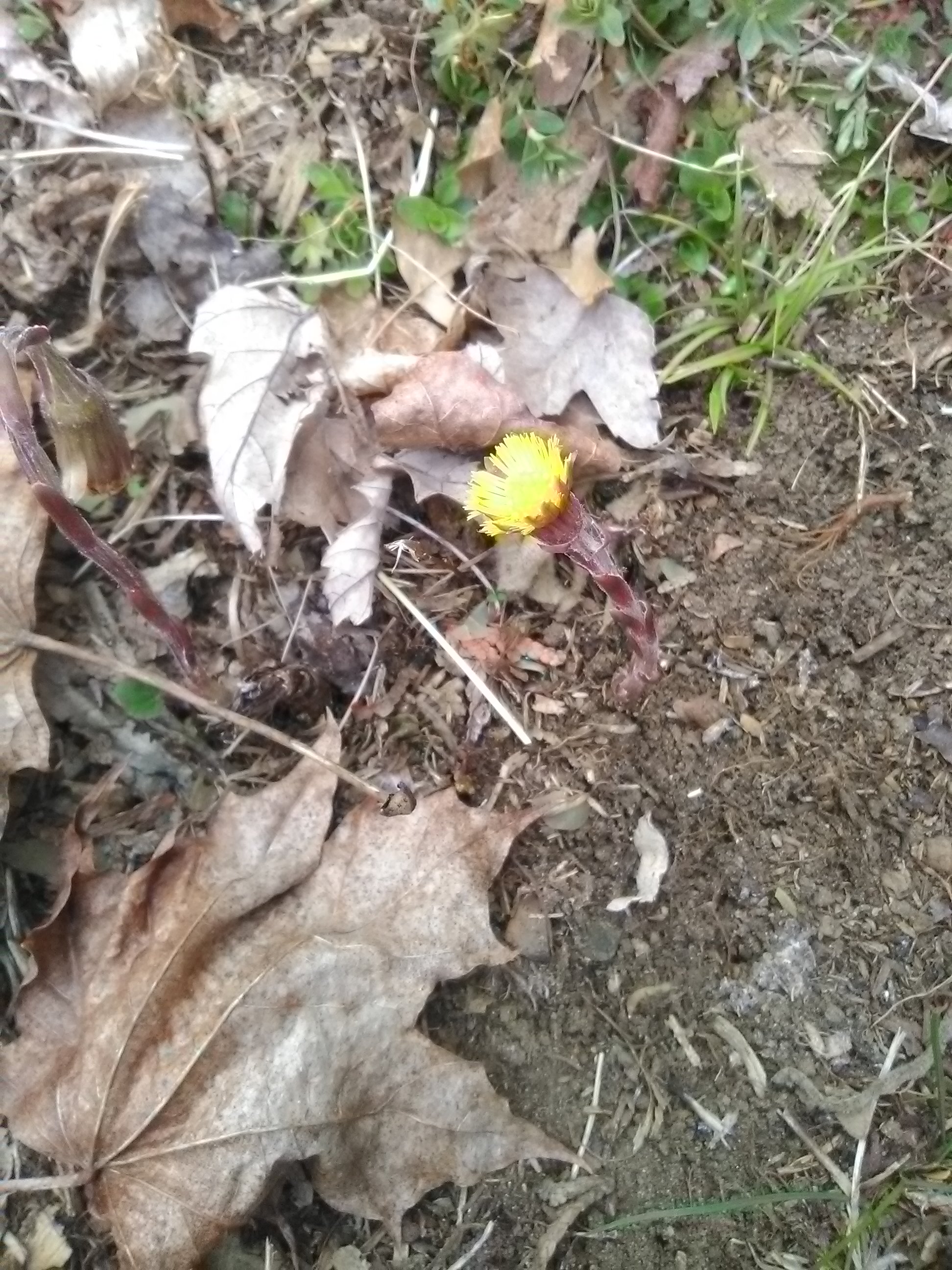
My Master Gardener instructors and classmates would be horrified: I have intentionally planted Coltsfoot (Tussilago farfara) in my garden. The reason for their horror? Coltsfoot is said to be an invasive species and is not native to this land (albeit it has become naturalized like so many other plants brought from European settlers in earlier generations). My reason for defying some unspoken MG oath? Coltsfoot is one of the main ingredients in the tincture that I brew to control my asthma and to heal any winter bouts with bronchitis. I have even healed a bout of pneumonia with it and that makes it more valuable than any “oath”. Furthermore, I want to know what’s in my medicine. In my home garden, I know it hasn’t been sprayed with any chemicals or genetically-modified.

The information contained herein is for educational purposes ONLY. The FDA has not evaluated these statements. This blog post/article is not intended to diagnose, treat, cure, or prevent any diseases.

In Coltsfoot’s defense, the one lone plant that I transplanted over 3 years’ ago has only “spread” to a second plant in those 3 years. At the museum where I used to be their herb garden lead, it was also slow-spreading. So, while I’ll give it the “non-native” status, I question the “invasive” part. It wouldn’t surprise me if the university is receiving kick-backs from one of the major drug companies to downplay this little beauty. The latter makes an awful lot of money off of seasonal allergy sufferers, asthmatics and others with chronic upper-respiratory illnesses. A plant whose primary use is for upper-respiratory complaints is a threat to their livelihood and, because it is a “weed”, it cannot be patented. (And, yes, I’m on another rant and getting all conspiracy theorist, too; sorry, I trust big pharma about as far as I can throw them.)

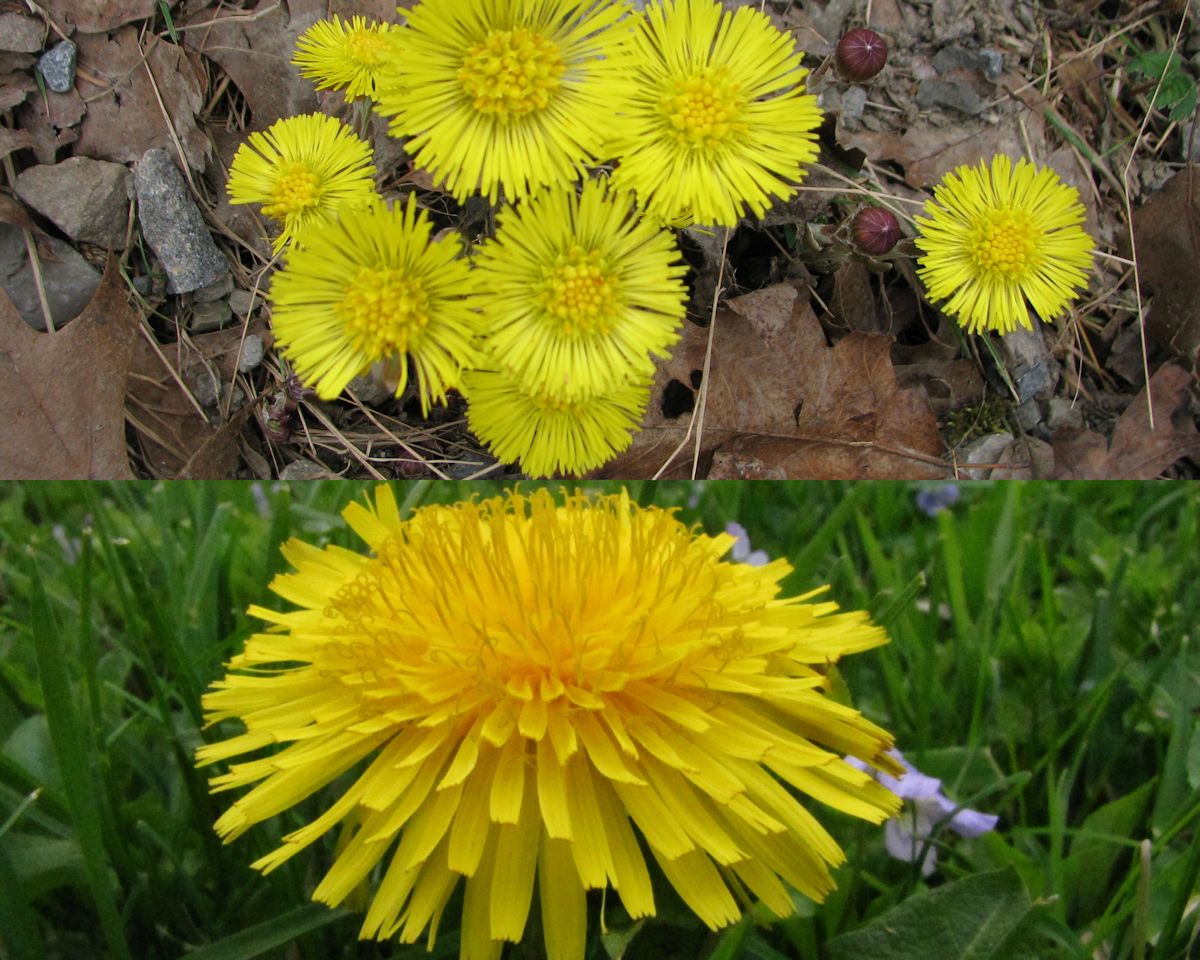
Ahem…ranting aside, many may mistake Coltsfoot for a dandelion. They have similar flowers, albeit, Coltsfoot’s floral head falls somewhere between a dandelion and an English daisy. Unlike the dandelion, whose foliage sprouts before the flowers bloom, Coltsfoot flowers first and then the colts’ foot-shaped leaves emerge (hence, its name).

Images from my garden:

Image found on Yahoo of the foliage later in the season:

Image comparing Coltsfoot in full bloom with a dandelion, also in full bloom:

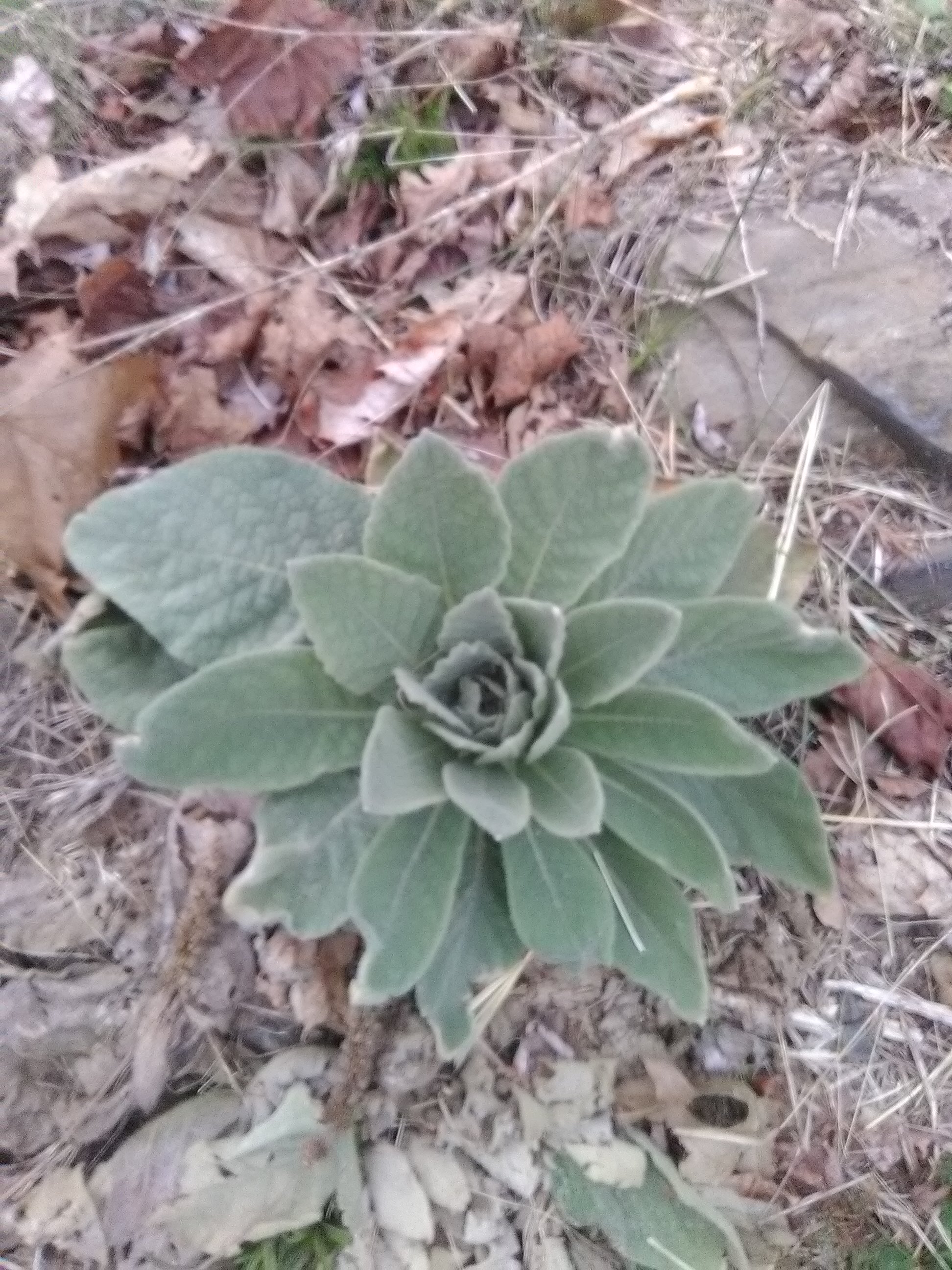
As stated above, I use Coltsfoot (leaves only) as part of a tincture to control my asthma and to treat bronchitis. The tincture in question (and I will leave the formula below) contains several other herbs, but it is the combination of Coltsfoot with another “weed”, Great mullein (Verbascum thapsus), that makes this tincture so effective against asthma. While Coltsfoot is both an expectorant and anti-imflammatory, mullein is antispasmodic, as well as also being an expectorant. Both herbs have demulcent properties, which mean they produce a mucilage that coats inflamed bronchial passages. Additionally, Coltsfoot is antitussive, astringent and sedative. It’s very name in Latin translates to “cough dispeller” and it has been used effectively over thousands of years to aid the healing of coughs, wheezing, asthma, bronchitis, whooping cough, emphysema, laryngitis, hoarseness, flu, colds, sore throat, difficulty breathing, and shortness of breath (Tierra, 2003, pp. 70-71). Since using Coltsfoot, I have not had to rely on a steroidal-based inhaler at all. And, while my allopathic medical doctor has not been willing to stake his medical claim on it, every time I have gone in for a note due to some sort of upper-respiratory ailment, he has repeatedly told me to keep taking/doing whatever I’m taking/doing as he has never heard my lungs so clear.

Great Mullein (Verbascum thapsus)

Now, all that being said, I would be remiss as a responsible herbalist if I did not state that even herbalists caution not to use Coltsfoot if pregnant, nursing, or stricken with some sort of liver disease. And, with children, only very small doses of the below tincture (1/8 – 1/4 tsp every 4 hours if battling some sort of bronchial condition, or as needed to control an asthma attack; or 1/2 cup of a weak tea brewed for 10 minutes with a lid with local honey added). Coltsfoot has contraindications with fritillaria, magnolia flowers, ephedra, scute, coptis and astragalus (some of these I have never even heard of using in herbal medicine???).

Asthma/Upper-respiratory Tincture:
3 1/2 tbsp each of Coltsfoot (Tussilago farfara) and Great Mullein (Verbascum thapsus)
1 tbsp each of Elecampane Root (Inula helenium), Lobelia (Lobelia inflata) or, if being used for smokers, substitute Hops (Humulus lupulus)
1/2 tbsp each of ginger (Zinziberis officinalis) and Comfrey (Symphytum officinale)

To tincture, measure the above herbs (I normally use dried herbs; fresh herbs would need to triple amount) into a clean 1-quart size Mason jar. Fill the jar, covering the herbs, with 100 proof vodka or brandy (Majorska has a good 100 proof vodka that has worked well for me). Screw the cover on, give it a good shake, and place the jar in a dark, dry cupboard. Shake it a couple of times each day while it tinctures. In two weeks’ time, it will be ready to use. I typically strain the liquid through a sieve and funnel it into dark-colored bottles found at my local herb shop (check online if you do not have a herb store nearby).

NOTES: You can also use apple cider vinegar, if using alcohol is a concern, but it will have a much shorter shelf life and have to be kept in the fridge. Also, it can be challenging to find 100 Proof. I recommend it because anything less than that may cause mold to form over time. With 100 Proof, it typically has a shelf life of 2 years. However, if you can only find 80 proof, 1/4 tsp. of vitamin E will aid in the preservation. I would also recommend labeling the jar with the date created, the ingredients used, and I always include a batch number so, if you’re making this for the first time, it is “Batch 1”.

May God bless you & keep you!

REFERENCES

Tierra, Lesley (2003). Healing with the Herbs of Life. Berkeley, CA: Crossing Press.

Yahoo (n.d.) “Coltsfoot Plant-lore.” Image. Retrieved from: https://images.search.yahoo.com/search/images;_ylt=AwrJ7FWB6KpeHHkAzD9XNyoA;_ylu=X3oDMTEybDY4NmF2BGNvbG8DYmYxBHBvcwMxBHZ0aWQDQzAwNzBfMQRzZWMDc2M-?p=coltsfoot%2C+images&fr=mcafee#id=62&iurl=http%3A%2F%2Fwww.plant-lore.com%2Fwp-content%2Fuploads%2F2010%2F12%2FIMG_2774-e1505765426444.jpg&action=click

Yahoo (n.d.). “Coltsfoot vs. Dandelion.” Image. Retrieved from: https://images.search.yahoo.com/search/images;_ylt=AwrJ7FWB6KpeHHkAzD9XNyoA;_ylu=X3oDMTEybDY4NmF2BGNvbG8DYmYxBHBvcwMxBHZ0aWQDQzAwNzBfMQRzZWMDc2M-?p=coltsfoot%2C+images&fr=mcafee#id=7&iurl=http%3A%2F%2Fwww.coldclimategardening.com%2Fwp-content%2Fuploads%2Fcoltsfoot_vs_dandelion.jpg&action=click

19th century, Abuse, Addiction, Alcoholism, Animal Rights, Animals, Appreciation, aquaponics, Art, Bereavement, Biodynamic, Birthday Wishes, Book signing, Books, Brothers & Sisters, Christianity, Chronic Epstein Barr, Chronic Fatigue Syndrome, Climate Change, Compassion, compost, Cooking, Creativity, Culture, Diversity, ecosystems, Emergency Preparedness, Enlightenment, Environment, Exhaustion, Faith, Family, Fashion, Fiber Arts, Fleece, Forgiveness, Freedom Dividend, Friendship, Frugality, Gaia, gardening, Ghosts, Global Warming, God/Jesus, Gratitude, Greenhouse, Grief, Gun Control, Hauntings, Healing, Heavy Metal Music, Herbs, History, Holidays, Holistic Health, Homesteading, Human rights, Humanity First, illness, Irritable Bowel Syndrome, Lasagna Gardening, Lent, LGBTQ, Love, Memories, Minimalism, Mother Mary, Music, Nature, No-dig Gardening, Nostalgia, OCD, Open-mindedness, Organic, permaculture, Plants, Politics, Potted Plants, Prayer, Puzzles, Reading, Recipes, Reflexology, Reiki, Religion, Rock & Roll, Scripture, Self-esteem, Self-improvement, Sleep Deprivation, Social Media, Sophia, Spices, Spinning, Spirituality, Straw Braiding, Summer Rayne Oakes, Supernatural, Touch for Health, Understanding, Universal Basic Income, vermicomposting, Weaving, Wicca, Wool, Word Search, Worm castings, Worm Tea, Writing, Yoga & Fitness, YouTube, Zero Waste

Stay tuned…

…our regularly scheduled program will be back as soon as I’ve finished my final exam this week! =)

Stay safe, stay healthy…May God bless you & keep you!