Abuse, Animals, aquaponics, Creativity, Environment, Faith, gardening, Gratitude, Healing, Herbs, Homesteading, Organic, Prayer, Religion, Self-esteem, Self-improvement, Spirituality

A Bigger Life

“Ask, and you will be given what you ask for. Seek, and you will find. Knock, and the door will be opened. For everyone who asks, receives. Anyone who seeks, finds. If only you knock, the door will open. If a child asks his father for a loaf of bread, will he be given a stone instead? If he asks for fish, will he be given a poisonous snake? Of course not! And if you hardhearted, sinful men know how to give good gifts to your children, won’t your Father in heaven even more certainly give good gifts to those who ask him for them?” (Matthew 7:7-11)

Believe it or not, I often struggle with this biblical passage. Struggle because there is too much doubt in my heart that what I wish for, what I hope will come to be, I am not worthy to have. This passage says nothing about worthiness. It asks only that we, well, ASK. No other hidden clauses.

Of course, when/if I discuss this passage with others, I invariably get that old standby of predestination. If it’s meant to be, it will be. Yes, that’s probably true. Does not the Bible also tell us that even the hairs on our heads are numbered by God? And that He knows when every sparrow falls so, therefore, He also knows our struggles…even the desires of our hearts? And yet, I hear that old adage and, no sooner have I gone to God in prayer for what I need, or even want, and I’m already deciding that what I’m asking for is probably not a part of His will and, therefore, why am I asking? I defeat myself as soon as the prayer is out of my mouth…or head.

What kind of lukewarm faith is this? Is there nothing too great for God? Did He not make me along with everyone else?

Then we get into the whole thought process of accepting that maybe He is instead trying to mold and shape me for something better, something that is in line with His plans. And my anxiety ramps up because maybe it will require too much of a sacrifice…like the loss of someone I love (did not The Twelve leave even their closest family members to follow Jesus?) in order to have that dream. Because, whatever dream He put on my heart, I’ve already convinced myself I’m not worthy of. So I try to guess His plans. What does He want me to do? Show me the way. And then I start chastising myself for being so ungrateful for what I already have. And I shouldn’t want or ask for more. Who cares if I’m robbing Peter to pay Paul and find that Peter’s flat broke? I’ve reached the cap on God’s mercy, or gifts, or grace. Such thinking, I consider, must surely anger God. For where in the Bible does it say He has a cap? Nowhere. His love is unconditional. Passage after passage tells us that He wants only the best for His children. Yet still I doubt. If You’re going to show me the way, I need neon signs and strobe lights highlighting that way. And even then I’d probably doubt if it was “meant” for me.

You see, people who grow up in abusive homes, especially if the abuser was their father, or a father figure, have difficulty believing in a loving and compassionate Father in heaven; it’s an alien concept. We get the angry and vengeful God who punished the Israelites for worshiping other gods and erecting idols, for being stubborn, etc. But the God who loves us, who will give His children good gifts, we struggle with.

I am grateful for everything I have. I know I have been richly blessed already. Even when so many others were losing their homes during the Great Recession, I managed to hang on to this one…despite only being a part-time and/or seasonal worker (the only jobs available in this sleepy New England town)…simply due to His grace. It does seem a bit, well, sinful and selfish to be wishing for something more. This house is a fixer-upper; the homestead is small and, because of it’s smallness, it can also be limiting. However, the smaller size has forced me to get more creative as I continue to landscape and design, to find ways to re-purpose certain areas. It’s also on a major interstate so the dream of growing organic vegetables, fruits and herbs is already out the window. With that much carbon zooming by in a continuous stream, even with the row of Thujas across the front border, that carbon is undoubtedly settling onto each and every leaf; the Thujas can only filter out so much. And, though I am grandfathered in for the use to which I put the land, as big box stores continue to climb the hill, closer and closer to home, I can’t help but fear how much worse that carbon impact is going to be…or how long before that grandfathered use gets challenged. Of course, I probably wouldn’t say “no” if some big developer came by and offered me a decent price for it, enough that I could start over somewhere else…but that’s a bit like waiting to hit the lottery.

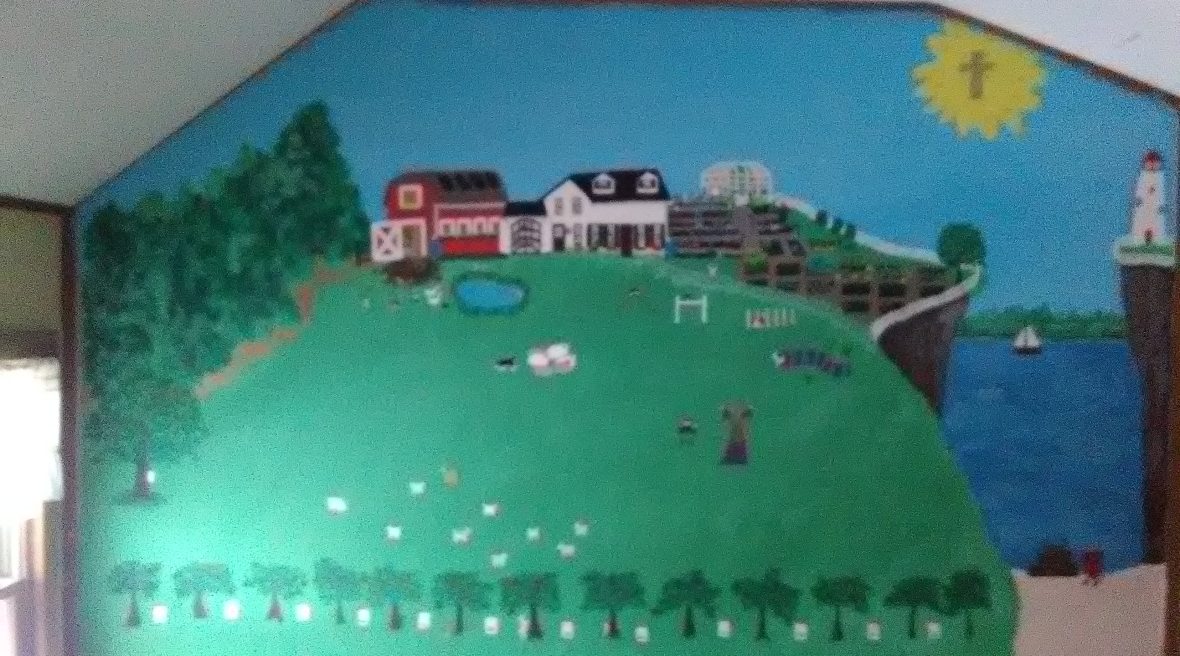
I dream of acreage somewhere. I dream of that plot of land down that dusty, country lane, with pastures full of goats, sheep and chickens, maybe a horse or two, and border collies zipping around “Come by” and “Away to me” as they herd those sheep and goats into the barn at night. I dream of a small pond, or lake, on that property where my ducks can swim until their hearts’ are content. I dream of paddling a canoe, or pedaling a paddle boat, out onto that lake or pond after the workday is done. I dream of campfires, with friends and family sharing meals and some good music as we break out the guitar, the dulcimer, and open our hearts and lips to song. No Kumbaya, mind you, just a gathering of friends. I dream of herb gardens, lush, full, and diverse. Gardens made for teaching how to cook with herbs; how to tincture, infuse, poultice and compress. Maybe even some “magickal” uses for luck and love and a bit of romantic whimsy. I dream of equally lush vegetable gardens and small fruits growing and a greenhouse that houses an aquaponics’ system for growing even more food. I dream of a thriving produce stand, or a booth in the local farmers’ market. I dream of supplying the local food pantry with fresh, nutritious produce instead of the packaged, processed donations they typically receive. I dream of looms full of brightly-colored threads, all weaving a brilliant tapestry from the wool, angora, mohair and cashmere fibers routinely sheared, or plucked, from the animals I raise. I dream of a little store where yarns and fabric are sold from my stock. I dream of fresh goat’s milk and cheese, and goat’s milk soap scented with some of the herbs I grow. I dream that all, or at least most, of these animals are rescues, given a second chance at life, for a forever home. I dream of summer days out on the road with a trailer full of goats as we clear land for others in a manner that is much gentler on Mother Earth. I dream of an orchard with healthy and thriving honeybees buzzing in and out of the blossoms. I dream of honey and beeswax candles. And I dream of walking into that bookstore someday, or logging into Amazon, and seeing my name on the cover of that bestseller.

And I dream. And I yearn. And I consider that, maybe, these are just dreams and never “meant” to be. Maybe someday I will do as that Garth Brooks’ song says and thank God for unanswered prayers. Surely, His plans ARE bigger and better than anything I could ever imagine. But, maybe, just maybe, I can finally find it in my heart to TRUST that God truly has put these dreams in my heart for a purpose, that it isn’t all a pipe dream, fueled by an over-active imagination. Perhaps *Someday* I will trust that, yes, I am worthy of such dreams, that God loves me beyond any human ability to comprehend. Just because. Not because I “earned” it. Not because I prayed the most compelling prayer and that was the one He chose to answer. Not because of anything of my will but because His will shall be done. Maybe, just maybe, He’s using these dreams and yearnings to first answer another prayer, a prayer that asked to draw closer to Him, to know Him better, to learn how to trust in a loving Father.

Can I let go enough to let that healing begin? To allow His miracles to take place? Can I trust that, even if these dreams do not come to light, that wherever He does lead me, will bring me more joy than I can possibly imagine? Can I trust that His gifts are not like those given on earth, to sometimes bribe, sometimes stifle, to sometimes manipulate? This isn’t a toe-in-the-water sort of thing. It’s that proverbial, giant leap of faith. Can I do it? Can I accept God’s will for me on this earth? And, more importantly, can I accept that, yes, I do have a loving Father in heaven who does desire to give me good gifts?

Okay, then.

Breathe.

Relax.

And let go.

Thy will be done, Father. Thy will be done.

May God bless you & keep you!

Cooking, Creativity, gardening, Gratitude, Herbs, Homesteading, Nature

Violet Syrup Revisited

I should’ve blogged about this sooner as it has been over a week since I posted about harvesting the violet blooms from my yard…especially since the recipe I posted with it called for 8 cups of water, 8 cups of sugar per 1 cup of violet blossoms. Unless you have an extremely sweet tooth, you might want to cut back a little on the sugar. I followed the recipe to the letter and found it to be so sweet, it was actually painful (if that’s even possible). There was also no need for me to gather a second cup of blossoms as I now have five quarts of violet syrup…Mom and I may be eating a lot of pancakes for a while. (chuckle)

Actually, it’s funny because I’m finding that I’m not caring as much for the end product–though that’s always a plus–but it’s the whole process of watching, waiting, harvesting, preserving that keeps me homesteading. It’s the journey. The skills learned along the way. And the satisfaction I find every time I try something new.

Violet syrup? Who knew?

And with it, comes a bit of nostalgia. As a little girl, I was forever picking the violets and dandelions that graced the lawn of my paternal grandparents’ home. Though the blending of deep purple and bright yellow might be considered gaudy by many if, for example, you were to paint your house in this combination (this from the lady who painted hers black with orange doors, but that’s another story for another time…), to my 4, 5, 6 year-old self, they were a striking contrast that looked oh-so-delicate in a little Dixie cup on my grandmother’s windowsill. Sure, I felt a little sorrow the next morning when those bright blossoms shriveled and curled and turned various shades of brown in their cup and yet, the next day, I couldn’t resist picking a few more.

Today, the herbalist in me recommends dandelion greens for everything from a healthy fodder for your rabbits, goats, poultry, etc. to a valuable folk remedy for kidney and urinary infections. And I’m making violet syrup to pour over pancakes. Maybe, just maybe, I’ll pick a few extra blossoms for my own windowsill now…and come full circle.

May God bless you & keep you!

Cooking, Creativity, gardening, Herbs, Homesteading, Recipes

Violet Syrup

That name alone was enough to catch my attention last spring. I’ve heard of sugared violets before, for decorating cakes, but never violet syrup. But the blog I was reading and following added a post about gathering wild violets and making a syrup out of them. This young mother would make quite a number of quarts from them to be used on pancakes and waffles and such; her children loved it. I was intrigued.

Of course, by the time I’d read the post–perpetually always a few days to a week behind on my reading–the carpet of violets that cover a good portion of my property were out of bloom. I have been waiting patiently for this spring to gather some and give it a whirl.

And I almost missed them again.

Northeastern Connecticut has been inundated with rain. Rain. And more RAIN. I shouldn’t lament; my well is getting a good replenishing. But who wants to pick flowers in a deluge? Sure, and I could consider the adventure of it but, when the rain is pouring down like that, I’d rather curl up with a good book and a cup of tea. And I confess I’ve indulged that desire a bit over the last few days.

Today it was back to business as usual though. The sun is shining and the forecast is for upper-70’s to mid-80’s over the next few days. Suddenly, that “blah” feeling I tend to experience when it rains steady for too long, has gone away and I’m charged again.

So I picked some violets.

The recipe I have calls for 1 cup of the flower heads to 4 cups of sugar. But you have to brew the flowers in 4 cups of hot water for 30 minutes on up to 8 hours (or overnight) and then slowly melt the sugar into the heated violet “tea”. The recipe says it will not be the pretty purple you expect until you add a bit of lemon juice…a little bit at a time. Right now my “tea” is a lovely green. It even smells green…with a hint of violet. It is hard to imagine a few squirts of lemon will change that to a purple later on but we shall see…who am I to question the logic of chemistry? Or the allure of magick?

May God bless you & keep you!

Animals, compost, Cooking, gardening, Gratitude, Healing, Herbs, Homesteading, Recipes, vermicomposting

Chive Talking

“And God said, Let the earth bring forth grass, the herb yielding seed, and the fruit tree yielding fruit after his kind, whose seed is in itself, upon the earth: and it was so. And the earth brought forth grass, and herb yielding seed after his kind, and the tree yielding fruit, whose seed was in itself, after his kind: and God saw that it was good. And the evening and the morning were the third day.” Genesis 1:11-13

I’ve been spending a little time each morning, building more raised beds, adding compost to the beds and, after mucking out chicken coops and rabbit cages and such, starting some new compost. Earlier this week, as I was transferring some of that compost into the new beds, I let out a “whoop!” that brought Mom to the door with a scowl!!??! Even when I explained my elation–the discovery of dozens of red wigglers in that compost pile–I could tell she didn’t quite “get it” as she shook her head and walked away. Even my assurance that worms in the compost bin are a very good thing didn’t convince her. She still thinks I’m addled. Worms aren’t her thing.

Oh, well. I refuse to let it daunt me.

Of course, some of the already established beds also got a dressing of this composted rabbit waste…with worms. I have a small bed about equal distance between the front and the side doors of the house. And my chives are up in it.

I love chives. I love the flavor they impart in cooking, as well as their aroma. They make a nice addition to salads. And I usually eat one raw coming out of the garden. Fresh like that, they really pack a punch. But my favorite use is in my favorite winter casserole: Spinach Mashed Potatoes. The recipe calls for 2 tablespoons of chives; mine are usually “heaping” tablespoons but it’s all good. Usually I buy them dried from a local herb store as I haven’t quite mastered the art of drying them with a food dehydrator–until Tuesday of this week. It took a couple of tries; the first batch I cut and spread on the screen turned brown and lifeless using the recommended drying time. So I cut the time in half and voila! I have a half-pint jar of chives and will be drying another half-pint this weekend. So I’m feeling a little victory here. And this is one that even Mom can relate to a bit.

As I love chives so much for cooking, the herbalist in me has never really looked into them as a potential medicine. But, before writing this blog entry, I did do some research in some of my herbals. Not much there either except in Juliette de Bairacli Levy’s “Herbal Handbook for the Farm and Stable”. She recommends sprinkling some cut up chives into animal feed for the “expulsion of worms.” (Good thing the chives are well away from that wormy compost pile…)

And, unlike many cooks, I have no aversion to sharing that recipe for Spinach Mashed Potatoes; good food is meant to be shared.

SPINACH MASHED POTATOES

6 large or 8 medium potatoes, peeled and diced (if using white potatoes; if red-skinned, may leave the skins on them).
1 10 ounce package (or equivalent from garden) of spinach
8 oz. package of shredded cheddar cheese (or, an 8 oz block of cheddar and shred it yourself; usually about 50 cents cheaper (eh, I am ever the frugal fanatic…))
1 stick of butter
1/4 cup of sour cream
2 tbsp. chives
1 tbsp. olive oil
1 tsp. sugar
1/4 tsp. dill
1/8 tsp. black pepper
pinch of salt, to taste

Boil potatoes until tender. Drain. Add stick of butter, sour cream, sugar, black pepper and pinch of salt; mash (will be very creamy) In large skillet saute spinach, chives and dill in olive oil until just wilted. Fold into mashed potatoes until well mixed then fold potato and spinach mixture into casserole dish. Sprinkle cheese over the top and back in the oven for 20 minutes at 400 degrees. Enjoy!

May God bless you & keep you!

References

De Bairacli Levy, J. (1952) “The Complete Herbal Handbook for Farm and Stable.” Faber and Faber Limited, London,
England.

Animals, compost, Environment, Frugality, gardening, Herbs, Homesteading, Lasagna Gardening, Minimalism, Nature, No-dig Gardening, Organic, permaculture, Zero Waste

Spring Fever

It’s a little early. It’s only February. But this week the temps have been in the mid-50’s up to lower-60’s and it feels great after the snowstorm a couple of weeks ago that dumped 18 inches on us. Just walking out to the barn has been a challenge and, as soon as the rest of it melts, I’ll have a few minor repairs to attend to as the bottom board of the chicken coop came off. Actually, there may be a bigger repair in the form of cutting out the rotting wooden floor (ducks play in the water no matter the temps outdoors, leaving the floor around the waterer perpetually wet…) and pouring cement instead. This is murky territory for me; I haven’t done this sort of thing before but, homesteading equals a lot of DIY (do-it-yourself), especially on a very limited budget.

But before I go into “overwhelm”, this caress of warmth on my skin has me planning out this year’s garden and getting itchy fingers to finish landscaping the front and side yards for more raised beds. I do everything “no-dig”, which puts more traditional gardeners off, but this year I “discovered” a man named Charles Dowding in the UK who has landscaped 4 acres using this method. He gets a significant yield; fewer weeds; good, rich soil, and he has a plethora of videos on his YouTube channel. I’ve been obsessed with watching them.

What is “no-dig” gardening?

Exactly as it suggests: no digging, no rototilling. Instead of digging up, or rototilling, the sod–something that seriously disturbs weed seeds in the earth and causes more of them to grow in your garden (i.e. more work to do), you lay a piece of cardboard down (or several sheets of newspaper if no cardboard is available) and start layering compost (or you can layer kitchen scraps, leaves, etc.; things that would normally go in your compost bin), vermiculite, potting soil, etc. on top of it. Another name for this type of gardening technique is lasagna gardening. The cardboard acts as a weed barrier but, as it is biodegradable, it also feeds the soil. You simply plant your seeds, or a plug if you’ve started seeds indoors, directly into the layers of compost and soil. Charles Dowding uses straight compost; I don’t have quite as much of that as I will need to finish this landscaping project. However, each spring, these beds will need a new dressing. And, with several rabbits, some goats and a flock of chickens and ducks, that situation is rapidly being remedied.

I scored yesterday. When I went in to work, there was an enormous box being readied for the trash compactor out back of the automotive department. I claimed it immediately and am grateful, indeed, for the help of a fellow co-worker for taking it home for me. This box housed the liner for the bed of a pick-up and was too big for transporting in the backseat. I am envisioning the healthy vegetables and herbs I can grow atop of this box.

And that only gets the fingers itching even more. I am ready for spring. How ’bout you?

May God bless you & keep you!

Creativity, Healing, Herbs, Homesteading, Minimalism, Nature

A “Tiny” Drool

I don’t remember his name. I do remember he was a professor at a college in Massachusetts and that he was looking for a slightly larger tiny house closer to his work. His current tiny house was approximately 124 square feet. That’s a bit too small for me; if I were to build a tiny house, it would be closer to 300 square feet. And the loft would be tall enough I could sit up straight without bumping my head. He couldn’t in his loft. I wasn’t drooling over his tiny house. I was drooling over what he’d built around it and the lifestyle he was leading with this first tiny house.

Nestled in the New Hampshire woods, this permaculture farm provided for all of his needs. He grew fruits and vegetables, raised chickens for eggs, and there were even a couple of pigs running around. Albeit, as a pescetarian, I would likely omit the pigs for anything other than pets but to each their own. I may not have a need to fill my freezer with ham or bacon but I can appreciate this low-impact lifestyle, this more sustainable and healthier way of living. As he was growing and raising his food, he knew exactly what was in it, how it was fed. That was worth the drool. He was entirely off the grid. That, too, was worth a drool. And what made me chuckle was the bowl bath he took outside each day. Now I have no aspirations to dance around sky-clad under a full moon or anything but, that he could get away with such, without being hauled into court somewhere for indecent exposure, is a measure of the freedom this man enjoyed. For someone who feels so totally oppressed living on a major interstate with the fish bowl effect, this was definitely something to drool over. I like my privacy. And this man had it in abundance.

Yeah. I am a bit of the hermit in the woods. Don’t get me wrong. I love people. But I also love my solitude. Quiet time for me is how I rejuvenate. Granted, my idea of “quiet” time typically involves the CD player cranking out some Within Temptation or Blackmore’s Night while I paint or draw–and I do plenty of that right here on Route 6. But I’m not surrounded by woods. I’m not walking out my door and hearing nothing but crickets chirping and bird song. I’ve got the perpetual hiss and rumble of traffic zooming by, the growl of a semi down-shifting as it passes through this little strip of residential properties. And, as I type this, I am realizing how much I’m growing to hate the noise most of all.

Yeah. I think that decision I lamented about a few posts’ back is already made. Yes, I can start with what I have right here. There’s land enough to grow fruits, vegetables and herbs, and I have done so in the past. This summer, we grew very little as I concentrated on building and outlining more raised beds. But it comes in fits and starts as I consider the filtering of carbon monoxide which undoubtedly contaminates everything I grow here. There’s also the continuous development of commercial land in this area. This strip of Route 6 is rapidly becoming a big box nightmare. So I procrastinate. I do so, too, because life here is still in financial limbo. I’ve been on mortgage assistance since 2013. While I am grateful that it saved my home and put me right-side up again on the mortgage payments, this is a loan. And it is a bit counter-intuitive in my quest for getting out of debt. But, without it, I’d likely lose even this noisy, little patch of land. So I take a step forward, then a couple backwards. A friend of mine called it projectoral thinking. It’s anticipation of the worst-case scenario. And, in doing so, I trigger the law of attraction and welcome in my worst nightmares–maybe. I’m also a cock-eyed optimist. But I can’t help wondering from time to time, if I throw all of my efforts into developing this property into the homestead of my dreams, that some hotshot developer is going to suddenly want to buy it for a strip mall. At this point in time, I’d likely let him. But, at present, I need to focus in on that decision and concentrate all of my energies on whatever path I eventually choose.

It’s time for a change. And maybe, just maybe, I’ll find my own little woodsy oasis in the middle of nowhere where I can dance around naked under a full moon without scaring any neighbors–but only on Halloween.

May God bless you & keep you!

Herbs, History, Nature, Spirituality

Wednesday’s Weed Walk: Belladonna

Do NOT try this at home, kids! I repeat, DO NOT TRY THIS at home, in the office, in the car on the way to the office, in school, church, the local gym or even the grocery store. Today’s post is strictly for educational and entertainment purposes ONLY! And because this is also the last “weed walk” before Halloween/Samhain, writing a blog post about an herb whose other common names include: Banewort, Devil’s Berries, Naughty Man’s Cherries, Death Cherries, Beautiful Death and Devil’s Herb (Wikipedia), seemed appropriate for the occasion.

I am talking about Atropa belladonna, more commonly known as either Belladonna or Deadly Nightshade. This is one of the most deadly plants one can have in their garden as it’s attractive fruits entice the palette–especially that of children’s–yet it takes only 2-3 of those plump, sweet berries to prove lethal for a child. Adults are not immune either though it takes about 10 of those berries to prove lethal for us; lower doses are said to incite hallucinations and, as such, it has a history of abuse as a recreational “drug” but it has some very unpredictable side effects so, again, DO NOT TRY THIS AT HOME! Or anywhere else. And I don’t care how redundant I’m being. This is one of those you can never be too cautious about.

Interestingly, Belladonna also has a history of medicinal uses. Many of the hypnotic properties in this plant deaden pain and it is used even today in many modern pain relievers. Modern pharmaceuticals have found a way to isolate these painkilling properties to produce allopathic medicines for treating ulcerative colitis, diverticulitis, diarrhea, peptic ulcers, chronic bronchitis, asthma and vertigo, among others. Deadly nightshade/Belladonna contains an anticholinergic agent that blocks the neurotransmitter acetylcholine in the central and peripheral nervous systems (Wikipedia), systems that control the parasympathetic nerve impulses. Your parasympathetic nerves control those involuntary movements of the smooth muscles, those that control the gastrointestinal tract, urinary tract, your heart, your lungs and many other parts of the body. These are muscles that expand and contract, or function, without any conscious thought on our part. These nerves, we could say, work “behind the scenes” in our bodies, helping us to breathe, digest food and eliminate waste. Which would be one of the reasons this plant is so deadly as too much would likely shutdown these automated systems. We’ll leave this one to the pros…and, perhaps, to the memories of the wise women and cunning men of old.

Of course, in the days of cunning men and wise women–the true crones of old, who were often regarded as witches for their uncanny knowledge of the herbs–Belladonna was more commonly used as an anesthetic to relax, or deaden, the body for surgery, or for the making of poison-tipped arrows for men of war. That it was effective in the latter, and these early surgeries were often unsuccessful, hence, I shall throw another word of caution in here. This is definitely not a “simple” you want to brew in your home-grown apothecary.

However, it is an attractive plant and I know of many who do keep some in the garden for aesthetic purposes. It can grow up to 6’6″ tall with 7″ long, ovate leaves and lovely bell-shaped flowers that are a dull purple in color with just a hint of green and, when ripe, shiny black berries. Bees often make honey from the nectar of the flower. Wild birds and animals often eat the berries, despite their toxicity, dispersing the seeds in their droppings. However, this plant has proven toxic to many domesticated animals, as well as to humans, so this homesteader-in-the-making would rather admire it from afar than in the garden.

The name “Belladonna” is Italian for “pretty woman”. In addition to its earlier uses as a medicine, and poison, it was also used by ladies as a cosmetic. A tincture of Belladonna dropped into the eyes will give them a seductive appearance, an appearance that was much favored by earlier women. However, it also distorts the vision, creating a near-sightedness that inhibits one’s ability to focus on things close-at-hand; it also increases the heart rate and, over prolonged periods of time, causes blindness (Wikipedia).

As a quick aside, I am citing Wikipedia throughout and I know this free, online encyclopedia is definitely NOT approved as an appropriate reference academically or professionally, but there were enough citations attached to this listing that I decided to use it anyway. As an herbalist, though I would never consider working with such a toxic plant, it is one that I have learned about in various herb classes for safety and educational purposes–enough to know this Wikipedia listing is accurate. And that accuracy should be enough to instill a big WARNING sign over any intention to use it. Because it is so deadly, few, if any, of my herbals lists it as a curative. For the sake of this posting, I am more interested in sharing some of the folklore I found about it, folklore that I do have in some of my “magickal” herbals.

Revisiting those hallucinogenic properties, many the wise woman and cunning man was reputed to use Belladonna to “fly”. A common mixture was of Belladonna, the opium poppy, monkshood and/or poison hemlock. I shudder to think of what sort of “trips” this combination of herbs created. (Again and again, don’t try this at home…) However, they were used in an ointment so, my guess is, as my sources do not give detail, that it was absorbed through the skin–our largest organ. Having had some lightheaded experiences working in the “High” bed in the herb garden at the living history museum where I used to volunteer, I can testify that the absorption of potentially toxic plant matter through the skin can be quite potent, indeed. In my case, it was Lily of the Valley that had me reeling a bit.

But I digress…

In his excellent book, Encyclopedia of Magical Herbs, Scott Cunningham also alludes to this ancient practice of using Belladonna “to encourage astral protection and to produce visions, but safer alternatives are available today and belladonna is best avoided’ (53).

May God bless you & keep you!

Works Cited

Atropa belladonna. Wikipedia, the Free Encyclopedia. Web.
Retrieved from: https://en.wikipedia.org/wiki/Atropa_belladonna. 26 October 2016.

Cunningham, Scott. Encyclopedia of Magical Herbs, Second Edition. Llewellyn Publications, Minnesota: 1985.

Alcoholism, Animals, Healing, Herbs, Homesteading, Nature, Writing

Odds and Ends…and Apologies

First, the apology. For being “absent” for the last two days and sporadically posting this past week in general. A recent resignation by our Titles’ Clerk at the dealership, just days before our supervisor’s week-long vacation, has provided some much-needed extra hours (and pay!) to keep things running, well, maybe not “smoothly” but certainly running…period. And I am happy to pitch in and help. But it’s certainly thrown a curve ball into my daily routine. I’ve even fallen off of the wagon, so to speak, with my 3:30 a.m. rising time; the longer days requiring some extra ZZZ’s to stay on top of things. However, this morning I awakened at exactly 3:44 a.m., which isn’t bad considering I forgot to set my alarm last night, so maybe this is a sign we’re getting back in the groove again–a good groove. My apologies for allowing myself to fall out of that groove in the first place. While this is a free blog, there is an old saying that “paying customers deserve prompt and regular service”; my regular readers deserve regular posts to keep reading.

Anywho, now that I’m back–albeit, my work schedule is still fuller than usual for the rest of this week–some updates on the homestead.

I hate making these reports. I lost one of my Plymouth Barred-Rock chickens Saturday evening. My Patience started looking “off” a few days’ before, back roached, stomach distended. One of my other chickens started pecking at her–not brutally, more like a nudge to say, “Hey, are you okay?” but I decided to bring her indoors, lest, some of the more aggressive birds decide to have a real go at her. After checking to be certain she wasn’t egg bound, I heated some olive oil in a sauce pan, added a tablespoon of minced garlic, and let it simmer for a while. After it cooled, I filled an eyedropper and gave it to her. Garlic is a fine antibiotic as well as being good for expelling worms, and chickens fairly love it. I added a bit more of the dried, minced garlic to her feed, along with some fennel (good for digestion) and dried parsley, which is also good for worms. Parsley has the added benefit of being good for constipation and obstructions of the intestinal tract (De Bairacli Levy 118-119). She balked at these treatments at first but, over time, I would say she at least resigned herself to them. I even gave her an olive oil enema because she was not passing her waste but it was to no avail. I found her when I came home from work Saturday night. Patience was one of my older hens but, losing beloved pets, is something you never quite get “used to”. Albeit, I have noticed a certain thicker skin happening where my chickens are concerned. Despite a healthy, varied diet, plenty of room to stretch their legs, dust baths, and good, clean housing, they tend to go down rather quickly and, sometimes, unexpectedly. They can be quite stoic, not displaying any symptoms of illness or even injury until those final moments. They are also pretty high on the food chain and predation can also be a problem. However, I never considered, when I first took up homesteading, how many times I would also adopt the role of “gravedigger”. I know that nobody–human or humane–lives forever but knowing that doesn’t make it any easier–and I hope it never does become “easy”; that’s when I quit.

Today would have been my paternal grandfather’s birthday. He would have been 111 years old so not likely I would still have him in my life even if alcoholism hadn’t ended his time here on earth at only 68 years’ old, but I always mark this day as special, remembering him and the legacy he left behind. Calef Burbank (and that’s pronounced with a long A: KAY-lef) wrote for the Providence Journal for 40 years as an investigative reporter. He was even nominated for the Pulitzer Prize for his writing. Some of my earliest memories of him are watching him bang away at the old manual typewriter and emulating him. I loved that old typewriter and, though I prefer the speed at which my fingers can fly over this modern PC keyboard–a speed that can keep pace better with my thoughts–there will always be a nostalgic love for the manuals. In addition to his writing, he was a gifted pianist, guitarist, taught me to play chess at the tender age of 3, enjoyed learning, bird watching, and ginger snap cookies. I can say “ditto for me” with the exception of piano playing. He tried teaching me as a little girl but I was too impatient, preferring to bang away with wild abandon and a lot of discord; he finally gave up on me. Today, I wish I’d absorbed those teachings as readily as I did the chessboard.

Lastly, I spent an hour yesterday morning building four more raised beds for the herb garden. I am hoping this wonderful Indian summer lasts long enough to build a few more before the cold creeps back in. With a little luck–and a lot of hard work–next summer may be the first of many physical “weed” walks. Keep your fingers crossed!

May God bless you & keep you!

Works Cited

De Bairacli Levy, Juliette. The Complete Herbal Handbook for the Farm and Stable, Fourth Edition. Faber and Faber, New York: 1991.

Animals, Healing, Herbs, Holistic Health, Homesteading, Nature

Wednesday’s Weed Walk with the Crazy Cat Lady

That title should make it obvious what herb I’m going to write about today: Nepeta cataria, or more commonly known as, Catnip.

Catnip typically conjures up cartoon images of helpless felines languishing about in the sun, looking like someone on a healthy dose of Cannabis…and, in this household, with 10 felines, that image is pretty accurate. I keep a quart-size mason jar in my pantry full of dried catnip; the moment I unscrew the lid, every feline comes running. And the effects are almost instantaneous as even my geriatric felines start rolling around like young kittens, only to nod off into dreamland shortly thereafter. They also like to eat the dried leaves and, as it is very good for them, I allow them to take all they want.

Catnip is a mild sedative and is an excellent remedy for nervousness and hyperactivity in children (m. Tierra 114). It is also a carminative (relieves gas and bloating) and a diaphoretic (induces sweating), helping to ease fevers and colds. However, it is the analgesic properties to which I have lately been putting Catnip to use (M. Tierra 32). Catnip relieves pain. And, as the mammary tumor grows under my Ariel’s right front leg, keeping her comfortable is important. At her age (she’s 16), surgery is no longer an option and, to be honest, I am not overly-confident it is the best course of action anyway. It is highly-invasive and extremely painful for them; I’ve witnessed it time and again. Ditto for many allopathic pain-relievers that eventually shutdown the major organs. Fortunately, our vet’s sister is an herbalist and he approves many of the herbal alternatives, carries many of their tinctures in his clinic. She is under his care, just not under the knife. And the Catnip does appear to ease her pain and discomfort. What’s more, it is a lot easier getting her to drink an eyedropper-full of Catnip “tea” than some of the more orthodox remedies with their medicinal tastes.

For humans, Catnip tea is very good for easing headaches, toothaches, and the deep-down body aches and pains of fever and flu (Tierra 114). It also tastes good so give it a try. Your cats will love you.

May God bless you & keep you!

**These statements have not been evaluated by the Food and Drug Administration. This article has been presented for educational purposes only; it is not intended to diagnose, treat, cure, or prevent disease.”

Works Cited

Tierra, Michael. The Way of Herbs. Pocket Books, New York: 1998

Healing, Herbs, Holistic Health, Organic

Wednesday’s Weed Walk: Do Re Mi…

Singer’s Tea…no, that’s not actually a legitimate product, that I know of, but that’s what I call one of my favorite herbal tea blends.

I don’t sing professionally anymore. Or even semi-pro. While the vocal chords may get a bit of a workout on the weekends when I’m enclosed in my home office and working on the mural that is currently consuming me, rare do I get on a stage–or even in the choir loft at church–to sing. Some of it is time constraint. As a full-time (online) student, minister, herbalist, homesteader, writer, artist, holistic healthcare practitioner and part-time photographer/receptionist most evenings, I have a pretty full plate. But many years ago I fronted metal bands, both lead guitar and lead vocals. I didn’t know about this tea then; I learned about it years’ later. It might have helped in the metal years; however, no matter what genre you sing in–even if it’s only the shower–taking care of one’s vocal chords is important.

In 2007 I took Apollo Herbs’ “Herbal Apprentice” course with Michael Ford and Joanne Pacheco. It was during one of our weekend workshops that Mike mentioned this combination, primarily for sore throats, but he also mentioned that a student from one of his previous classes used this combination religiously. She was a singer, like me, and fronting a local band. I was singing regularly with the Folk Group at Our Lady of LaSalette Catholic Church in Brooklyn, CT at the time so I gave it a whirl.

The blend is equal parts of Echinacea purpurea (Echinacea, Purple Coneflower are common names) and Ulmus fulva, or Slippery Elm. “Equal parts” is just what it suggests. If you measure a teaspoon of Echinacea, you also measure 1 teaspoon of Slippery Elm; a tablespoon of Slippery Elm, a tablespoon of Echinacea, and so on. The combination has a pleasant flavor so it is also palatable rather than tasting “medicinal”. I typically use the dried herbs, purchased from a local and reliable herb shop (organic; responsibly harvested) but you may also use fresh herbs if you have them in your garden or from another reliable source (i.e. one without pesticides). As we are brewing roots and bark here, a standard infusion doesn’t quite cut it. You will need a decoction of the herbs. And how we do that is preferably through the use of a double boiler but a makeshift of setting a slightly smaller sauce pan inside a larger one that has at least an inch or so of water in it will do in a pinch. No non-stick pans for this. The coating may leach into your herbal tea; I don’t recommend non-stick pans for any purpose. Cast-iron will also leach into the herbs and affect the outcome. Stainless steel, or enamel, is preferable. Place the herbs in the smaller pan, cover them with water (about an inch higher than the herbs) and place a lid on the pan with the herbs in it. The idea is to simmer them, not boil them. And you will want to watch that the water is not evaporating too much as you don’t want the herbs to scorch. If you see the water level lowering too rapidly, you may add a little warm water and lower the heat a bit. This takes approximately 45 minutes on low heat. I always add honey to mine, which also acts as a mucilage to the throat but it is optional.

So how does it work?

Slippery Elm** (Ulmus fulva) is the inner bark of the slippery elm tree. This dried bark is rather stringy and may range from a light tan to a light beige in color. It has a sweet, spicy scent and it is a well-known demulcent. “Demulcent” means that it soothes and moistens, usually via mucilage. This particular demulcent is specific for sore throats, cough, bronchitis and for relieving the inflammation of the respiratory tract, including the mouth and throat (L. Tierra, 121). It is also good for soothing the intestinal tract, and relieving the pain and irritation from indigestion and colitis, but it is the respiratory tract that we are most concerned with here, for obvious reasons.

Echinacea** (Echinacea purpurea) is also good for relieving sore throats; all infections and inflammations, and swollen glands. A known sialagogue, it increases the flow of saliva in the mouth. It is also an immune enhancer, helping to prevent and cure colds and flus (Tierra 78-79),; for singers, it makes it a wonderful combination with Slippery Elm. Back in the metal years, it seemed I always came down with a cold and/or upper respiratory complaint whenever there was something important coming up in music. It is a singer’s nightmare. It could be because I tend to be a perfectionist and so pushed myself harder, practicing longer, and depriving myself of much-needed sleep in preparation for whatever I was doing but, regardless, whatever “bug” was lurking around always found its way to me. Again, I wish I’d had this tea in my arsenal then.

One last thought, as both of these herbs are now on the endangered list, please use only the cultivated herbs from a reliable and responsibly-harvested source. For more information about sustainable harvesting, please visit http://www.unitedplantsavers.org.

May God bless you & keep you!

**These statements have not been evaluated by the Food and Drug Administration. This article has been presented for educational purposes only; it is not intended to diagnose, treat, cure, or prevent disease.”

Works Cited

Tierra, Lesley. Healing with the Herbs of Life. Ten Speed Press, California: 2003.