Animals, Faith, Gratitude, Healing, Homesteading, Nature, Prayer, Spirituality

More Little Crises

Domino is doing much, much better. He and the other goats had a second dose of dewormer on Friday; they will receive a third treatment in 10 days’ time. His stool is back to normal. Appetite still not quite up to snuff but he is eating again; he was completely off his feed before. And, as he’s a little overweight, I’m not going to quibble about it too much…so long as it doesn’t go on for too long and he continues to thrive. He’s full of pep these days rather than the slight lethargy he was displaying a little over a week ago. Fortunately, this little crises has been easy to treat. The goats love the taste of the de-wormer so there’s been no trouble getting it into them. (Now if they would show as much enthusiasm for hoof trimming…) In fact, Domino keeps nuzzling my hand for more, even after he’s had the full dosage. He’s also becoming more lovable and affectionate as he starts to feel better. That makes “Momma” feel better!

A month ago, I blogged about Mom’s dog, Max, peeing blood and having to make an emergency run to the vet. The vet diagnosed him with two separate, tick-borne diseases, Lyme and Anaplasmosis (Hope I’m spelling that last one correctly…). The vet put him on doxycycline and he did fairly well with it until the day before his re-check visit. Max stopped eating. He also started developing symptoms of a urinary or kidney infection, straining to pass urine but only producing a small trickle, at best. However, when we took him in Friday for his visit, an attack of nerves had him suddenly leaking everywhere. His vet put him on a different antibiotic to kill the infection but he is being scheduled for something called a full senior panel. As he is 8, going on 9, he counts as a senior. I’m not sure what all this encompasses but, in short, they want to make sure everything inside is working correctly. The vet’s main concern was the leakage but, as soon as we left the office and headed home, the leaking stopped. And it has stayed that way. Off the doxycycline, his appetite has returned and he’s also much more himself.

However, Max did not visit the vet alone on Friday. Pearl rode shotgun. I came home from work Thursday evening and Pearl came running to the door to greet me as usual. Halfway across the living room floor she suddenly stiffened and rolled a couple of times. Stopped, got halfway up and rolled again. Scared the crap out of both of us. My worst thought was a seizure of some sort. Or a stroke. (Can cats have a stroke?) However, it has proved to be an inner ear infection that was affecting her balance. She, too, is on antibiotics and seems to be thriving again.

Phew!

I am so grateful that all three of these fur-babies are healing; I keep thanking God for each little triumph on the road to wellness again. 2016 was a rough year here at the homestead, with the loss of several geriatric pets, and even a couple of youngsters (Squire the psychotic rooster met his end suspiciously after challenging Sargent Feathers earlier in the day…Alice Cooper, my beautiful flame-point kitten, curled up for a nap in his kitty bed and never awakened); enough already!

They say trouble comes in threes. I’m not sure who “they” are but they seem to know what they’re doing. I hope “they” are right. Mommy’s heart–and her pocketbook–need a break!

May God bless you & keep you!

May
Animals, Environment, Gratitude, History, Nature, Religion, Spirituality, Writing

First Decent Snowstorm

First big snowstorm hit last night and I became a little kid again. Though an inch of snow fell in December, it barely coated the ground. This is different. According to Channel 3 News, 8 inches in some areas. I’d say we’re pretty close here in Brooklyn, CT. The snow hadn’t finished falling last night when I went out to the barn around 7:30-8 o’clock to feed, water and check on the animals, and it was over the back of my calf.

I love it!

Of course, I’m not looking forward to the clean up this morning. My driveway’s not super-long but my shoulder will be screaming abuse at me before the job is done. Thankfully, this is the light, fluffy, sugar-snow…as opposed to the heavy, wet variety…and I can push more than actual shoveling. That’s a little easier on the back and shoulders but, though I am scheduled as a Eucharistic minister this morning, I doubt I’ll get shoveled out in time for the 8 a.m. Mass. No burly young men to sweet talk into doing the shoveling for me (and I’m not really lamenting that, just stating the facts) nor do I own a working snow blower. This ought to burn some calories. =)

But, aside from these practical considerations, and a deeply-felt gratitude that we did not fall victim to the power outages that were predicted for the area (we were woefully unprepared for such; we have plenty of bottled water, candles, oil lamps but no wood for the stove), I’m feeling that childhood magic that comes with the first big snowfall.

And, yes, I do feel that it is magical. Those first few moments, before any of that snow is disturbed, that pristine blanket makes everything feel safe, clean and fresh, and makes me think of some sort of fairy land, like Narnia. I sincerely hope the White Witch doesn’t come riding up on her sleigh, but the artist and author in me sees a thousand pictures, paintings and/or stories hidden in each and every flake. I see a snowman on someone’s front lawn and think of Frosty. I see a pattern of hoof prints in the snow by the woods and, despite the yuletide season being over (unless you’re of Ukrainian descent; yesterday was Ukrainian Christmas (or Eastern European)), I think of Santa’s reindeer and their white-tailed cousins who live in those woods behind my house. The big kid in me wants to follow their trail, roll one of Frosty’s cousins into existence, throw a few snowballs at someone and lay in that snow to make an angel.

Of course, for those of us who grew up in Rhode Island, there’s still that little kid inside, hoping to hear Salty Brine’s voice singing out over the radio: “No school Foster/Glocester!” (I always wanted to live in either Foster or Gloucester as a kid…they had more snow days than every other town/city in RI combined!) God bless him; he will forever be a Rhode Island icon, his voice forever recorded in my memory.

I’m praying that these magical snowstorms will never be “forever recorded” in just a memory. Eight inches on the ground today; temperatures in the 50’s Tuesday through Thursday this week. As a kid, this sort of snowfall would last weeks. Guess I’ll have to do the angel thing on my way to the barn again. Might not get another chance.

May God bless you & keep you!

Animals, Faith, Gratitude, Homesteading, Nature, Religion, Spirituality

Winter Wonderland

The unmistakable smack and part-scrape, part-screech of a metal plow hitting and running along the pavement caught my attention yesterday morning. I had forgotten all about the 1″ of snow Mom advised me of the night before. Eh, how often are the weather people right? I looked out my office window and discovered that, this time, they were. Most of the ground was coated and, looking towards the massive spotlight in the parking lot across the street (even in darkest night, my house is lit up like a Christmas tree), I could see flakes still falling.

The child in me lit up like that Christmas tree. No, it’s not a “No school Foster-Gloucester” kind of morning, as Salty Brine used to say, and was the hero of every school age child in Rhode Island throughout the 1960’s and 70’s–and probably a few decades before. Snow or not, my college studies continue. But the memory of what the first snowfall used to mean clung to me like one of those icicles that form in late-spring after a perpetual cycle of thaw and re-freeze. Forget that I am a 50 year-old woman and that snowfall now equals back pain and muscle aches from endless hours of shoveling. It’s the first snow for Pete’s sake! And only an inch of it; no shoveling required. I couldn’t wait to get outside and experience it.

And neither could Max. Max, the lily-livered Blue Heeler who will hide behind every chair, on the stair well, any place he can squeeze his bologna sausage-shaped body to avoid going out in even a light mist of rain, catapulted himself off of the sofa yesterday morning, all tail wags, to go out in the fluffy white stuff (sorry, S-N-O-W is regarded as a disgusting swear word in the office at the dealership…LOL!). There was no hesitation. He pranced out onto the back deck and immediately put his nose down into it, sniffed, sneezed, snorted and then bounded off the deck, on the deck, and fairly skipped with me to the chicken coop.

That’s the spirit…

While the ground coverage was thin and actually spotty in some places, still, it was like someone magically transformed my backyard into that proverbial winter wonderland. Everywhere I looked, I saw pristine white. And the still-falling flakes made me feel as though someone had stuffed me into one of those snow globes…you know the ones, those kitschy ornaments that you shake and watch “snow” over whatever plastic, painted scene is protected under dome. And I loved every moment in it.

A few trips back and forth with Max to fill the smaller winter duck “pool”, scatter leftovers and birdseed for the chickens under the overhang where the snow didn’t fall, and replenish the outdoor waterers, and then Max went back inside the house so that chickens and ducks could come out to play.

Normally, I open the door of the hen house and take a quick step out of the way as 18 chickens and 3 ducks explode out of the house. Yesterday morning, Duncan, Dweezil and Dixie Ducks–affectionately and collectively known as The Quackers–waddled right outside and straight into their minuscule pool, obviously overjoyed to see this winter wonderland. Eh, snow’s only frosty water after all. However, there was a log jam of chickens at the door of the hen house. Goldie, the barking chicken (yes, she barks; she does NOT cackle or cluck. Whether this is learned “speech”, a mimicry of Max, or just her natural “singing” voice, I don’t know but Goldie barks…most convincingly…like a dog), squealed her brakes at the door jamb. Every hen and rooster in the chicken marathon behind her plowed into the back of her. Amazingly, she kept her footing and stayed just inside the door jamb. You could almost see the cogs turning as she took in this strange yet vaguely-remembered phenomena. Nope. She didn’t like this at all. It wasn’t until Sunset, Tank and a few others grew impatient and flew over her and into the yard that she finally resigned herself to cold feet for the rest of the day. And only Taffy ventured beyond the coop at first. In her usual pell-mell way, she came racing out of the hen house behind everyone else, squawking and cackling at the top of her lungs and racing, well, “normal” would be racing across and back again the yard but, with snow on the ground, her “race” was a wide arc around to the door of the goat barn. Race around in the snow? Maybe not…

A half hour later, goats, chickens and ducks all watered, fed and wandering free, the snow turned to a mix of snow and rain. The pristine whiteness rapidly gave way to the mud and muck of the barnyard again. But, for a few shining moments, I walked through magic, a magic that makes all things new again…just as Jesus makes all things new again.

May God bless you & keep you!

aquaponics, compost, ecosystems, Environment, gardening, Homesteading, Nature, Organic, vermicomposting, Zero Waste

Aquaponics 101…or Dreams of Fish, Flora and Fauna.

I am pumped.

Fueled.

Psyched.

I’ve been viewing some videos produced by a man named Murray Hallam, who hales from Australia, about Aquaponics. I’ve had an interest in this for some time but, for some strange reason, have not satisfied my curiosity about it…until last week when I decided to type “Aquaponics” in the Facebook search engine and came across his Facebook page. He provides a link to his website and a host of videos that provide a good introduction to this phenomena.

And, yes, phenomena would be the perfect terminology when one considers what this man–and others–are growing in such a system: potatoes, squash, cucumbers, papaya, and even bananas and mangoes! Who would’ve thought? As a Master Gardener, I am well-familiar with hydroponics, which uses a “raft” (a square of styrofoam with circles cut out with which to “plant” the plants) in a tub of water to grow greens, strawberries, and some herbs. But, because there are no fish involved–fish, which supply the much-needed nutrients each plant requires–there is a limit to what can be grown in hydroponics. From what I have been able to learn from these videos, hydroponics is designed for growing lots of a single crop, or a handful of crops in a rotational manner, similar to the big agribusiness farms out West. And, because it is designed for monoculture, nutrients must be added to keep the plants healthy. Oftentimes, especially in commercial operations where a large output is needed to stay afloat (no pun intended), synthetic fertilizers, plant feed, and even pesticides are added. They’re not needed with aquaponics. The only additive that Mr. Hallam added to his tanks was a bit of either compost tea or worm tea.

What is compost tea? It is very simple. You take a handful of composted waste from your compost bin, place it in a mesh bag, tie it off and steep it in a barrel of water–much like a giant bucket of tea. Then you pour that water into your tank (or, for those of more traditional garden means, you can pour this nutrient-rich “tea” into the soil around your plants). Worm tea is the run-off from a vermicomposting set up. Vermicomposting is using worms to digest kitchen waste. It is very easy to do. Get a square box, drill a small hole in the side towards the bottom and put a plug in it. Layer strips of newspaper (non-shiny…i.e. no glossy advertisements), and/or wood shavings in the bottom of the box (PS Box should be wooden or plastic, not cardboard as the worms may eat that, too, and it won’t hold up to all the moisture inside) and then add some worms. Red wigglers work best. Now start adding in all of your kitchen scraps: vegetable peelings and cores, eggshells, spent tea leaves and coffee grinds (minus the paper filters or actual tea bags) and those little guys will start eating it up. As they eat, they do what every other creature does after eating–they excrete. This pools up into the bottom of the box and this is the reason for the plugged hole. This worm excrement is the consistency of tea, a liquid black gold that has nothing to do with the petroleum industry and everything to do life. After about 2 weeks of steady feeding of these scraps, you should be able to harvest this “tea” by simply placing a bucket under that plugged hole and pulling out the plug. This, too, may be added directly to your soil as a natural means of fertilizing it. Also, for those of you in more northerly climates, you may also cover this worm bin with straw to help insulate it but there are companies out there that sell vermicomposting systems at a fairly low cost. They are designed to actually sit in your kitchen, being a fairly attractive apparatus, with a handy little spigot at the bottom for extracting the “tea”.

Anyway, I’ve veered a little off subject but that’s what happens when I get all fired up about something. My enthusiasm takes me away. And that’s what has happened with the viewing of these videos. Now that I have a better understanding of how it all works, I want to plunge right in and get started. But I may need a greenhouse for that as New England is rapidly approaching winter and the freezing temps that go along with it. And I have no desire to go ice fishing–even if it is a popular endeavor with many fishermen.

So how does it work? The system is comprised of multiple tubs, or basins. There are actually three types of grow “beds”. One is a raft system with the styrofoam “grid” (picture a square of styrofoam with 16-20 circles, about the size of the bottom of a styrofoam cup, cut into it in neat little rows). Another is called a media bed that has gravel or clay pellets and you plant directly into them. This is for more “permanent” plants like squash or corn, whereas the raft system is more for quick-growing plants like leafy greens and strawberries. The last is a wicking bed, which is used for growing root vegetables. It is similar to the media bed with its gravel but the plants are placed in a basket of gravel and then the basket is set inside a media bed (water and gravel). This keeps the roots from becoming too soggy and rotting. Some systems also have towers, which are basically PCB pipes with holes drilled in them for planting so that you can take advantage of vertical spacing…but you need a stronger pump for these. And, of course, you also have a tank or two of fish. Mr. Hallam recommends jade perch, tilapia, or carp as being the most hardy for these systems. In short, waste water from the fish is pumped up into the grow beds. The plants filter this waste water, extracting the nutrients from the fish waste, and then the filtered water goes back into the fish tank. In the media and wicking beds, the water is actually drained and then re-filled in a constant cycle, which is how the roots are kept from rotting; in the raft beds, you need a means of aerating it. (Not sure if the latter are also drained; still learning…)

What I liked best about this is that it is a perfect eco-system. Yes, you will get bugs–both beneficial and some not-so-beneficial. But, if your system is maintained properly, you’ll strike a good balance in keeping those harmful bugs to a minimum.

Yes, an aquaponics’ system does require energy to run. Mr. Hallam has a video about using solar. He had four batteries connected to 20 solar panels to power his Indy 23 system (he designs aquaponics’ systems). He also talks about using wood pulp/shavings/mulch in a pile that you keep moist–basically, green compost–and burying some geothermal coils in it. As the moistened mulch heats up, it heats the water in the coils and that keeps your plants at a nice, even temperature. So there are definitely alternatives and, with a little Yankee ingenuity (even if you’re not a Yank!), it may be easy enough to set something up at a reasonable cost. When one considers how much food can be grown in such a system, that certainly outweighs the cost of operation. You’re getting both vegetables and fish to eat, as the fish are also harvested regularly, and both are free of harmful chemicals. In one of his videos, Mr. Hallam, talks about feeding his fish naturally (i.e. no commercial fish feed), using some of the greens grown in his beds, vegetable waste, steel-cut oatmeal (dried oatmeal) and, occasionally, some finely-cut chicken. Fish, like chickens, eat just about anything. For fish, it simply has to be cut up a little smaller.

There is also a segment about the yield one of these systems can produce: 19.8 lbs. of Swiss chard from just 3 plants; 88 lbs. of tomatoes from 5 bushes; 22 lbs. of beets from 60 plants; 33 lbs. of lettuce from 30 plants; 6 lbs. of radishes from 60 plants. Those were some samples. It’s pretty impressive. And it’s food security at its best. In today’s market, with so many herbicides and pesticides killing our rivers and streams, animals, plant life, and human life, finding healthier ways to grow food is a worthy endeavor.

For more information, you may visit Mr. Hallam’s website at https://murrayhallam.com

May God bless you & keep you!

Creativity, Healing, Herbs, Homesteading, Minimalism, Nature

A “Tiny” Drool

I don’t remember his name. I do remember he was a professor at a college in Massachusetts and that he was looking for a slightly larger tiny house closer to his work. His current tiny house was approximately 124 square feet. That’s a bit too small for me; if I were to build a tiny house, it would be closer to 300 square feet. And the loft would be tall enough I could sit up straight without bumping my head. He couldn’t in his loft. I wasn’t drooling over his tiny house. I was drooling over what he’d built around it and the lifestyle he was leading with this first tiny house.

Nestled in the New Hampshire woods, this permaculture farm provided for all of his needs. He grew fruits and vegetables, raised chickens for eggs, and there were even a couple of pigs running around. Albeit, as a pescetarian, I would likely omit the pigs for anything other than pets but to each their own. I may not have a need to fill my freezer with ham or bacon but I can appreciate this low-impact lifestyle, this more sustainable and healthier way of living. As he was growing and raising his food, he knew exactly what was in it, how it was fed. That was worth the drool. He was entirely off the grid. That, too, was worth a drool. And what made me chuckle was the bowl bath he took outside each day. Now I have no aspirations to dance around sky-clad under a full moon or anything but, that he could get away with such, without being hauled into court somewhere for indecent exposure, is a measure of the freedom this man enjoyed. For someone who feels so totally oppressed living on a major interstate with the fish bowl effect, this was definitely something to drool over. I like my privacy. And this man had it in abundance.

Yeah. I am a bit of the hermit in the woods. Don’t get me wrong. I love people. But I also love my solitude. Quiet time for me is how I rejuvenate. Granted, my idea of “quiet” time typically involves the CD player cranking out some Within Temptation or Blackmore’s Night while I paint or draw–and I do plenty of that right here on Route 6. But I’m not surrounded by woods. I’m not walking out my door and hearing nothing but crickets chirping and bird song. I’ve got the perpetual hiss and rumble of traffic zooming by, the growl of a semi down-shifting as it passes through this little strip of residential properties. And, as I type this, I am realizing how much I’m growing to hate the noise most of all.

Yeah. I think that decision I lamented about a few posts’ back is already made. Yes, I can start with what I have right here. There’s land enough to grow fruits, vegetables and herbs, and I have done so in the past. This summer, we grew very little as I concentrated on building and outlining more raised beds. But it comes in fits and starts as I consider the filtering of carbon monoxide which undoubtedly contaminates everything I grow here. There’s also the continuous development of commercial land in this area. This strip of Route 6 is rapidly becoming a big box nightmare. So I procrastinate. I do so, too, because life here is still in financial limbo. I’ve been on mortgage assistance since 2013. While I am grateful that it saved my home and put me right-side up again on the mortgage payments, this is a loan. And it is a bit counter-intuitive in my quest for getting out of debt. But, without it, I’d likely lose even this noisy, little patch of land. So I take a step forward, then a couple backwards. A friend of mine called it projectoral thinking. It’s anticipation of the worst-case scenario. And, in doing so, I trigger the law of attraction and welcome in my worst nightmares–maybe. I’m also a cock-eyed optimist. But I can’t help wondering from time to time, if I throw all of my efforts into developing this property into the homestead of my dreams, that some hotshot developer is going to suddenly want to buy it for a strip mall. At this point in time, I’d likely let him. But, at present, I need to focus in on that decision and concentrate all of my energies on whatever path I eventually choose.

It’s time for a change. And maybe, just maybe, I’ll find my own little woodsy oasis in the middle of nowhere where I can dance around naked under a full moon without scaring any neighbors–but only on Halloween.

May God bless you & keep you!

Animal Rights, Animals, Environment, Faith, Gratitude, History, Nature, Politics

Congratulations

“Then Daniel praised the God of heaven, saying: Blessed be the name of God forever and ever, for He alone has all wisdom and all power. World events are under His control. He removes kings and sets others on their thrones. He gives wise men their wisdom, and scholars their intelligence.” Dan 2:20-21

This morning I turned on the PC, went directly to MSNBC’s website and swallowed my disappointment. My gut was telling me last night, before I turned off the TV (yes, we have TV now; Mom can’t get along without it…), that Donald Trump would be the winner. And, while it is a disappointment, because he has little to no stand on the environment, thinking only with his pocketbook rather than the safety and good health of the people, animals, and our shared planet, I have to concede to God’s wisdom in this and give thanks. We have a new president. And, before I went to bed last night, I prayed only that His wisdom prevail and that whoever He thought would be the better candidate would win.

Astonishingly, to those who know me best, Hillary Clinton was not my first choice of candidates. I have been following Jill Stein of the Green Party, which is just as the name suggests–one concerned with our environment and the very real threat of global warming. However, she did not get my vote. And, I confess, it was a bit of a dilemma all the way up to the ballot box. While I felt she would have been the better choice, I also knew, like our Independent and Libertarian candidates, she wouldn’t even be a consideration in the overall big picture. It is sad, because we really can’t call ourselves a democracy if we narrow our views to the same two parties each election, but that is the way of it. And, as I debated about my decision, knowing that maybe a few more votes might put the Green Party in a better position for later elections, I didn’t want Donald Trump to get into office. I didn’t really want Hillary either but, in my opinion, because she at least she has some sensitivity to the environment, she was the lesser of two evils. My vote went to her only because I wanted it to truly count against Trump and, maybe, just maybe, give Hillary a little more edge over him.

But who am I to question God’s wisdom?

While disappointment is a bitter pill to swallow before 4 a.m. in the morning, I give my heartfelt congratulations to Donald Trump. I don’t really think he’s “evil”, per se. I think he is an intelligent man, even if he lacks the finesse and tactfulness that should be a leading quality in any position of authority. We already have a reputation in many other countries for being greedy, wasteful and arrogant, even as we provide aid and support to many countries, especially in times of crises; before Donald Trump is through we may have to add crude to that list as well. I do think he is a good businessman. He knows how to manage big money, how to handle large debts, how to balance a budget, and he has the strength and courage to make tough decisions where it comes to job creation and the economy. For me, those things are almost as important a concern as the environment, as full-time, decent-paying employment opportunities are few and far between these days. However, I also think, as a businessman, he leads from a corporate perspective, meaning the growing gap between the haves and the have-nots is going to get even wider. No, I don’t expect anyone to be handed anything but I do hope he truly can create more and better-paying jobs so that Americans may stand proud again from having earned those wages. Somehow, though, I think we are going to see longer unemployment lines, and longer lines at our local soup kitchens and food pantries. I hope I’m wrong. If I am, in four years’ time, I’ll eat some humble pie and sing his praises.

In the meantime, I’m sending up prayers for our environment, that his decision to start extracting oil from tar sands and oil shale might change before he is sworn into office in January. I hope that, somehow, he manages to pull his head out of that sand and stop denying this very real threat–not only to America, but to the whole world, and to every living being that shares it with us. As the US currently is responsible for 25%-40% (depends who you ask but it’s a large number either way) of the energy usage in this world, I think we would better serve it–and even ourselves–if we moved to greener energies rather than mining for more petroleum. That’s my personal utopia speaking but I dread the next four years; I dread what they will do to this great planet. Somehow, America the Beautiful is more of a history lesson now than anything else–or it will be once this mining begins.

Last night, before she went to bed, I half-jokingly told Mom that if Donald Trump won the election, we were moving to Canada. Amazingly, she laughed and said, “That’s right!” I doubt she truly meant it but it has been a consideration. However, as our polar ice caps continue to melt, and knowing Donald Trump will likely not use this new authority he’s been given to try to at least help slow it down, moving is not really an option. If they melt, and our oceans rise the 40 feet scientists predict, there will be nowhere safe. And, in the meantime, as our planet continues to heat up at an alarming rate, I’m going to join some of those doomsday preppers. Greater temperatures mean bigger and stronger hurricanes, tornados, earthquakes, tsunamis and volcanic eruptions. Again, nowhere safe.

And, yes, I am a little ray of sunshine this morning. I told you it was a bitter pill to swallow at such an ungodly hour.

So, a truly heartfelt “Congratulations!” to Donald Trump. Again, despite my fear for the environment, I will not question God’s wisdom in setting you in our highest office. You fought the good fight, maybe a bit down and dirty, but that’s politics. And you won. That’s an accomplishment in itself, for any candidate. To Hillary, an A for effort; you hung in there until the end. As I felt Bill did a decent job in office, I am sure you would have done well, too. And I would have liked to have seen a woman–finally–in our highest office. Just because. Thank you to all our candidates! Maybe our next election will be one of true change–a change in parties; can’t hurt. The last few elections have been more about choosing that “lesser of two evils” rather than a candidate we can truly feel good about. Sad, but true. And, as we begin the march towards that next election, may Donald Trump, and all our political leaders, lead with God’s wisdom and love…for all creatures great and small.

May God bless you & keep you!

Animals, Environment, Faith, Nature, Politics

Getting Political

O Kings and rulers of the earth, listen while there is time.” Psalms 2:10

It seems ironic that I should pull this passage out of the Bible this morning as I was researching biblical passages pertaining to the election–or appointment–of a king, or ruler. Would that every candidate this election year take heed in regard to our environment and the very real threat of global warming.

For me, it is all about the environment. And my vote will be won or lost depending on where each candidate stands on environmental concerns. Yes, I know there are other issues. And they are all important. But how productive can one be in an improved job market if we are all dying of cancers and other diseases due to the increased carbon emissions produced by oil shale mining and the pollution of our precious drinking water? And what good is higher education if we continue to stick our heads in the sand and ignore the destruction of our dear planet, and the life contained therein? Yes, I want to bring our soldiers home. I want to decrease our dependence on foreign oil. But we can do that with the production and implementation of greener energies–energies that respect all life forms and will leave a cleaner, healthier world for future generations to enjoy.

So, a little background on oil shales. Yes, the largest reserves of this fine-grained sedimentary rock are found right here on domestic soil, in places such as Utah, Wyoming and Colorado (McDermott). And that makes it attractive because it will certainly decrease our dependence on that foreign oil. However, while there is a vast store of oil contained in these oil shales, the cost for extracting it far outweighs the benefits. Compared to conventional crude oil, the greenhouse gasses created by oil shale are nearly two times greater, most of them being created during production (Herra). And the Bureau of Land Management states that it would require anywhere from 2.1 to 5.2 barrels of water for each barrel of oil produced. This is water that will no longer be safe for drinking, or even bathing, and such a process will seriously deplete the annual flow of the Colorado White River. This river has been voted one of the most endangered rivers in America (American Rivers). The loss of it would threaten many species of wildlife, as well as the many citizens of Colorado, who depend on it for their drinking water.

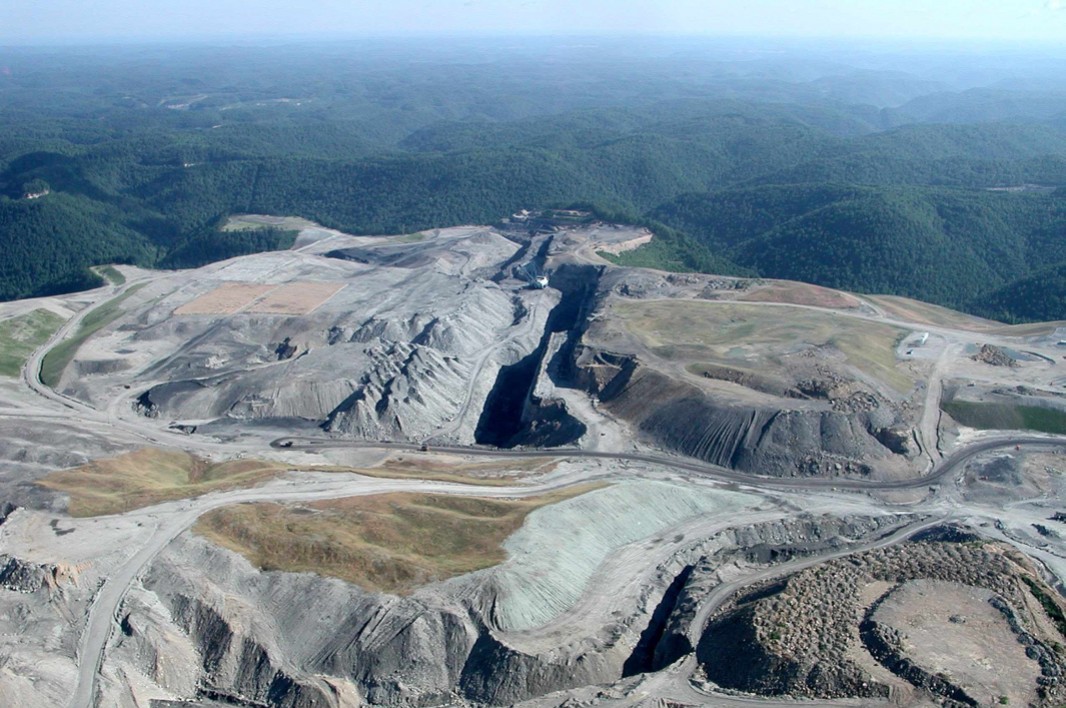
There are two potential processes for extracting keragen (the petroleum-like substance found in oil shales). The first involves either open-pit, underground or strip mining to extract the shale. It would then have to be crushed and the oil distilled at temperatures of 800 degrees Fahrenheit or more (Herra). The second is called an “in-situ” process that involves heating the shale underground to liquify it but this is a very untried and untrue method. The former method–mining–has proven time and again to be a hazardous occupation. We use open-pit mines to extract various metal ores, coal and other minerals from the earth. One of the largest of these is in Utah, the Bingham Canyon copper mine. There, enormous “lakes” have formed within the pits from groundwater seepage. These “lakes” are filled with the waste from mining, waste that often includes toxins such as mercury and uranium. Sadly, birds and water fowl are attracted by these “lakes” and lose their lives stopping for a drink, unaware of what’s contained within these waters. And, as groundwater travels underground, these toxins may also seep into nearby farmland, contaminating the soil. Underground mining, like the mining done for coal, has a history of dangerous explosions; cave-ins; with coal, the creation of black lung in the miners who work to extract it; and the emission of carbon dioxide from the many fires and explosions that result from this type of mining. Strip mining involves the removal of mountaintops, with all of the topsoil and earth being pushed down into the valleys below–along with the mercury, cadmium and other toxins. These valleys, along with their homes, farms, cemeteries, forests and streams, are often buried (Cunningham and Cunningham 309, 429). Valley filling has actually been banned in the United States but many of these mines are grandfathered in and continue to operate as usual. Below is a photograph of what land looks like after a strip mining operation moves in.

strip-mining

While beautiful forests and lush greenery surround this scar on the landscape, this strip mine plateau is devoid of life and beauty. The Appalachians are filled with these scars and the ratio of cancer victims in these areas far exceeds the national average (Cunningham & Cunningham).

tar-sands-rupture-arkansas-cropped

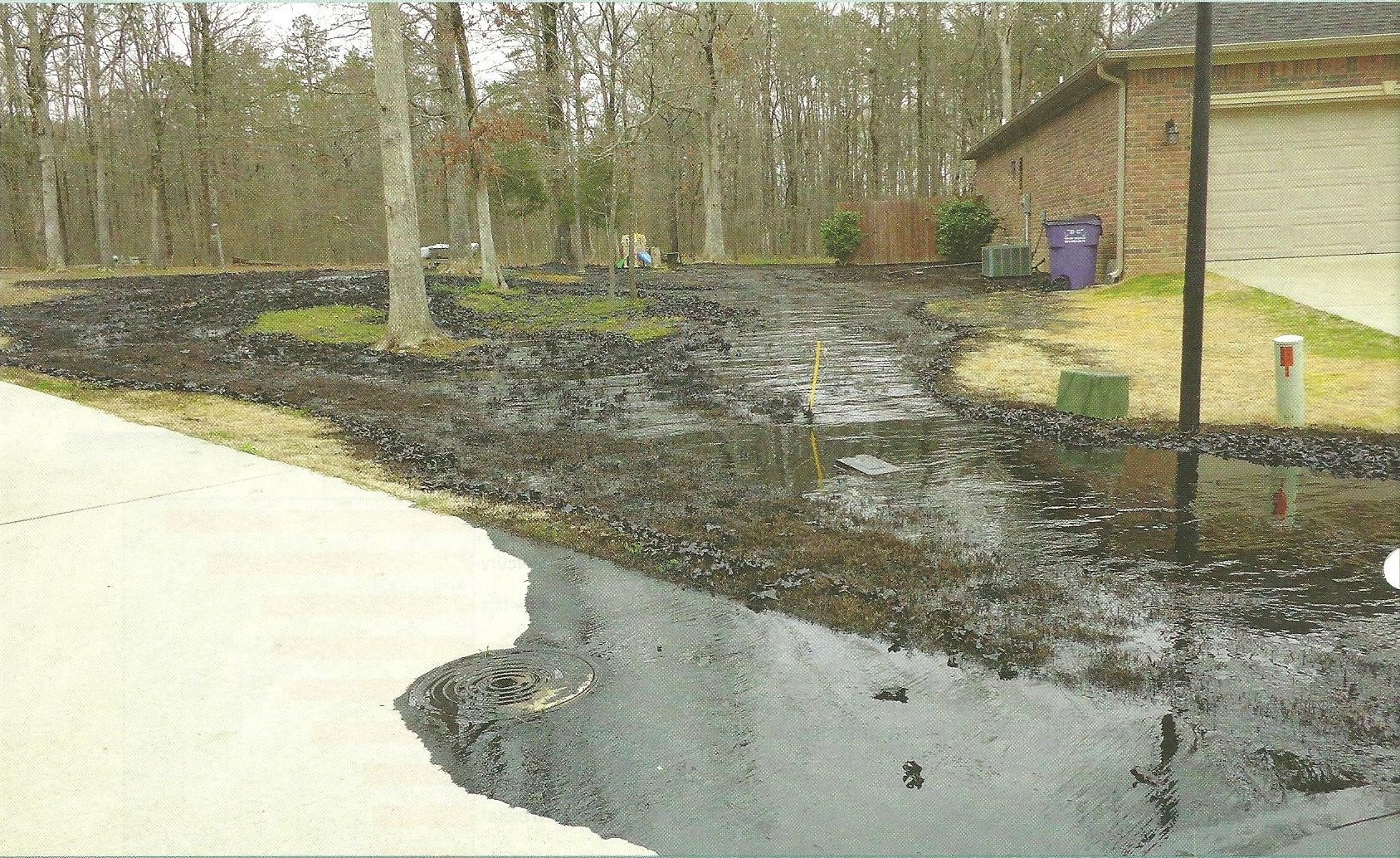
The picture above was scanned from a textbook I have entitled: Environmental Science: A Global Concern, 13th Edition by William P. and Mary Ann Cunningham. It shows what happened in 2013 when the Pegasus pipeline ruptured across yards in Mayflower, Arkansas. This is from tar sands, rather than oil shale, but both resources present a greater hazard to our environment than conventional oil drilling (Herro; McDermott). Imagine what it would be like to wake up one morning to find your yard flooded with this smelly, viscous lake of poison. These homes are forever lost, homes where people lived and loved and laughed. People who lost everything that they’ve worked for in life due to our greed and selfishness. Only a fool would trust that this ground, and the water within it, could one day be safe enough to live on/near, the water safe enough to drink again. And what of the beloved pets who also made their homes in this area? Or the wildlife? This is not just birds and squirrels and chipmunks, though they love life, too. Our soil and water are both teaming with life–microscopic life that plays a huge role in cleaning, rejuvenating and aerating our natural resources. What are the chances any of these organisms survived this spill? And, sadly, as water and soil both move, this spill is not contained to this one area in Arkansas. Neighboring towns got to share the wealth. So will mining oil sands and/or shale really be a way to cheaper fuel prices?

And, as I type this, I am reminded of the opening song to the old sitcom, The Beverly Hillbillies: “Come listen to my story about a man named Jed, a poor mountaineer barely kept his family fed, and then one day he was shooting at some food, and up through the ground came a bubbling crude. Oil that is, black gold, Texas tea.” (Flatt & Scruggs) For many of our political leaders, this is the real motivation behind wanting to mine these oil sands and shales–they see the money and power behind it. But they, too, if we allow our vote to allow the progression of this mining campaign, will also feel the effects of these “accidents” in time. I can only hope that whoever is elected to office tomorrow will realize this while there is still time.

May God bless you & keep you!

Works Cited

American Rivers. “Colorado’s White River Among America’s Most Endangered Rivers of 2014”. 9 April 2014. Web. Retrieved from: http://www.americanrivers.org/conservation-resource/colorados-white-river-aong-americas-endangered-rivers-2014.

Cunningham, William P. and Mary Ann Cunningham. Environmental Science: A Global Concern, 13th Edition. McGraw-Hill, New York: 2015.

Flatt, Lester and Earl Scruggs. “The Ballad of Jed Clampett” 26 November 1962. Web. Lyrics retrieved from: https://www.quora.com/What-are-the-lyrics-for-the-Beverly-Hillbilly-theme-song

Herro, Alana. “Plenty of Shale, Plenty of Problems”. Eye on Earth, Worldwatch Institute. Web. Retrieved from: http://www.worldwatch.org/node/5167

McDermott, Mat. “Fossil Fools Gold: Tar Sands & Oil Shale Eco-Impact Explained”. Treehugger. Web. 12 October 2010. Retrieved from: http://www.treehugger.com/clean-technology-fossil-fools-gold-tar-sands-oil-shale-eco-impact-explained.html

Strip Mining. Photo. Earthjustice. Retrieved from: earthjustice.org/slideshow/images-of-mountaintop-removal-mining.

The Living Bible, Self-Help Edition. Tyndale House Publishers, Illinois: 1971.

Herbs, History, Nature, Spirituality

Wednesday’s Weed Walk: Belladonna

Do NOT try this at home, kids! I repeat, DO NOT TRY THIS at home, in the office, in the car on the way to the office, in school, church, the local gym or even the grocery store. Today’s post is strictly for educational and entertainment purposes ONLY! And because this is also the last “weed walk” before Halloween/Samhain, writing a blog post about an herb whose other common names include: Banewort, Devil’s Berries, Naughty Man’s Cherries, Death Cherries, Beautiful Death and Devil’s Herb (Wikipedia), seemed appropriate for the occasion.

I am talking about Atropa belladonna, more commonly known as either Belladonna or Deadly Nightshade. This is one of the most deadly plants one can have in their garden as it’s attractive fruits entice the palette–especially that of children’s–yet it takes only 2-3 of those plump, sweet berries to prove lethal for a child. Adults are not immune either though it takes about 10 of those berries to prove lethal for us; lower doses are said to incite hallucinations and, as such, it has a history of abuse as a recreational “drug” but it has some very unpredictable side effects so, again, DO NOT TRY THIS AT HOME! Or anywhere else. And I don’t care how redundant I’m being. This is one of those you can never be too cautious about.

Interestingly, Belladonna also has a history of medicinal uses. Many of the hypnotic properties in this plant deaden pain and it is used even today in many modern pain relievers. Modern pharmaceuticals have found a way to isolate these painkilling properties to produce allopathic medicines for treating ulcerative colitis, diverticulitis, diarrhea, peptic ulcers, chronic bronchitis, asthma and vertigo, among others. Deadly nightshade/Belladonna contains an anticholinergic agent that blocks the neurotransmitter acetylcholine in the central and peripheral nervous systems (Wikipedia), systems that control the parasympathetic nerve impulses. Your parasympathetic nerves control those involuntary movements of the smooth muscles, those that control the gastrointestinal tract, urinary tract, your heart, your lungs and many other parts of the body. These are muscles that expand and contract, or function, without any conscious thought on our part. These nerves, we could say, work “behind the scenes” in our bodies, helping us to breathe, digest food and eliminate waste. Which would be one of the reasons this plant is so deadly as too much would likely shutdown these automated systems. We’ll leave this one to the pros…and, perhaps, to the memories of the wise women and cunning men of old.

Of course, in the days of cunning men and wise women–the true crones of old, who were often regarded as witches for their uncanny knowledge of the herbs–Belladonna was more commonly used as an anesthetic to relax, or deaden, the body for surgery, or for the making of poison-tipped arrows for men of war. That it was effective in the latter, and these early surgeries were often unsuccessful, hence, I shall throw another word of caution in here. This is definitely not a “simple” you want to brew in your home-grown apothecary.

However, it is an attractive plant and I know of many who do keep some in the garden for aesthetic purposes. It can grow up to 6’6″ tall with 7″ long, ovate leaves and lovely bell-shaped flowers that are a dull purple in color with just a hint of green and, when ripe, shiny black berries. Bees often make honey from the nectar of the flower. Wild birds and animals often eat the berries, despite their toxicity, dispersing the seeds in their droppings. However, this plant has proven toxic to many domesticated animals, as well as to humans, so this homesteader-in-the-making would rather admire it from afar than in the garden.

The name “Belladonna” is Italian for “pretty woman”. In addition to its earlier uses as a medicine, and poison, it was also used by ladies as a cosmetic. A tincture of Belladonna dropped into the eyes will give them a seductive appearance, an appearance that was much favored by earlier women. However, it also distorts the vision, creating a near-sightedness that inhibits one’s ability to focus on things close-at-hand; it also increases the heart rate and, over prolonged periods of time, causes blindness (Wikipedia).

As a quick aside, I am citing Wikipedia throughout and I know this free, online encyclopedia is definitely NOT approved as an appropriate reference academically or professionally, but there were enough citations attached to this listing that I decided to use it anyway. As an herbalist, though I would never consider working with such a toxic plant, it is one that I have learned about in various herb classes for safety and educational purposes–enough to know this Wikipedia listing is accurate. And that accuracy should be enough to instill a big WARNING sign over any intention to use it. Because it is so deadly, few, if any, of my herbals lists it as a curative. For the sake of this posting, I am more interested in sharing some of the folklore I found about it, folklore that I do have in some of my “magickal” herbals.

Revisiting those hallucinogenic properties, many the wise woman and cunning man was reputed to use Belladonna to “fly”. A common mixture was of Belladonna, the opium poppy, monkshood and/or poison hemlock. I shudder to think of what sort of “trips” this combination of herbs created. (Again and again, don’t try this at home…) However, they were used in an ointment so, my guess is, as my sources do not give detail, that it was absorbed through the skin–our largest organ. Having had some lightheaded experiences working in the “High” bed in the herb garden at the living history museum where I used to volunteer, I can testify that the absorption of potentially toxic plant matter through the skin can be quite potent, indeed. In my case, it was Lily of the Valley that had me reeling a bit.

But I digress…

In his excellent book, Encyclopedia of Magical Herbs, Scott Cunningham also alludes to this ancient practice of using Belladonna “to encourage astral protection and to produce visions, but safer alternatives are available today and belladonna is best avoided’ (53).

May God bless you & keep you!

Works Cited

Atropa belladonna. Wikipedia, the Free Encyclopedia. Web.
Retrieved from: https://en.wikipedia.org/wiki/Atropa_belladonna. 26 October 2016.

Cunningham, Scott. Encyclopedia of Magical Herbs, Second Edition. Llewellyn Publications, Minnesota: 1985.

Alcoholism, Animals, Healing, Herbs, Homesteading, Nature, Writing

Odds and Ends…and Apologies

First, the apology. For being “absent” for the last two days and sporadically posting this past week in general. A recent resignation by our Titles’ Clerk at the dealership, just days before our supervisor’s week-long vacation, has provided some much-needed extra hours (and pay!) to keep things running, well, maybe not “smoothly” but certainly running…period. And I am happy to pitch in and help. But it’s certainly thrown a curve ball into my daily routine. I’ve even fallen off of the wagon, so to speak, with my 3:30 a.m. rising time; the longer days requiring some extra ZZZ’s to stay on top of things. However, this morning I awakened at exactly 3:44 a.m., which isn’t bad considering I forgot to set my alarm last night, so maybe this is a sign we’re getting back in the groove again–a good groove. My apologies for allowing myself to fall out of that groove in the first place. While this is a free blog, there is an old saying that “paying customers deserve prompt and regular service”; my regular readers deserve regular posts to keep reading.

Anywho, now that I’m back–albeit, my work schedule is still fuller than usual for the rest of this week–some updates on the homestead.

I hate making these reports. I lost one of my Plymouth Barred-Rock chickens Saturday evening. My Patience started looking “off” a few days’ before, back roached, stomach distended. One of my other chickens started pecking at her–not brutally, more like a nudge to say, “Hey, are you okay?” but I decided to bring her indoors, lest, some of the more aggressive birds decide to have a real go at her. After checking to be certain she wasn’t egg bound, I heated some olive oil in a sauce pan, added a tablespoon of minced garlic, and let it simmer for a while. After it cooled, I filled an eyedropper and gave it to her. Garlic is a fine antibiotic as well as being good for expelling worms, and chickens fairly love it. I added a bit more of the dried, minced garlic to her feed, along with some fennel (good for digestion) and dried parsley, which is also good for worms. Parsley has the added benefit of being good for constipation and obstructions of the intestinal tract (De Bairacli Levy 118-119). She balked at these treatments at first but, over time, I would say she at least resigned herself to them. I even gave her an olive oil enema because she was not passing her waste but it was to no avail. I found her when I came home from work Saturday night. Patience was one of my older hens but, losing beloved pets, is something you never quite get “used to”. Albeit, I have noticed a certain thicker skin happening where my chickens are concerned. Despite a healthy, varied diet, plenty of room to stretch their legs, dust baths, and good, clean housing, they tend to go down rather quickly and, sometimes, unexpectedly. They can be quite stoic, not displaying any symptoms of illness or even injury until those final moments. They are also pretty high on the food chain and predation can also be a problem. However, I never considered, when I first took up homesteading, how many times I would also adopt the role of “gravedigger”. I know that nobody–human or humane–lives forever but knowing that doesn’t make it any easier–and I hope it never does become “easy”; that’s when I quit.

Today would have been my paternal grandfather’s birthday. He would have been 111 years old so not likely I would still have him in my life even if alcoholism hadn’t ended his time here on earth at only 68 years’ old, but I always mark this day as special, remembering him and the legacy he left behind. Calef Burbank (and that’s pronounced with a long A: KAY-lef) wrote for the Providence Journal for 40 years as an investigative reporter. He was even nominated for the Pulitzer Prize for his writing. Some of my earliest memories of him are watching him bang away at the old manual typewriter and emulating him. I loved that old typewriter and, though I prefer the speed at which my fingers can fly over this modern PC keyboard–a speed that can keep pace better with my thoughts–there will always be a nostalgic love for the manuals. In addition to his writing, he was a gifted pianist, guitarist, taught me to play chess at the tender age of 3, enjoyed learning, bird watching, and ginger snap cookies. I can say “ditto for me” with the exception of piano playing. He tried teaching me as a little girl but I was too impatient, preferring to bang away with wild abandon and a lot of discord; he finally gave up on me. Today, I wish I’d absorbed those teachings as readily as I did the chessboard.

Lastly, I spent an hour yesterday morning building four more raised beds for the herb garden. I am hoping this wonderful Indian summer lasts long enough to build a few more before the cold creeps back in. With a little luck–and a lot of hard work–next summer may be the first of many physical “weed” walks. Keep your fingers crossed!

May God bless you & keep you!

Works Cited

De Bairacli Levy, Juliette. The Complete Herbal Handbook for the Farm and Stable, Fourth Edition. Faber and Faber, New York: 1991.

Animals, Healing, Herbs, Holistic Health, Homesteading, Nature

Wednesday’s Weed Walk with the Crazy Cat Lady

That title should make it obvious what herb I’m going to write about today: Nepeta cataria, or more commonly known as, Catnip.

Catnip typically conjures up cartoon images of helpless felines languishing about in the sun, looking like someone on a healthy dose of Cannabis…and, in this household, with 10 felines, that image is pretty accurate. I keep a quart-size mason jar in my pantry full of dried catnip; the moment I unscrew the lid, every feline comes running. And the effects are almost instantaneous as even my geriatric felines start rolling around like young kittens, only to nod off into dreamland shortly thereafter. They also like to eat the dried leaves and, as it is very good for them, I allow them to take all they want.

Catnip is a mild sedative and is an excellent remedy for nervousness and hyperactivity in children (m. Tierra 114). It is also a carminative (relieves gas and bloating) and a diaphoretic (induces sweating), helping to ease fevers and colds. However, it is the analgesic properties to which I have lately been putting Catnip to use (M. Tierra 32). Catnip relieves pain. And, as the mammary tumor grows under my Ariel’s right front leg, keeping her comfortable is important. At her age (she’s 16), surgery is no longer an option and, to be honest, I am not overly-confident it is the best course of action anyway. It is highly-invasive and extremely painful for them; I’ve witnessed it time and again. Ditto for many allopathic pain-relievers that eventually shutdown the major organs. Fortunately, our vet’s sister is an herbalist and he approves many of the herbal alternatives, carries many of their tinctures in his clinic. She is under his care, just not under the knife. And the Catnip does appear to ease her pain and discomfort. What’s more, it is a lot easier getting her to drink an eyedropper-full of Catnip “tea” than some of the more orthodox remedies with their medicinal tastes.

For humans, Catnip tea is very good for easing headaches, toothaches, and the deep-down body aches and pains of fever and flu (Tierra 114). It also tastes good so give it a try. Your cats will love you.

May God bless you & keep you!

**These statements have not been evaluated by the Food and Drug Administration. This article has been presented for educational purposes only; it is not intended to diagnose, treat, cure, or prevent disease.”

Works Cited

Tierra, Michael. The Way of Herbs. Pocket Books, New York: 1998