Alcoholism, Christianity, Cooking, Emergency Preparedness, Frugality, Healing, Herbs, Holistic Health, Homesteading, Organic, Prepping, Recipes, Religion, Scripture, Spices

Wednesday’s Weed Walk: Tinctures

“And God said, Behold, I have given you every herb bearing seed, which is upon the face of all the earth, and every tree, in the which is the fruit of a tree yielding seed; to you it shall be for meat” (Genesis 1:29)

Though it is a couple of weeks’ late, as promised, this week’s Wednesday Weed Walk isn’t so much about a specific herb but, about a way to preserve the herbs for future use when not in their growing, or harvest, seasons.

A tincture is, in my opinion anyway, the easiest way to make medicine. You can tincture a single herb, or blend them. I tend to do the latter…except when I’m making my own vanilla extract (recipe below).

To tincture herb(s), you need a clean, sterile container (repurposed glass Mason jars work well!) and, preferably, 100 proof alcohol of some kind. I use 100 proof vodka to tincture my herbs but other mediums, such as rum, would also work. You can use an 80 proof and broaden the selection of spirits but, you will need a few capsules of vitamin E oil added against spoilage, as anything less than 100 proof may mold. Apple cider vinegar (ACV), also with added vitamin E oil, will work for short-term storage. With ACV, you will have to store your tinctures in the refrigerator and they will only keep for 2 weeks, at best. When tincturing in 100 proof alcohol, your tinctures remain shelf-stable for up to 2 years. However, if you, or someone you love, is susceptible to alcoholism, or for young children, ACV may be the better option for you.

Tincturing is simple. You measure your herbs into a jar and pour the alcohol, or ACV, over them until they are covered with the liquid. Then you put a lid on the jar, label it with the contents, ingredients, the date you started the tincturing, and the batch #. This last isn’t 100% necessary but, if you decide to sell herbal products, having a running batch # is helpful should any adverse reactions occur. Depending upon the medium you used, you place the tincture into the refrigerator, or in a dark cabinet (too much light will destroy the healing properties), and shake it daily for two weeks. At the end of those two weeks, you can either leave the spent-herbs inside, and strain as you use it, or strain them now, at the two week mark, into another clean and sterile jar, or dark-colored bottle.

You can use fresh herbs, or dried. If using dried, remember the herbs will have a higher concentration of medicinal properties to them. 1/3 of the amount of dried herbs suffices. So, if you normally measure 1 tablespoon of, say, fresh chamomile, you would only use a teaspoon of the dried.

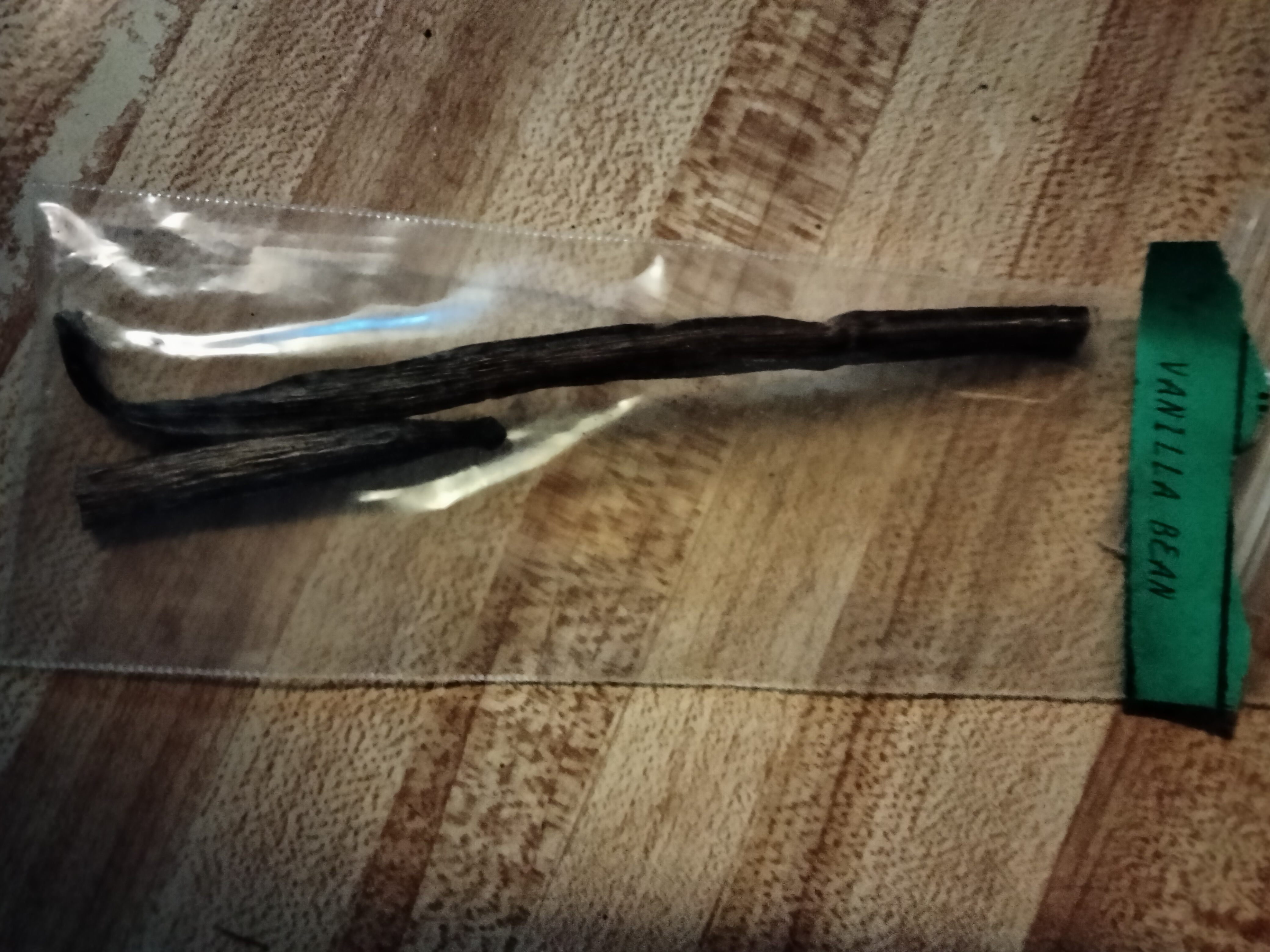
Making medicine is the part I like the best but, you can also use this method to create extracts for the kitchen, such as vanilla. To make vanilla extract, you will need a dark jar/bottle of some kind (you can find online, or many herb shops will sell them), or a dark cabinet to store them if using clear glass. It doesn’t need to be a large bottle. A couple of ounces suffices. Think of the tiny bottles that vanilla extract comes in at the grocery store. Anyway, take 2-3 vanilla beans, slice them in half lengthwise, and put them in the bottle (if bottle is short, you may also need to cut them in half the other way, too). Fill the bottle with 100 proof alcohol, screw on the cap, give it a shake and let it tincture for two weeks. Once the two weeks are over, however, in this case, you will NOT be straining the liquid into another container. Instead, keep the vanilla beans in the liquid. As you use it, you can simply top it off with more 100 proof alcohol, and/or add more vanilla beans over time. Also, in this case, the ACV will NOT work. However, any concerns over the alcohol content should be unfounded as the alcohol burns off in the cooking/baking process.

This same method will work for almonds, lemon peels, etc. too.

May God bless you & keep you!

Christianity, Faith, Healing, Heavy Metal Music, Herbs, Holistic Health, Homesteading, Organic, Plants

Another Wednesday’s Weed Walk Revisited

“For I know the plans I have for you, says the Lord. They are plans for good and not for evil, to give you a future and a hope. In those days when you pray, I will listen. You will find me when you seek me, if you for me in earnest.” (Jeremiah 29:11-13)

I wrote the following weed walk several years ago. And, as I’m looking into voice over work as a possible supplemental income, having a tea blend that will soothe tired throats and keep the voice healthy is a blessing. Of course, any work, or hobby, that requires the use of one’s vocal chords can benefit from this tea: DJ, actor/actress, podcaster, TV host, newscaster, reporter, politician…the list could go on.

Singer’s Tea…no, that’s not actually a legitimate product, that I know of, but that’s what I call one of my favorite herbal tea blends.

I don’t sing professionally anymore. Or even semi-pro. While the vocal chords may get a bit of a workout on the weekends when I’m enclosed in my home office and working on the mural that is currently consuming me, rare do I get on a stage–or even in the choir loft at church–to sing. Some of it is time constraint. As a full-time (online) student, minister, herbalist, homesteader, writer, artist, holistic healthcare practitioner and part-time photographer/receptionist most evenings, I have a pretty full plate. But many years ago I fronted metal bands, both lead guitar and lead vocals. I didn’t know about this tea then; I learned about it years’ later. It might have helped in the metal years; however, no matter what genre you sing in–even if it’s only the shower–taking care of one’s vocal chords is important.

In 2007 I took Apollo Herbs’ “Herbal Apprentice” course with Michael Ford and Joanne Pacheco. It was during one of our weekend workshops that Mike mentioned this combination, primarily for sore throats, but he also mentioned that a student from one of his previous classes used this combination religiously. She was a singer, like me, and fronting a local band. I was singing regularly with the Folk Group at Our Lady of LaSalette Catholic Church in Brooklyn, CT at the time so I gave it a whirl.

The blend is equal parts of Echinacea purpurea (Echinacea, Purple Coneflower are common names) and Ulmus fulva, or Slippery Elm. “Equal parts” is just what it suggests. If you measure a teaspoon of Echinacea, you also measure 1 teaspoon of Slippery Elm; a tablespoon of Slippery Elm, a tablespoon of Echinacea, and so on. The combination has a pleasant flavor so it is also palatable rather than tasting “medicinal”. I typically use the dried herbs, purchased from a local and reliable herb shop (organic; responsibly harvested) but you may also use fresh herbs if you have them in your garden or from another reliable source (i.e. one without pesticides). As we are brewing roots and bark here, a standard infusion doesn’t quite cut it. You will need a decoction of the herbs. And how we do that is preferably through the use of a double boiler but a makeshift of setting a slightly smaller sauce pan inside a larger one that has at least an inch or so of water in it will do in a pinch. No non-stick pans for this. The coating may leach into your herbal tea; I don’t recommend non-stick pans for any purpose. Cast-iron will also leach into the herbs and affect the outcome. Stainless steel, or enamel, is preferable. Place the herbs in the smaller pan, cover them with water (about an inch higher than the herbs) and place a lid on the pan with the herbs in it. The idea is to simmer them, not boil them. And you will want to watch that the water is not evaporating too much as you don’t want the herbs to scorch. If you see the water level lowering too rapidly, you may add a little warm water and lower the heat a bit. This takes approximately 45 minutes on low heat. I always add honey to mine, which also acts as a mucilage to the throat but it is optional.

So how does it work?

Slippery Elm** (Ulmus fulva) is the inner bark of the slippery elm tree. This dried bark is rather stringy and may range from a light tan to a light beige in color. It has a sweet, spicy scent and it is a well-known demulcent. “Demulcent” means that it soothes and moistens, usually via mucilage. This particular demulcent is specific for sore throats, cough, bronchitis and for relieving the inflammation of the respiratory tract, including the mouth and throat (L. Tierra, 121). It is also good for soothing the intestinal tract, and relieving the pain and irritation from indigestion and colitis, but it is the respiratory tract that we are most concerned with here, for obvious reasons.

Echinacea** (Echinacea purpurea) is also good for relieving sore throats; all infections and inflammations, and swollen glands. A known sialagogue, it increases the flow of saliva in the mouth. It is also an immune enhancer, helping to prevent and cure colds and flus (Tierra 78-79),; for singers, it makes it a wonderful combination with Slippery Elm. Back in the metal years, it seemed I always came down with a cold and/or upper respiratory complaint whenever there was something important coming up in music. It is a singer’s nightmare. It could be because I tend to be a perfectionist and so pushed myself harder, practicing longer, and depriving myself of much-needed sleep in preparation for whatever I was doing but, regardless, whatever “bug” was lurking around always found its way to me. Again, I wish I’d had this tea in my arsenal then.

One last thought, as both of these herbs are now on the endangered list, please use only the cultivated herbs from a reliable and responsibly-harvested source. For more information about sustainable harvesting, please visit http://www.unitedplantsavers.org.

May God bless you & keep you!

**These statements have not been evaluated by the Food and Drug Administration. This article has been presented for educational purposes only; it is not intended to diagnose, treat, cure, or prevent disease.”

Works Cited

Tierra, Lesley. Healing with the Herbs of Life. Ten Speed Press, California: 2003.

19th century, Brothers & Sisters, Christianity, Healing, Herbs, History, Holistic Health, Homesteading, illness, Nature, Organic, Recipes, Spices

Age…and Digest Tea

“White hair is a crown of glory and is seen most among the godly.” (Proverbs 16:31)

Ever since I broke the habit of rising at 3:30 each day to write, I’ve been struggling to get back to that schedule. If I don’t write this blog early in the a.m., it usually doesn’t happen. And 3:30 leaves me a few hours for blogging, working on my book, some yoga and prayer before the farm starts clamoring for breakfast. However, it’s a tough schedule to maintain even under the best of circumstances.

This morning?

A 2:00 a.m. attack of acid reflux, which triggered an asthma attack, which had me running to the bathroom because I’m rapidly becoming one of those ladies that pees when she sneezes, wheezes or coughs, of which I was batting 2 out of 3. Middle age is starting to peek over the horizon in the rearview mirror.

Welcome to the silver years!

After relieving myself, I attempted to go back to bed. 2 a.m. is a bit early even for me. But acid reflux continued to rage and then, alas, hot flashes, too. Ay caramba! I got back up a little after 3 after tossing and turning, burning and flashing, brewed a cuppa my favorite Chai tea (of which I’m wondering if the herbalist should’ve elected to brew her digest tea instead of being so much of a creature of habit…) and voila! And, while I may have given the recipe for my digest tea in an earlier post, it’s one that is worth repeating for any who may have missed it.

Digest tea is made with equal parts Chamomile (Matricaria recutita) and Fennel seeds (Foeniculum vulgare). I typically use a tablespoon each of the dried herbs. Then add about 1/8 – 1/4 teaspoon of ginger and just a pinch of cardamom. All are excellent digestive aids.

Chamomile is an excellent brew all by itself for digestive complaints. It relieves diarrhea, abdominal cramping (antispasmodic), flatulence, colic in babies and, when used in conjunction with these other herbs and spices, tends to calm my acid reflux. It is also good for menstrual cramps, nervousness and insomnia (Tierra, pp. 110-111, 1998).

During my tenure in living history, I learned that both fennel seeds and caraway seeds used to be candied and placed on the dinner table to alleviate gas and the abdominal pains that often come with eating certain foods, or overindulging. Though caraway seeds could easily be substituted, I prefer the slight licorice-y taste of the fennel seeds. Fennel is also good for treating colic and can be used as an expectorant to help expel excess mucus. It is often used in “herb formulas containing strong laxatives to prevent griping” (Tierra, pp. 76-77, 1998).

Ginger (Zingiber officinale) is, in my opinion anyway, a herbal powerhouse. It is good for anything pertaining to the stomach, intestines, and for the circulatory system. It relieves nausea (which often comes with acid reflux) and indigestion. Combined with honey and lemon, it soothes sore throats and helps promote sweating in the treatment of colds and flus. It works well as a natural pain reliever for muscle and joint pain, including the pain that accompanies arthritis.

Lastly, cardamom (Elettaria cardamomum) is another carminative, which means it relieves gas and acid reflux. It has a warming effect on the body and helps to relive diarrhea, colic and headaches.

These four herbs combined not only relieve my acid reflux and help with all things digestive, they also taste delicious. It’s one of the few herbal teas that I can drink without any sweetening, though I often add a spot of honey, which can have a soothing effect of its own on the digestive tract.

When making any herbal tea, you want the water hot, not boiling. I tend to bring my water just to a boil, turn it off and let it sit for about 5 minutes before pouring it over the dried herbs. If the water is too hot, it will destroy the medicinal properties of the herbs. Cover the mug, or tea pot, and allow the herbs to steep for about 20 minutes. Strain and enjoy! If using honey, I typically add it to the cup right after I pour the water over the herbs and allow it to steep along with the herbs.

A word of caution: Avoid using any plastic vessels or nonstick cookware as they may leach into your tea. Cast iron may also adversely affect your brew. And never use the microwave! I use stainless steel pans and kettles for all of my herbs, and ceramic mugs/tea pots for brewing.

As both cardamom and ginger are two of the herbs used to make Chai tea, maybe I’m not so far off with my favorite brew this morning after all but, I’m also thinking maybe I should start incorporating a cup of digest tea before meals…instead of hoping I’ll remember at 2 a.m. when acid reflux is already wreaking havoc. As much as I am enjoying watching the sunrise and hearing the opening chorus of wild birds and pet roosters, acid reflux would definitely fall under the heading of a “rude awakening”.

May God bless you & keep you!

The FDA has not evaluated these statements. This blog post is not intended to diagnose, treat, cure, or prevent any diseases.

REFERENCES

Tierra, Michael (1998). The Way of Herbs. Pocket Books, a division of Simon & Schuster, Inc. New York, NY.

19th century, Animals, Christianity, Climate Change, Compassion, Cooking, Creativity, Culture, ecosystems, Emergency Preparedness, Environment, Exhaustion, Faith, Fashion, Fiber Arts, Fleece, Frugality, gardening, Global Warming, God/Jesus, Greenhouse, Herbs, History, Holistic Health, Homesteading, Human rights, Minimalism, Nature, Nostalgia, Organic, Prayer, Scripture, Spices, Spinning, Straw Braiding, Weaving, Wool, Writing, Zero Waste

Yearnings

“I know how to live on almost nothing or with everything. I have learned the secret of contentment in every situation, whether it be a full stomach or hunger, plenty or want; for I can do everything God asks me to with the help of Christ who gives me the strength and the power” (Philippians 4:12-13)

The above passage from Scripture is almost true for me: No material girl here, but I do know how to live on almost nothing. The last decade or so has taught me well…as did a good portion of my childhood. I don’t need much. In fact, growing up on the lower end of the socioeconomic scale, and being both financially and occupationally challenged in current years, has developed in me a bit of a tightwad. No, I won’t skimp on your birthday or Christmas presents. I will buy you lunch, or tea/coffee, from time to time. I’m extremely frugal but, hopefully, not selfish or stingy. I give what and when I can.

But I perpetually yearn for a simpler life.

If you’ve followed my blog for more than a few months, you know I worked in living history, first as a volunteer for many years, and then as paid staff for a little over a year and a half. My deepest yearnings are for that kind of simpler life in these modern times.

Yup. Maybe I am a few fries short of a Happy Meal. I wouldn’t be the first to over-romanticize an earlier time. But, working in living history, I found a satisfaction in the skills that I learned…and a certain sense of rightness in each of them. Somehow spinning wool on a great wheel, refilling bobbins on a loom tool (smaller spinning wheel designed to load the bobbins for the looms), weaving, braiding straw, cooking and baking on a hearth came naturally to me. Whether this is some sort of ancestral memory, or maybe there is something to reincarnation after all, I don’t know. However, it wasn’t quite so easy for others who learned along with me.

Even the fashions of those earlier days proved to me to be much more comfortable and satisfying than today’s idea of fashion. First of all, the garments were made with natural fibers, which is healthier for us, and for the planet. In those long, full dresses I felt more attractive, more feminine, than in any other attire. So much so that I’ve been perusing websites for similar styles…either purchased ready made (someday when I’m back on my feet, not now that I’m struggling through financial hardship and zoning issues), or for patterns to make myself. There’s a part of me that would love to make several of the work gowns we wore for living history and maybe jazz them up a bit, a modern twist on an antiquated style. And, no, this may not jive with most people’s idea of frugality if I’m talking about purchasing new clothes, but we must wear something on our bodies. Why not something we truly love rather than conforming to modern expectations?

I remember some years’ back writing a post about how satisfying it was to sit down to a meal where the vegetables had been grown completely by my hand in the garden, the bread baked from scratch, the eggs from the chickens I raised, etc. I can’t help thinking that someday it might be just as satisfying to don an outfit that I either grew the cotton or flax, or raised the sheep; sheared/picked, cleaned, dyed, carded, spun, wove, and stitched all by myself. Yes, maybe that is a bit of pride, but I am of the mindset that maybe when we hear that “pride goeth before a fall” it’s not because having pride in one’s appearance, work, or living space will cause us to fall, but that, oftentimes, the only thing left someone has is their pride, and when they lose even that, that’s when they fall…sometimes never to truly get back up again. It’s tough to hold your head up when things are falling apart in your life. And Esther didn’t plead the cause for her people in rags; she dressed to the nine’s. She took pride in her appearance and made a statement. For me, that statement would be to embrace the comfort, simplicity and femininity of a simpler time.

Getting off a soapbox that threatens to get into a discourse on feminism, and going back to one of my beginning statements about yearning for a simpler life, I am referring to the whole reason I started homesteading in the first place. I’m tired of the rat race. I’m tired of killing myself, searching for a 9-to-5 that no longer exists, that will also leave me miserable, with no time to write, create, or work a homestead, and still not pay the most basic of bills. I’m tired of being dependent on the power grid, of our factory farm-to-grocery store food system. I’m tired of synthetic, plastic clothing poisoning our water and soil…and maybe even our bodies; can’t be healthy. I’m tired of all the additives to our foods, the pesticides and herbicides used to grow and preserve our food…and even the genetically-modified organisms that do not resemble food at all. I’m tired of watching species of life disappear, of honey bees struggling to exist. I’m tired of seeing advertisements for prescriptions that cause more maladies than the illnesses, or conditions, they were supposedly developed to alleviate. Our modern day lifestyle, the systems that have been put in place, make us vulnerable to them. This Covid-19 pandemic has shown us that. The power outages following each hurricane, tornado, or other natural disaster have shown us that, too. How many of us have friends or family members, especially the elderly, who start taking one pill for, say, high blood pressure then have to take another pill for bloating, or water retention, and then another as cholesterol skyrockets, etc?

Yeah, a bit of a rant today. I’m beating my head into the wall, preaching to the choir, because there are many things that I cannot change no matter how much I rant and rave, and seek to fight an uphill battle.

That doesn’t mean I give up entirely though.

My dream home has a hearth in the kitchen. It requires a hand-pump to draw water up from the well. It has a spinning wheel and a loom, a loom tool and a few niddy-noddies. It has a dough box for starting bread to rise. And a hand wringer for doing my laundry. It is lit with candles and/or oil lamps, and has a composting toilet if allowed (this last is often prohibited in many towns across the nation). My dream home is small and well-insulated with natural fibers, but sits on land large enough to support a decent-sized herd of goats for both fiber and dairy, sheep, chickens, ducks, honey bees and rabbits. There is a large herb and vegetable garden; a couple of greenhouses and/or hoop houses for year-round growing and for warm-climate spices. My dream home has an agility course because there are Border Collies sharing that home, too. Maybe there’s even a small pond for my ducks and geese, and for paddling a canoe once in awhile, because being on the water is such a great way to relax…even for those of us who cannot swim(!).

The yearning for such a life comes about as I navigate through this zoning and foreclosure nightmare I’ve been swimming through for too long now, always circling back to it just when I think I’ve finally got it licked. It’s where I go to escape, or better yet, to manifest? I know much of this is beyond me as building codes require certain regulations to be met, but to the extent I can get away with and still remain within the law, this is where I hope to go.

For too long now, a peaceful, simple, fairly self-sufficient life has been a dream only. I’m tired of the rat race. It’s time to live the life I was meant to live, a life lived with intention. And I pray the same thing for each and every soul reading this post…no matter how different your intentional life is from mine.

May God bless you & keep you!

19th century, Alcoholism, Christianity, Climate Change, Cooking, Creativity, Culture, Emergency Preparedness, Exhaustion, Frugality, Gratitude, Healing, Herbs, History, Holistic Health, Homesteading, illness, Minimalism, Nostalgia, Open-mindedness, Organic, Spices, Spinning, Straw Braiding, Weaving, Wool

Instead of Gatorade, Try Haymakers’ Punch

“For I will give you abundant water for your thirst and for your parched fields. And I will pour out my Spirit and my blessings on your children.” (Isaiah 44:3)

There are many things I miss about working in living history. I miss “my” herb garden. I miss spinning wool into yarn on the Great, or Walking, Wheel. I miss filling the bobbins on the loom tool (another type of spinning wheel). I miss weaving. I miss braiding straw for making hats. I miss cooking and baking on the hearth. And I miss the clothing.

Except when it was 90+ degrees outside and I had to get a fire going both on the hearth and in the bake oven (that little beehive-shaped cavity next to the kitchen fireplace).

Housewives in the 19th century did bake…even in summer. Southern ladies had summer kitchens; those were rarer in New England. However, New England housewives were sensible enough to rise early and get their baking done before that afternoon sun rolled directly overhead. In 2018, in a living history museum, where you have to demonstrate during normal business hours, you simply endured.

Or not.

I remember one afternoon that I felt extremely tired, and even a little dizzy, after baking all day. During the long walk back to my car after the work day was done, I was hailed by a fellow co-worker. I turned to greet her and almost fell over. She looked at me funny. I think I mumbled something about heat exhaustion but that was all. Exhausted, I drove the 30+ miles home and figured a good night’s sleep would have me feeling better in the morning.

The next morning the alarm went off. I sat up in bed, intent on turning it off, and the whole room spun. I nearly passed out again. Instead, I sat there, chilling, thinking it was the longest minute in history before the alarm stopped on its own. Finally, I got up but I felt weak and shaky, and I had to cling tightly to the banister as I made my way downstairs. It took me 45 minutes to feed the barnyard; normally, it was a 25 minute job. I decided to call in; there was no way I could interpret for visitors this day.

I also decided I needed to go to the hospital.

Now, one would think I would’ve had the sense to call a friend, to wake Mom, etc. to take me to the hospital. There’s a reason why dehydration is equated with inebriation: both make you stupid.

After calling work, I got in the car and backed out of the driveway. At the end of the driveway, I turned my head to look both ways for traffic and the whole road spun out…much like my room had done when I first awakened. As soon as it was clear, I drove myself to the hospital (yes, folks, we’re out there…).

The folks in the lobby must’ve seen me zigzagging like a drunk across the parking lot. They had a wheelchair waiting for me.

I must add here, for the benefit of future heat exhausted patients, that emergency room workers should NOT run with their patients down to the ER. As I was hurled along those stark green and white fluorescently-lit halls, it was all I could do not to “hurl” in another sense.

Long story short, two hours’ later, the doc told me that I had flushed most of the electrolytes out of my body the day before. You see, I thought I was okay, all but immune to dehydration, because I had been sipping water all day. Apparently, when it’s 90+ degrees and you’ve got a couple of infernos going behind you…and you’re wearing three layers of clothing…you need to replace those electrolytes, not just slake the thirst.

The doc recommended either Pedialyte or Gatorade; I prefer something a little healthier…and less expensive.
Fortunately, folks in earlier centuries made something called Haymakers’ Punch, or Switchel. I got to try some while visiting another living history museum in New Hampshire over a dozen years’ ago and they gave me the recipe. It’s an acquired taste for some. Others, like myself, think it’s delicious. Here it goes:

1 cup apple cider vinegar
¾ cups of honey (preferably locally grown)
4 teaspoons of molasses
¼ teaspoon of ginger (there’s that ginger again…)

Place all of the above ingredients in a cup of warm water, stirring constantly until dissolved. Pour the mixture into a 1 gallon container (preferably glass or ceramic; I don’t recommend plastic for any recipe). Fill the rest of the container with water. Keep in the refrigerator.

A word to the wise: Switchel is meant to be sipped, not gulped, or drank straight down.

Though it does not have all the fancy labeling, coloring, and artificial flavorings of either Pedialyte or Gatorade, Switchel will keep you hydrated during those hot summer days when you need a little more than just plain water to keep your cool. And it’s definitely an inexpensive alternative.

May God bless you & keep you!
19th century, Appreciation, Brothers & Sisters, Christianity, Cooking, Creativity, Culture, Diversity, Frugality, Gaia, gardening, God/Jesus, Gratitude, Healing, Herbs, Holistic Health, Homesteading, illness, Irritable Bowel Syndrome, Nature, Open-mindedness, Organic, Plants, Recipes, Religion, Scripture, Self-improvement, Spices, Spirituality, Wicca

Wednesday’s Weed Walk – Zingiberis officinalis

“And God said, ‘Behold, I have given you every herb bearing seed which is upon the face of all the earth, and every tree, in the which is the fruit of a tree yielding seed to which it shall be for meat’.” (Genesis 1:29)

I use ginger (Zingiberis officinalis) for everything! It’s in the asthma tincture I shared about recently; it’s in my digest tea (see recipe below); it’s in the golden milk I drink to control my Irritable Bowel Syndrome. I put it in a winter tonic. I also make and eat gingerbread and ginger snap cookies (or small cakes, as we used to say in the 19th century). I mean, it is so versatile and I’ll bet most of the people reading this have it in their spice cabinet right now.

Ginger has many healing properties. It is said to be a “stimulant, diaphoretic, carminative, emmenagogue, expectorant, antiemetic, analgesic, antispasmodic, stomachic, antipyretic, and antimicrobial (Tierra, 2003, p. 87). It has been used to treat motion sickness. It’s great for any lung complaint, such as asthma, bronchitis, and even pneumonia. It’s a stimulant for people with poor circulation. It has been used in poultices to ease the pain of arthritis. It’s capable of soothing sore throats and easing menstrual cramps. It’s also good for indigestion, nausea and flatulence. In fact, if you’ve ever had candied ginger, this was one of the earliest “treats” found in the local “country” or “general” store, along with horehound and lemon drops. Candying these “medicines” was a way to get children to take them. Think of Mary Poppins and her “spoonful of sugar” to help the “medicine go down”.

The FDA has not evaluated these statements. This blog post is for informational purposes only and is not intended to diagnose, treat, cure, or prevent any diseases.

Despite being a Christian, I have spent years studying Wicca and have a lot of respect for this religion. According to their traditions, ginger is said to “lend power” when “performing spells” as ginger is warming by nature and is particularly effective for “love spells” (Cunningham, 2006, p. 125). Supposedly, if you plant the whole root, you will attract money into your life, too. It is also recommended that you sprinkle some powdered ginger into your pockets, which could be interesting, to say the least ;).

Though we had ginger growing in the herb garden at the living history museum I used to work at, I have never tried growing it at home. My garden is still in the landscaping stages owing to when I have the necessary resources, such as time or money, to finish…or I dig down into that Yankee ingenuity to re-purpose something for the job. However, it seems to grow just fine in New England and overwinters with a healthy layer of mulch covering it. The only issues we had at the museum was that the groundhogs liked it a little spicy; we could never keep either the ginger root (it’s the root we use, not the leaves or other aerial parts) or the horseradish completely free of their nibbling. Surrounding it with chicken wire might do the trick. It’s worth a shot.

Whether you’re healing a bout of indigestion, casting a love spell, or baking some gingerbread to enjoy with family and friends, planting some ginger root in the garden, or simply buying some powdered organic, I’m confident you’ll find some new and effective uses for this little powerhouse.

May God bless you & keep you!
Digest Tea

1 tablespoon chamomile
½ tablespoon fennel
1/8 teaspoon of ginger
1 pinch of cardamom (with both the ginger and the cardamom, this is more to taste rather than science)

Heat water in a stainless steel kettle or sauce pan (water should be hot but not boiling; I often bring it to a boil and then let it sit for a few minutes so as not to damage the healing properties in each plant). Pour over the measured herbs/spices. Cover with a lid and allow it to steep for 20 minutes. Strain (or you may use a tea ball) and, if desired, add some honey to sweeten.

This is great about ½ hour before a meal…or as a soothing treat before bed.

REFERENCES

Cunningham, Scott (2006). Cunningham’s Encyclopedia of Magical Herbs, 2nd edition. Woodbury, MN: Llewellyn Publications.

Tierra, Lesley (2003). Healing with the Herbs of Life. Berkeley, CA: Crossing Press.

Christianity, compost, Emergency Preparedness, Exhaustion, Frugality, gardening, Gratitude, Herbs, Homesteading, Humanity First, Lasagna Gardening, No-dig Gardening, Organic, Plants, Potted Plants, Self-improvement, YouTube

Growing Hope

“There is a right time for everything: A time to be born, a time to die; a time to plant; a time to harvest.” (Ecclesiastes 3:1-2)

A reprieve from academia last week led to a whirlwind of activity here on The Herbal Hare Homestead. We have been inundated with rain and eggs. The former has led to overgrown grass, lots of mud and weeds. The latter, a never-ending query of where are we going to put them? Grocery shopping suddenly brought on a flurry of angst as cartons of eggs lined first one shelf, then another, and moved into the top shelf. Worse, the frugal fanatic here started cringing about the potential waste.

Not wanting to profit during a pandemic when millions of people are out of work and struggling, I hesitated about advertising them. However, the desire not to waste food won out. I posted a message on Facebook that I had them, free of charge, as some of them had been sitting in the fridge a few weeks. 13 dozen went in a few hours’ time. I spent the early part of last week driving around northeastern Connecticut, meeting friends and strangers alike, in parking lots, masked and gloved, or setting a carton or two on the lawn, or a doorstep, to maintain that 6 feet apart. A trip to the grocery store revealed that eggs are actually scarce right now. Who knew? I have back-orders for more. If you can find them, eggs are being sold at what I can only describe as price-gauging rates. Here I was worried about taking advantage of people by profiting from them.

Amazingly, though they were free, most offered some compensation at least for my gas. I appreciate it greatly! I also appreciate that my girls are still laying quite prolifically and I will be making another delivery run tomorrow to fill some of those back-orders.

Today my back is reminding me that I’m not 25 anymore. Or even 35.

I spent most of the last two days in the garden, turning compost; clipping back the blackberries that were moving out of their own bed and invading the patch of Columbines surrounding the birdbath; clipping back the semi-invasive Japanese Knotweed, and the highly-invasive Bittersweet. I weeded several beds, did a happy dance to see the blueberry bush I planted a couple of years’ ago finally growing, and checked on the rhubarb, which is almost ready for harvest. I doubt we’ll get a large enough crop of strawberries to make a strawberry rhubarb pie straight out of the garden this first time harvesting the rhubarb, but we’re on our way. The strawberry plants are at least growing…as are the raspberries.

My herb beds are in need of some serious work. I’m going to have to advertise for more cardboard to cover the grass that keeps spreading everywhere (YouTube: Charles Dowding, No Dig Gardening). However, my chives are looking good and I’ll be drying some before the week is over. I may also plant more chives as we go through them a lot. Whatever chives I can harvest never seem to last more than a month’s time.

All of this rumination is simply my way of growing hope. Because that’s what a garden is: it’s a sign of hope. It’s a way of sowing continuity, of a belief in tomorrow. I have lettuces and cucumbers ready for planting; seeds to sow for more lettuces and dark, leafy greens. The tomato plants will go in next week, after the danger of any frost is over for this gardening zone. And I’m looking at the overgrown herb beds and contemplating what to add, what to transplant, what to divide. I’m looking at all of the plans I have for this little patch of land here in CT and a smile is spreading across my face. It feels good to get my hands dirty…and I’m looking forward to the fall, when the fruits of this labor fill the freezer and line the cupboard shelves. More, there’s an even deeper hope that this garden, along with these grass-stained hands, aching back and equally aching knees, will provide a surplus that I can share with others.

If you garden, I would be delighted if you would share what you have planted/planned for your future harvest.

May God bless you & keep you!

Alcoholism, gardening, Healing, Herbs, Holistic Health, Homesteading, illness, Nature, Organic, Plants, Recipes, Self-improvement

Wednesday’s Weed Walk – Coltsfoot

“And God said, ‘Behold, I have given you every herb bearing seed which is upon the face of all the earth, and every tree, in the which is the fruit of a tree yielding seed to which it shall be for meat’.” (Genesis 1:29)

My Master Gardener instructors and classmates would be horrified: I have intentionally planted Coltsfoot (Tussilago farfara) in my garden. The reason for their horror? Coltsfoot is said to be an invasive species and is not native to this land (albeit it has become naturalized like so many other plants brought from European settlers in earlier generations). My reason for defying some unspoken MG oath? Coltsfoot is one of the main ingredients in the tincture that I brew to control my asthma and to heal any winter bouts with bronchitis. I have even healed a bout of pneumonia with it and that makes it more valuable than any “oath”. Furthermore, I want to know what’s in my medicine. In my home garden, I know it hasn’t been sprayed with any chemicals or genetically-modified.

The information contained herein is for educational purposes ONLY. The FDA has not evaluated these statements. This blog post/article is not intended to diagnose, treat, cure, or prevent any diseases.

In Coltsfoot’s defense, the one lone plant that I transplanted over 3 years’ ago has only “spread” to a second plant in those 3 years. At the museum where I used to be their herb garden lead, it was also slow-spreading. So, while I’ll give it the “non-native” status, I question the “invasive” part. It wouldn’t surprise me if the university is receiving kick-backs from one of the major drug companies to downplay this little beauty. The latter makes an awful lot of money off of seasonal allergy sufferers, asthmatics and others with chronic upper-respiratory illnesses. A plant whose primary use is for upper-respiratory complaints is a threat to their livelihood and, because it is a “weed”, it cannot be patented. (And, yes, I’m on another rant and getting all conspiracy theorist, too; sorry, I trust big pharma about as far as I can throw them.)

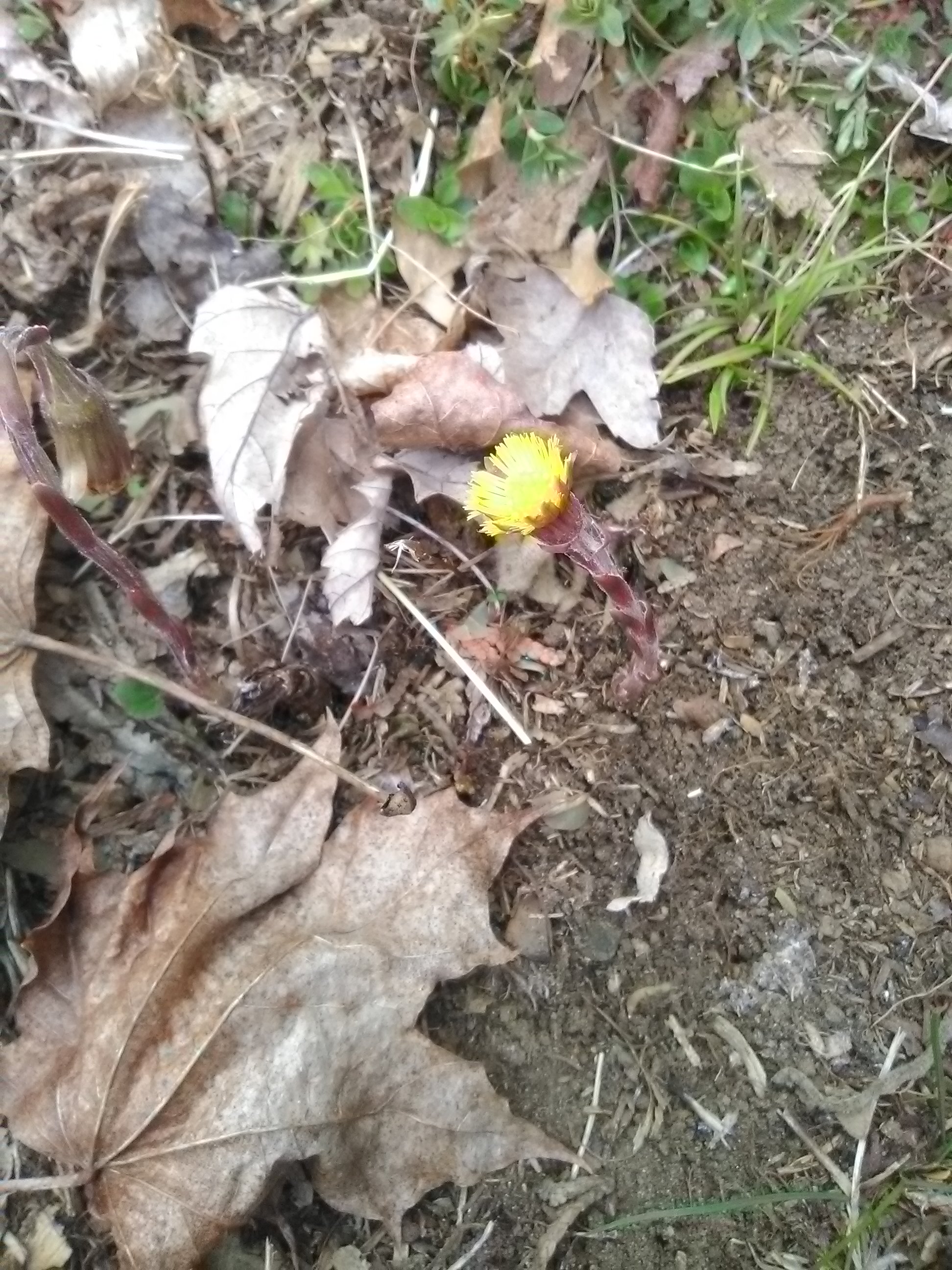
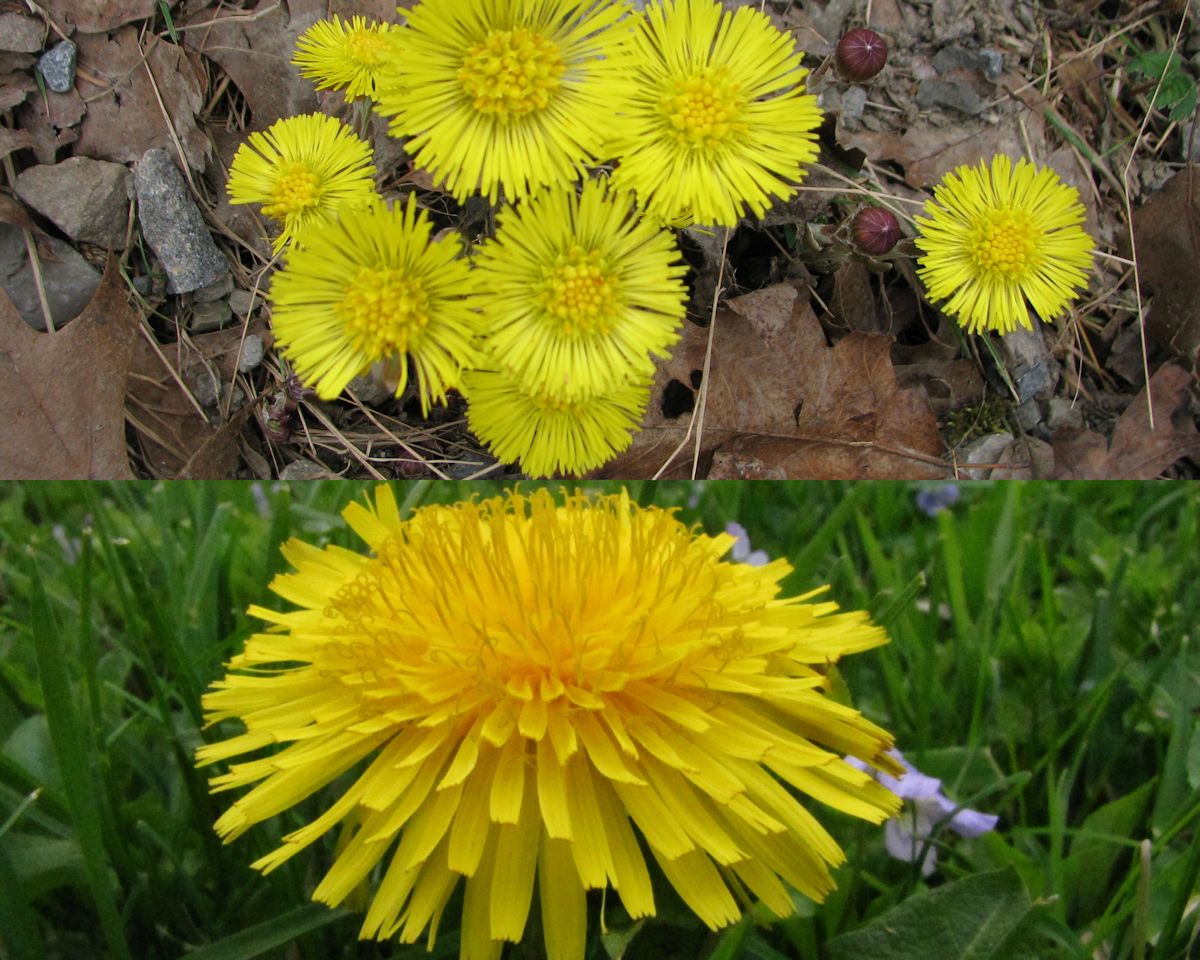
Ahem…ranting aside, many may mistake Coltsfoot for a dandelion. They have similar flowers, albeit, Coltsfoot’s floral head falls somewhere between a dandelion and an English daisy. Unlike the dandelion, whose foliage sprouts before the flowers bloom, Coltsfoot flowers first and then the colts’ foot-shaped leaves emerge (hence, its name).

Images from my garden:

Image found on Yahoo of the foliage later in the season:

Image comparing Coltsfoot in full bloom with a dandelion, also in full bloom:

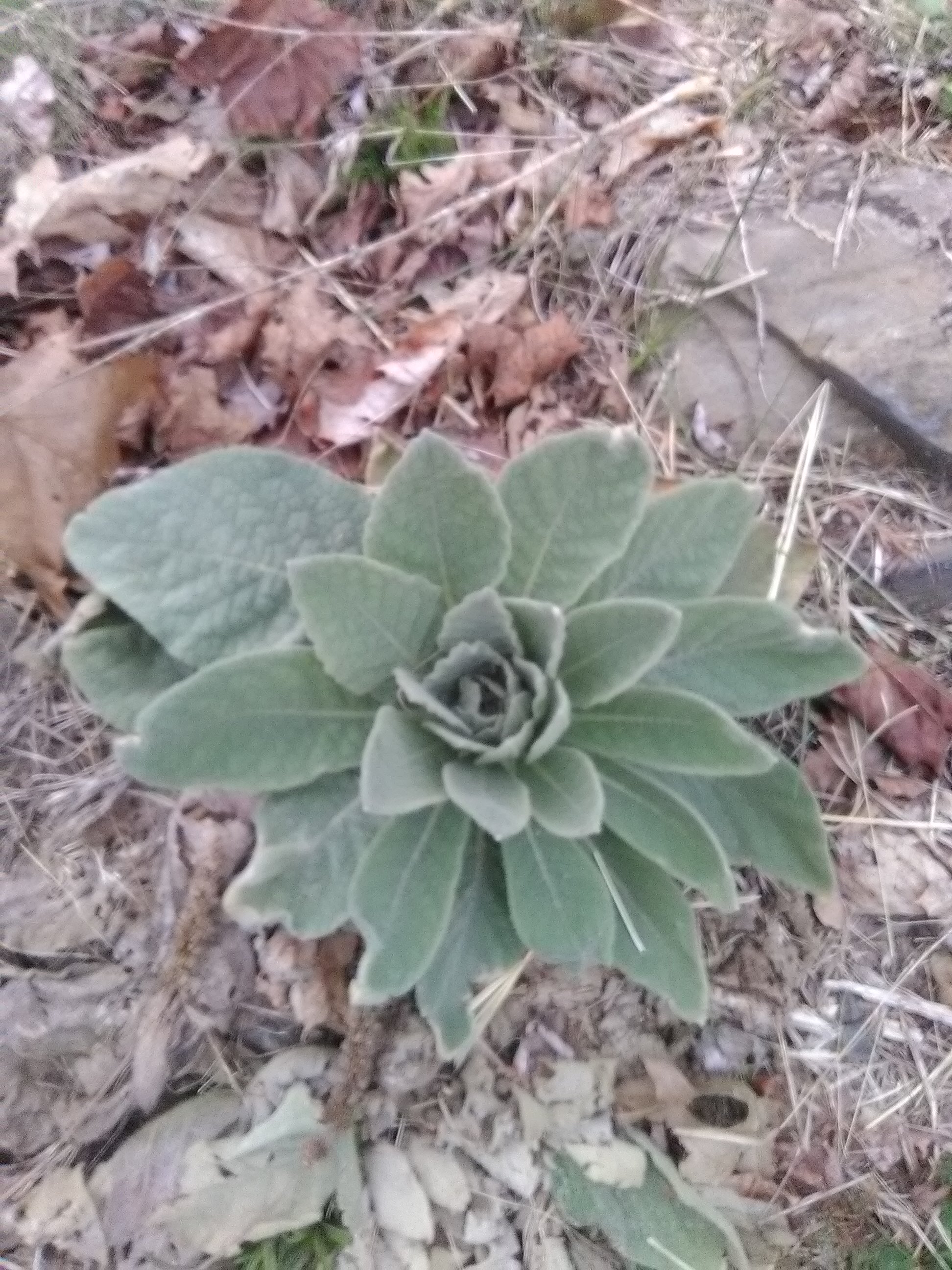
As stated above, I use Coltsfoot (leaves only) as part of a tincture to control my asthma and to treat bronchitis. The tincture in question (and I will leave the formula below) contains several other herbs, but it is the combination of Coltsfoot with another “weed”, Great mullein (Verbascum thapsus), that makes this tincture so effective against asthma. While Coltsfoot is both an expectorant and anti-imflammatory, mullein is antispasmodic, as well as also being an expectorant. Both herbs have demulcent properties, which mean they produce a mucilage that coats inflamed bronchial passages. Additionally, Coltsfoot is antitussive, astringent and sedative. It’s very name in Latin translates to “cough dispeller” and it has been used effectively over thousands of years to aid the healing of coughs, wheezing, asthma, bronchitis, whooping cough, emphysema, laryngitis, hoarseness, flu, colds, sore throat, difficulty breathing, and shortness of breath (Tierra, 2003, pp. 70-71). Since using Coltsfoot, I have not had to rely on a steroidal-based inhaler at all. And, while my allopathic medical doctor has not been willing to stake his medical claim on it, every time I have gone in for a note due to some sort of upper-respiratory ailment, he has repeatedly told me to keep taking/doing whatever I’m taking/doing as he has never heard my lungs so clear.

Great Mullein (Verbascum thapsus)

Now, all that being said, I would be remiss as a responsible herbalist if I did not state that even herbalists caution not to use Coltsfoot if pregnant, nursing, or stricken with some sort of liver disease. And, with children, only very small doses of the below tincture (1/8 – 1/4 tsp every 4 hours if battling some sort of bronchial condition, or as needed to control an asthma attack; or 1/2 cup of a weak tea brewed for 10 minutes with a lid with local honey added). Coltsfoot has contraindications with fritillaria, magnolia flowers, ephedra, scute, coptis and astragalus (some of these I have never even heard of using in herbal medicine???).

Asthma/Upper-respiratory Tincture:
3 1/2 tbsp each of Coltsfoot (Tussilago farfara) and Great Mullein (Verbascum thapsus)
1 tbsp each of Elecampane Root (Inula helenium), Lobelia (Lobelia inflata) or, if being used for smokers, substitute Hops (Humulus lupulus)
1/2 tbsp each of ginger (Zinziberis officinalis) and Comfrey (Symphytum officinale)

To tincture, measure the above herbs (I normally use dried herbs; fresh herbs would need to triple amount) into a clean 1-quart size Mason jar. Fill the jar, covering the herbs, with 100 proof vodka or brandy (Majorska has a good 100 proof vodka that has worked well for me). Screw the cover on, give it a good shake, and place the jar in a dark, dry cupboard. Shake it a couple of times each day while it tinctures. In two weeks’ time, it will be ready to use. I typically strain the liquid through a sieve and funnel it into dark-colored bottles found at my local herb shop (check online if you do not have a herb store nearby).

NOTES: You can also use apple cider vinegar, if using alcohol is a concern, but it will have a much shorter shelf life and have to be kept in the fridge. Also, it can be challenging to find 100 Proof. I recommend it because anything less than that may cause mold to form over time. With 100 Proof, it typically has a shelf life of 2 years. However, if you can only find 80 proof, 1/4 tsp. of vitamin E will aid in the preservation. I would also recommend labeling the jar with the date created, the ingredients used, and I always include a batch number so, if you’re making this for the first time, it is “Batch 1”.

May God bless you & keep you!

REFERENCES

Tierra, Lesley (2003). Healing with the Herbs of Life. Berkeley, CA: Crossing Press.

Yahoo (n.d.) “Coltsfoot Plant-lore.” Image. Retrieved from: https://images.search.yahoo.com/search/images;_ylt=AwrJ7FWB6KpeHHkAzD9XNyoA;_ylu=X3oDMTEybDY4NmF2BGNvbG8DYmYxBHBvcwMxBHZ0aWQDQzAwNzBfMQRzZWMDc2M-?p=coltsfoot%2C+images&fr=mcafee#id=62&iurl=http%3A%2F%2Fwww.plant-lore.com%2Fwp-content%2Fuploads%2F2010%2F12%2FIMG_2774-e1505765426444.jpg&action=click

Yahoo (n.d.). “Coltsfoot vs. Dandelion.” Image. Retrieved from: https://images.search.yahoo.com/search/images;_ylt=AwrJ7FWB6KpeHHkAzD9XNyoA;_ylu=X3oDMTEybDY4NmF2BGNvbG8DYmYxBHBvcwMxBHZ0aWQDQzAwNzBfMQRzZWMDc2M-?p=coltsfoot%2C+images&fr=mcafee#id=7&iurl=http%3A%2F%2Fwww.coldclimategardening.com%2Fwp-content%2Fuploads%2Fcoltsfoot_vs_dandelion.jpg&action=click

19th century, Abuse, Addiction, Alcoholism, Animal Rights, Animals, Appreciation, aquaponics, Art, Bereavement, Biodynamic, Birthday Wishes, Book signing, Books, Brothers & Sisters, Christianity, Chronic Epstein Barr, Chronic Fatigue Syndrome, Climate Change, Compassion, compost, Cooking, Creativity, Culture, Diversity, ecosystems, Emergency Preparedness, Enlightenment, Environment, Exhaustion, Faith, Family, Fashion, Fiber Arts, Fleece, Forgiveness, Freedom Dividend, Friendship, Frugality, Gaia, gardening, Ghosts, Global Warming, God/Jesus, Gratitude, Greenhouse, Grief, Gun Control, Hauntings, Healing, Heavy Metal Music, Herbs, History, Holidays, Holistic Health, Homesteading, Human rights, Humanity First, illness, Irritable Bowel Syndrome, Lasagna Gardening, Lent, LGBTQ, Love, Memories, Minimalism, Mother Mary, Music, Nature, No-dig Gardening, Nostalgia, OCD, Open-mindedness, Organic, permaculture, Plants, Politics, Potted Plants, Prayer, Puzzles, Reading, Recipes, Reflexology, Reiki, Religion, Rock & Roll, Scripture, Self-esteem, Self-improvement, Sleep Deprivation, Social Media, Sophia, Spices, Spinning, Spirituality, Straw Braiding, Summer Rayne Oakes, Supernatural, Touch for Health, Understanding, Universal Basic Income, vermicomposting, Weaving, Wicca, Wool, Word Search, Worm castings, Worm Tea, Writing, Yoga & Fitness, YouTube, Zero Waste

Stay tuned…

…our regularly scheduled program will be back as soon as I’ve finished my final exam this week! =)

Stay safe, stay healthy…May God bless you & keep you!

Appreciation, Books, Cooking, Creativity, Emergency Preparedness, Frugality, Gratitude, Herbs, Homesteading, Irritable Bowel Syndrome, Minimalism, Organic, Reading, Recipes, Self-improvement, Spices, Zero Waste

A Thrifty Thursday – Leftover Rice

“You feed them with blessings from your own table and let them drink from your rivers of delight.” (Psalms 36:8)

I consider The Tightwad Gazette by Amy Dacyczyn to be one of my secular bibles. When I first purchased it many years ago, I poured through it with all of the enthusiasm of a school girl with her first crush. I mean, who can’t appreciate some tips for saving money? And the ideas contained therein are relevant even 20+ years after its publication.

Mom made wild rice the other day. Rice is truly one of those thrifty foods anyway. A little bit goes a long way. However, because it is also filling (though not heavy and bloating in nature like pasta), there is usually some left over for another day.

If it is plain rice, either white, brown, basmati, etc., I like to re-heat it in the morning by placing the rice in a saucepan with some melted butter and sauteing it. Once heated through, I may add just a little more butter and 1/2 tsp of organic cane sugar sprinkled and stirred through. It makes a hearty, satisfying breakfast and keeps me going for much of the morning.

However, Mom made wild rice. This was an organic packaged rice. Even organic “packaged” isn’t the healthiest choice, but it’s better for someone with Irritable Bowel Syndrome than pasta (though I love the latter equally as much). It would also not, in my opinion, lend itself well as an alternative to, say, oatmeal first thing in the a.m. so I pulled out The Tightwad Gazette and flipped through the back index until I found what I was looking for: a recipe for turning your leftover rice into a savory “pie crust” for quiche. It’s simple. Grab a mixing bowl. Combine the leftover rice with an egg and a bit of shredded cheese (you may omit the latter if you don’t have any; the egg holds it together) then mold it into a pie plate and pop it in an oven heated to–it says 425 degrees for 20 minutes. I set my dial at 400, because my oven tends to run hot, and only baked for 10 minutes. I have found that if I go longer, it comes out a little too crispy. While it baked, I rummaged through the refrigerator, pulled out the leftover broccoli and cheese, some fresh spinach, and heated them both in a skillet with some garlic and chives, then scrambled some eggs. When the “pie crust” was done, I poured the vegetables and herbs into it and then poured the egg over them. I used 3 eggs; depending on the size of your pie pan, you may opt for more. Then I popped everything in the oven, same 400 degree temperature, and baked for 50 minutes…or until a knife inserted in the center comes out clean. It was delicious.

Bon appetit!

May God bless you & keep you!

REFERENCES

Dacyczyn, Amy (1998). The Complete Tightwad Gazette: Promoting Thrift as a Viable Alternative Lifestyle. New York, NY: Villard Books, an imprint of The Random House Publishing Group.